High-Stakes Rematch: Four States Head Back to the Ballot Box as Post-Dobbs Abortion Battles Enter a New Phase

The landscape of reproductive rights in the United States continues to evolve through state-level direct democracy, setting the stage for high-stakes electoral showdowns in November. Four years after the historic U.S. Supreme Court decision in Dobbs v. Jackson Women’s Health Organization dismantled federal protections under Roe v. Wade, voters across the country are once again preparing to shape the future of healthcare policy at the ballot box. This autumn, general election ballots in Missouri, Nevada, Idaho, and Virginia will feature critical measures addressing abortion access, testing the endurance of grassroots mobilization and the shifting political strategies of both anti-abortion advocates and reproductive rights coalitions.
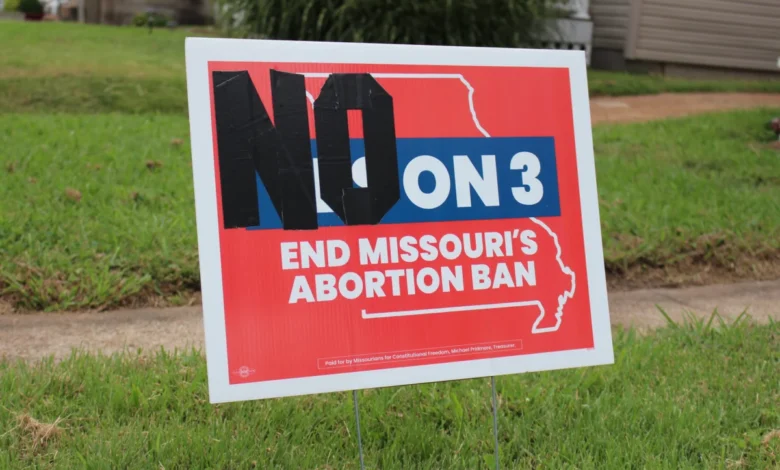
Among these states, Missouri stands out as a unique battleground. Just two years after a hard-fought campaign successfully added abortion protections to the state constitution, Republican lawmakers have engineered a legislative counteroffensive. The resulting ballot measure—confusingly designated as Amendment 3, mirroring the title of the 2024 constitutional amendment—asks voters to undo their previous decision. For residents like Kelly McCoomb of suburban St. Louis, the political whiplash has turned yard signs into literal canvases of resistance. Having preserved her 2024 sign supporting the measure in her basement, McCoomb recently retrieved it, covering the word "YES" with black duct tape to display a "NO" ahead of the November vote. Her sentiment reflects a broader skepticism toward the state’s political leadership: "I have little faith in our Missouri government," she remarked from her front porch.
The upcoming referenda highlight a deepening national divide characterized by a patchwork of state-level laws, shield legislation, and ongoing constitutional battles. While some states have moved swiftly to codify or expand access since 2022, others have enacted near-total prohibitions, creating profound legal and logistical hurdles for patients and providers alike.
The Post-Dobbs Landscape and the Emergence of State-Level Referenda
The June 2022 ruling in Dobbs v. Jackson Women’s Health Organization fundamentally transformed American jurisprudence by returning the authority to regulate or prohibit abortion entirely to individual states. The immediate aftermath produced a fractured map of healthcare delivery. States with Republican-controlled legislatures swiftly triggered or enacted stringent bans, while progressive and purple states sought to safeguard access through statutory and constitutional changes.
This dynamic created immense challenges for medical providers, who have had to navigate conflicting legal landscapes, interstate travel for patients, and the legal ambiguities of telehealth medication abortion. To counter strict bans, advocacy groups in various states launched ballot initiatives to enshrine reproductive rights directly into state constitutions, bypassing hostile legislatures. These efforts have proven remarkably popular at the polls, with voters in conservative and battleground states alike frequently supporting measures protecting abortion access when given a direct vote.
However, the permanence of these victories is now being tested. Lawmakers and anti-abortion organizations are actively seeking legislative and judicial pathways to challenge, weaken, or overturn voter-approved protections, setting up a complex multi-year chess match between statehouses and the electorate.
Chronology of the Missouri Abortion Battle
Missouri’s trajectory offers a clear view of the protracted struggle over reproductive rights in the post-Dobbs era. Long before the Supreme Court’s 2022 decision, Missouri was already a restrictive environment for abortion seekers. Over three decades, the state legislature enacted a series of stringent regulations targeting clinics and providers. These measures included a mandatory 72-hour waiting period, strict structural requirements for clinic hallways and procedure rooms, and a mandate requiring physicians performing abortions to maintain admitting privileges at a nearby hospital.
The cumulative impact of these regulations drastically reduced the availability of services. State health records indicate that the number of legal abortions performed in Missouri plummeted from 5,772 in 2011 to just 150 in 2021. Following the Dobbs ruling in 2022, Missouri became the first state in the nation to enact a near-total ban on the procedure, effectively shuttering the last remaining clinic in the state.
The turning point came in November 2024, when Missouri voters approved a constitutional amendment that guaranteed abortion access through fetal viability—typically considered to be around 24 weeks of gestation—and reversed the state’s prior ban. Despite the clear mandate from the electorate, logistical roadblocks and legal maneuvering delayed the resumption of medication abortions in the state for nearly two years.
Now, in a dramatic legislative reversal, the Republican-dominated General Assembly has placed a new measure on the November ballot. If approved, the amendment would repeal the 2024 constitutional protections and replace them with a statutory ban on abortion. The proposed restrictions would include narrow exceptions for medical emergencies, fetal anomalies, and pregnancies resulting from rape or incest, though survivors of sexual assault would face a strict 12-week gestational limit to obtain care.
Voter Confusion and Campaign Challenges
The return of abortion to the ballot in Missouri and Nevada has generated significant confusion among voters, election officials, and campaign organizers on both sides of the issue.
Margot Riphagen-Dunn, CEO of St. Louis-based Planned Parenthood Great Rivers, argued that the rapid succession of statewide votes mirrors the uncertainty patients face regarding the legality and availability of care. "Chaos is kind of the point here," Riphagen-Dunn said, "and it is absolutely a tactic that gets in the way of being able to provide."
Paradoxically, the administrative overlap has also complicated outreach for anti-abortion organizations. Reagan Barklage, vice president of Students for Life of America and treasurer of the Missouri Students for Life Ballot Committee, noted that her team has had to actively retrain canvassers and voters who are accustomed to the previous voting patterns. Because the upcoming measure is also designated as Amendment 3, voters who cast a "no" vote in 2024 to oppose the state’s abortion ban must now vote "yes" on the current legislative proposal to restrict access—or vice versa, depending on their perspective.
"I think it’s unfortunate," Barklage said regarding the ballot numbering and voter confusion. "People need to be very clear on what they’re voting for. It is crazy that it ended up being even the same number. I do not think that was intentional, but we’ve got to deal with what we’ve got."
State-by-State Breakdown: Nevada, Idaho, Virginia, and Missouri
As the November general election approaches, voters in four distinct states will weigh in on the future of reproductive healthcare within their borders, reflecting a diverse array of political strategies and legal contexts.
Nevada: A Second Mandate Required
In Nevada, reproductive rights advocates are organizing to secure the final step of the state’s constitutional amendment process. Nevadans for Reproductive Freedom spearheaded a 2024 ballot measure to enshrine the state’s existing policy—which allows abortions up to 24 weeks after conception—into the state constitution. The measure passed comfortably two years ago with 64% of the vote. However, Nevada constitutional law requires successful ballot initiatives to win majority approval in two consecutive general elections before taking effect.
Denise Lopez, president of the coalition, emphasized that campaigners are working to maintain voter urgency. "Folks care about it," Lopez said. "They’re seeing what’s happening at the national level, and they want to make sure that whatever’s happening in our neighboring states, like Idaho and Utah, doesn’t happen here in Nevada." While the measure would not alter the current 24-week statutory limit, it would create a higher legal barrier against future legislative restrictions, requiring any new ban to win voter approval across two separate elections.
Idaho: Testing Strict Bans at the Ballot
Idaho features some of the most restrictive abortion laws in the nation, enforcing near-total bans with few exceptions. However, a grassroots initiative successfully qualified a constitutional measure for the November ballot, asking voters to determine whether state statute should explicitly protect abortion access up to the point of fetal viability. The outcome could signal a major shift in a traditionally conservative state where legislative attempts to soften the ban have previously stalled.
Virginia: Codifying Trimester Protections
In Virginia, where abortion remains legal through the first two trimesters of pregnancy (up to 28 weeks), voters will decide whether to amend the state constitution to formally codify these rights. The referendum represents an effort by supporters to insulate the commonwealth’s current medical access from potential shifts in future legislative control.
Missouri: The Lone Rollback Effort
Missouri remains the only state in the country this year asking voters to strip away abortion protections already inscribed in the state constitution. The proposed repeal places the state at the epicenter of the post-Dobbs legal struggle, forcing a direct confrontation between the judiciary, the legislature, and the direct democracy process utilized by voters in 2024.
Broader Implications and the Looming Constitutional Crisis
Legal experts and national advocacy organizations warn that the ongoing divergence of state abortion laws is pushing the American legal system toward an unsustainable threshold. Kristi Hamrick, vice president of media and policy for Students for Life Action, pointed to the fundamental friction inherent in a federalist system grappling with a deeply polarized moral and legal issue.
"I just think there’s a constitutional crisis that’s coming," Hamrick said, questioning the viability of a fractured nation. "Can you have 50 state standards on whether or not a human being is a human being? Can you have 50 state standards on whether human beings have legal protection?"
Conversely, reproductive rights advocates argue that the true crisis lies in the erosion of bodily autonomy and the health risks imposed on patients living in states with strict prohibitions. By utilizing ballot measures, these groups aim to establish durable legal baselines that reflect popular support for healthcare access, even as state legislatures seek new avenues to restrict care.
As campaigns enter their final weeks, the outcomes in Missouri, Nevada, Idaho, and Virginia will likely serve as national bellwethers. For voters like Kelly McCoomb in Maplewood, the immediate task is ensuring that her neighbors look past the administrative confusion, recognize the stakes of the ballot language, and make their voices heard once again.
Related posts: