Federal Firefighter Shortages and Aggressive Suppression Mandates Create Crisis on the Frontlines of an Unprecedented Wildfire Season

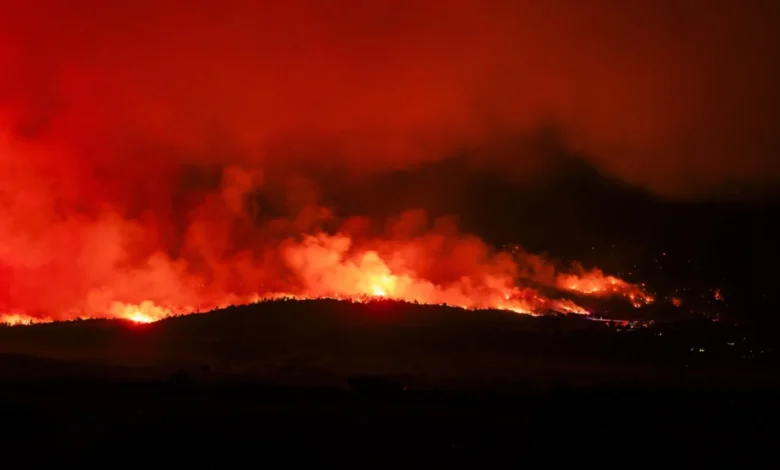
The United States is currently navigating one of the most perilous wildfire seasons in modern history, as federal firefighting forces face an internal crisis defined by critical staffing shortages, record-breaking fatigue, and a strategic pivot toward aggressive, high-risk suppression tactics mandated by the current administration. As the Aspen Acres fire in Colorado—the eighth-largest in the state’s history—continues to serve as a stark reminder of the volatility of the American landscape, veteran firefighters and labor advocates warn that the federal government’s current approach is pushing human resources to a dangerous breaking point.
The Anatomy of an Unrelenting Fire Season
By mid-September 2026, the scale of the destruction had reached levels that alarmed climate scientists and land managers alike. Data from the National Interagency Fire Center (NIFC) confirms that approximately 54,400 individual blazes have consumed more than 8.4 million acres across the United States. This figure represents a staggering 149 percent of the 10-year average, signaling a shift in the baseline of fire behavior.
The volatility of the 2026 season was cemented early, with the U.S. reaching "Preparedness Level 5" (PL5)—the highest possible tier of resource mobilization—for a record-breaking 48 consecutive days. This duration is nearly double the historical 10-year average for days spent at such a critical alert status, leaving crews with virtually no recovery time between assignments. This chronic lack of downtime has resulted in cumulative physiological and psychological strain, manifesting as a sharp increase in accidents and safety incidents on the ground.
A Chronology of Escalating Risks
The current crisis did not emerge overnight, but it has accelerated significantly throughout the spring and summer of 2026.
- April–May: Early season blazes began with atypical intensity, forcing crews into the field months earlier than historical norms.
- July 3: The Aspen Acres fire in Colorado ignited, eventually growing to over 73,000 acres and highlighting the strain on regional and federal resources.
- Late July: U.S. Forest Service (USFS) Chief Tom Schultz testified before a congressional subcommittee, asserting that the workforce was "fully staffed and equipped" to manage the season.
- Mid-August: Data from the Wildland Fire Lessons Learned Center revealed that firefighter entrapments—a worst-case scenario where flames cut off escape routes—had reached a 20-year high, with 12 incidents recorded in just over two months.
- August–September: The fatality count reached 14, including the tragic loss of three firefighters battling the Knowles fire in Colorado, followed by the death of a fourth crew member from the same unit weeks later.
The Strategic Shift: Aggression vs. Sustainability
A central point of contention in the current crisis is the administration’s directive for "fast and full suppression." Both Agriculture Secretary Brooke Rollins and Interior Secretary Doug Burgum have pushed for policies that mandate aggressive, direct attacks on virtually every ignition. This strategy marks a departure from modern wildfire management practices, which have increasingly favored nuanced, landscape-scale approaches—such as allowing fires to burn in remote areas to reduce fuel loads naturally.
Critics, including fire ecologists and retired incident commanders, argue that this mandate is fundamentally at odds with the current reality of limited personnel. By requiring aggressive suppression of every fire, the government is effectively forcing thin, exhausted crews to fight fires that may not pose an immediate threat to life or infrastructure, while simultaneously depleting the $6 billion suppression budget prematurely.
"Firefighting capacity is like wages, and the fire environment is like inflation—it has not kept up," noted one veteran fire captain from the Pacific Northwest. The sentiment is echoed by leaders within the Grassroots Wildland Firefighters advocacy group, who argue that the policy forces agencies to utilize "temporary supervisory structures" to fill gaps left by a lack of fully qualified, veteran personnel.
Congressional Oversight and Official Responses
The discrepancy between the USFS leadership’s optimistic public statements and the ground-level experience of firefighters prompted a formal response from the legislative branch. In a joint letter sent to the Department of the Interior and the USDA, a coalition of five senators—including Michael Bennet, Alex Padilla, Ron Wyden, Adam Schiff, and John Hickenlooper—expressed deep concern over the reports of safety lapses.
The senators highlighted that teams have been forced to work extended, unsafe shifts and that requests for critical support crews have gone unfilled in several Western states. The letter specifically cited the record-high fatality rate as evidence that the current operational pace is unsustainable. Despite these concerns, both the Department of the Interior and the USFS have remained largely unresponsive to requests for comment regarding the specific number of injuries or the systemic causes of the reported staffing gaps.
The Long-Term Implications of Human Depletion
The implications of this year’s fire management strategies extend beyond the current season. The "institutional knowledge" of the firefighting force is being eroded as experienced taskforce leaders and division supervisors—roles that require decades of training—leave the service due to the relentless pace and perceived lack of support.
Fire ecologist Timothy Ingalsbee, director of Firefighters United for Safety, Ethics and Ecology, emphasizes that the reliance on aggressive direct attack is a cycle that creates "a perfect firestorm." By suppressing all fires regardless of location, the agencies are allowing vegetation to accumulate on parched landscapes, ensuring that future blazes will be even more intense and difficult to control.
Furthermore, the physical toll of smoke inhalation, malnutrition, and sleep deprivation among firefighters is expected to have long-term health consequences for the workforce. As the 2026 season enters its final phases, the focus of fire management experts has shifted to the potential for a "breaking point." With crews reporting that they are nearing exhaustion, the ability of the federal government to respond to future, potentially more catastrophic, fire seasons remains in doubt.
The current situation represents a fundamental clash between traditional fire suppression doctrine and the new reality of a climate-impacted West. While administration officials maintain that their aggressive stance is necessary for community protection, the evidence from the frontlines suggests that the cost of this policy is being paid in the lives, health, and morale of those tasked with holding the line. As the federal agencies look toward the 2027 season, the demand for a more sustainable, safety-conscious, and properly staffed approach to wildland fire management continues to grow among both practitioners and policymakers.
Related posts: