Refining Volcanic Timelines: How Pliny the Younger’s Account and Advanced Argon-Argon Dating Are Reshaping Geochronology

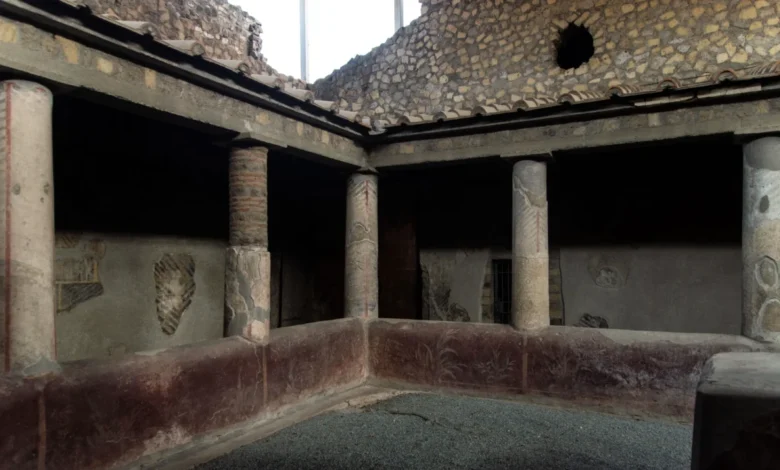
Two millennia ago, the cataclysmic eruption of Mount Vesuvius forever altered the landscape of the Roman Empire, burying the bustling cities of Pompeii and Herculaneum and preserving them beneath layers of ash, pumice, and volcanic debris. Among the most enduring records of this tragedy is a pair of descriptive letters written by the Roman author, lawyer, and administrator Pliny the Younger to the historian Tacitus. Composed decades after the event, these letters provided a meticulous eyewitness account of the disaster that claimed the life of his uncle, the natural philosopher Pliny the Elder, alongside thousands of other residents of the Campanian coast. For generations, the historical timestamp provided by Pliny—traditionally fixed to August 24, 79 CE—served as a foundational benchmark not only for classicists studying antiquity, but also for geoscientists attempting to date volcanic activity and calibrate geological timelines.
Now, a groundbreaking study published in the journal Science Advances demonstrates that this historical benchmark is more powerful than previously understood. By combining Pliny the Younger’s detailed historical chronicles with high-precision laboratory techniques, an international team of researchers has significantly refined the argon-argon geochronological dating method. This advancement allows scientists to determine the age of volcanic rocks and minerals with unprecedented accuracy and precision. By anchoring physical laboratory measurements to a rigorously verified historical event, the research team has established a new standard for evaluating volcanic hazards that threaten millions of people living near active stratovolcanoes around the globe today.
The Implications for Modern Volcanic Hazard Mitigation
The ability to accurately date past volcanic eruptions is not merely an academic exercise for historians and geologists; it is a critical component of modern disaster risk reduction. Around the world, millions of people reside in the shadow of volatile stratovolcanoes capable of catastrophic eruptions. Urban centers such as Naples, Italy—situated dangerously close to Vesuvius—as well as Mexico City, Mexico, and Yogyakarta, Indonesia, rely heavily on comprehensive hazard assessments to formulate evacuation plans, land-use policies, and early-warning infrastructure.
To construct reliable models of how a volcano might behave in the future, scientists must first decode its past. This requires piecing together a comprehensive, high-resolution eruptive history over relatively recent geological timescales.
“If you want to put together the eruptive history of a volcano in relatively recent time, precision and accuracy really count,” said Paul Renne, a study co-author and prominent geochronologist at the University of California, Berkeley. “The study shows that you can achieve that kind of highly useful precision and accuracy into the historical realm.”
By narrowing the margin of error in dating techniques, researchers can better understand the frequency, periodicity, and magnitude of eruptions over hundreds or thousands of years. This granular data enables authorities to distinguish between dormant intervals and active phases, ultimately improving the predictive models used by civil protection agencies worldwide.
The Rediscovery of the Suburban Pumice Samples
The methodological breakthrough described in the new study has its roots in field collection efforts conducted nearly three decades ago. In 1998, study co-author Andrea Marzoli, a researcher at the University of Padua in Italy, traveled to Oplontis, a wealthy Roman suburban enclave located in modern-day Torre Annunziata. Like Pompeii, Oplontis was devastated and buried by the 79 CE eruption of Vesuvius, famously featuring lavish villas such as the Villa of Poppaea.
During his field investigations, Marzoli collected specialized pumice samples from the archaeological site. Crucially, these samples originated from the earliest phase of the Vesuvius eruption. To understand why this early material is so valuable to geochronologists, scientists must look at the internal mechanics of stratovolcano magma chambers.
Beneath volcanoes like Vesuvius, large underground magma chambers undergo a process of differentiation and stratification over time. Heavier elements such as iron and magnesium tend to concentrate at the bottom of the chamber, while lighter, highly soluble elements—most notably potassium—migrate toward the upper strata. Consequently, when a volcano erupts, the potassium-rich magma at the top of the chamber is expelled first. This material settles at the very bottom of the initial ash and pumice fallout deposits.
The samples Marzoli retrieved in 1998 captured this pristine, potassium-rich early eruption phase. However, following their collection, the physical specimens were placed on a laboratory shelf, where they remained unanalyzed for nearly thirty years. It was only recently that a team of graduate students—Caroline Hasler, Anthony Fuentes, and Andy Tholt—proposed retrieving Marzoli’s archival samples to subject them to modern analytical techniques.
Navigating the Crucial Distinction Between Accuracy and Precision
In scientific measurement, the terms “accuracy” and “precision” are frequently conflated by the general public, yet they represent fundamentally distinct concepts. Accuracy describes how close a measured result is to the true, actual value of the quantity being measured. Precision, by contrast, measures the reproducibility and repeatability of a result—how closely repeated measurements cluster together, regardless of whether they center on the true value.
To illustrate the difference using a common analogy: if a marksman fires a series of arrows at a target, high accuracy means the arrows land squarely in the bullseye. High precision means all the arrows land tightly clustered in the exact same spot on the target, even if that cluster is located entirely outside the bullseye. In geochronology, achieving both high accuracy and high precision is the ultimate objective, as it ensures that dates assigned to geological strata are both reproducible and historically correct.
In the new study, the research team sought to test the limits of argon-argon dating—a technique that measures the radioactive decay of potassium-40 into argon-40 within minerals. Specifically, the team focused on sanidine, a potassium-rich feldspar mineral found in Vesuvius volcanic ejecta.
When preliminary analyses of these sanidine samples were conducted the previous year, standard dating models placed the eruption at approximately 1,938 years ago. However, by integrating the newly calibrated argon-argon dating method with a meticulous re-evaluation of historical texts—including Pliny the Younger’s epistles—the researchers calculated the actual age of the volcanic minerals to be 1,946 years. This refined estimate achieved an exceptional level of performance, equating to a precision of 0.7 percent and an accuracy of 0.4 percent.
“This lets us more precisely infer causality between events in the geologic record, for example a meteor impact structure and a mass extinction,” Renne noted, emphasizing the broader applicability of high-resolution geochronological calibration.
Validating the Historical Record Through Interdisciplinary Scholarship
A cornerstone of the new research involved a deep interdisciplinary dive into historical archives. Caroline Hasler led an exhaustive examination of the historical records surrounding the Vesuvius eruption, cross-referencing Pliny the Younger’s surviving letters with subsequent historical scholarship, textual variants, and archaeological excavations.
For centuries, scholars debated the exact calendar date of the eruption described by Pliny, largely due to variations in medieval manuscript copies of his letters. While August 24, 79 CE, became the traditional date accepted by most historians, some archaeological evidence—such as autumnal fruits found charred in the ruins and heavy winter clothing worn by certain victims—suggested the cataclysm may have occurred later in the autumn, potentially in October or November.
By marrying high-precision mass spectrometry data with historical textual analysis, the research team successfully validated the timing of the eruption within a remarkably narrow window of two months, doubling the precision of previous scientific estimates. This harmonization of physical science and classical history demonstrates how interdisciplinary collaboration can resolve longstanding historical debates while simultaneously advancing hard-science methodologies.
Unifying Global Geochronological Standards
The implications of this study extend far beyond the slopes of Mount Vesuvius. Radiocarbon dating currently serves as the dominant method for establishing chronological frameworks for organic materials younger than approximately 55,000 years. However, radiocarbon dating relies on fluctuating concentrations of atmospheric carbon-14 over time, meaning it requires independent calibration curves derived from tree rings, marine sediments, and well-dated volcanic marker beds (tephra).
By establishing Vesuvius’s 79 CE eruption as a rigorously calibrated, highly precise geochemical anchor point, the research team has provided the scientific community with a superior reference standard. This standard can be used to cross-calibrate and refine other geochronological techniques, including radiocarbon dating, uranium-thorium dating, and luminescence dating.
“We’re hoping to really unify as many geologic dating methods as we can by using the same mathematics, the same Bayesian approach, and just bringing more data, more raw observations into that mix,” Renne explained. “लेकिन [But] argon-argon dating is always going to be a standard—it’s going to be an important calibrant in that sense.”
As researchers continue to refine analytical instruments and computational models, the integration of historical observations with cutting-edge mass spectrometry promises to unlock a clearer, more dependable picture of Earth’s dynamic history. By looking backward through both ancient texts and pristine volcanic crystals, science is gaining a sharper view of the geological forces that continue to shape our world.
Related posts: