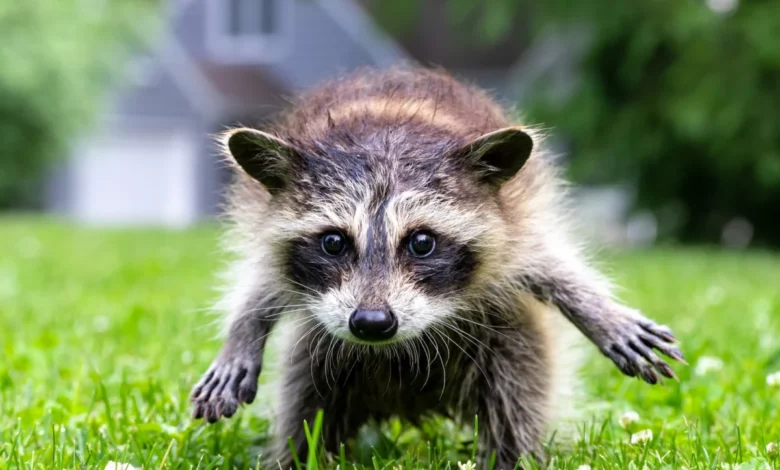
The internet has a new darling, and he’s a masked bandit with a remarkably compact physique. Jimothy, a Seattle raccoon, has captured the hearts and imaginations of millions online, thanks to his distinctive, almost impossibly round appearance. This unlikely celebrity, whose short spine syndrome has made him a viral sensation, is more than just a cute meme; his story offers a rare glimpse into genetic anomalies in wildlife and raises important questions about human interaction with wild animals.
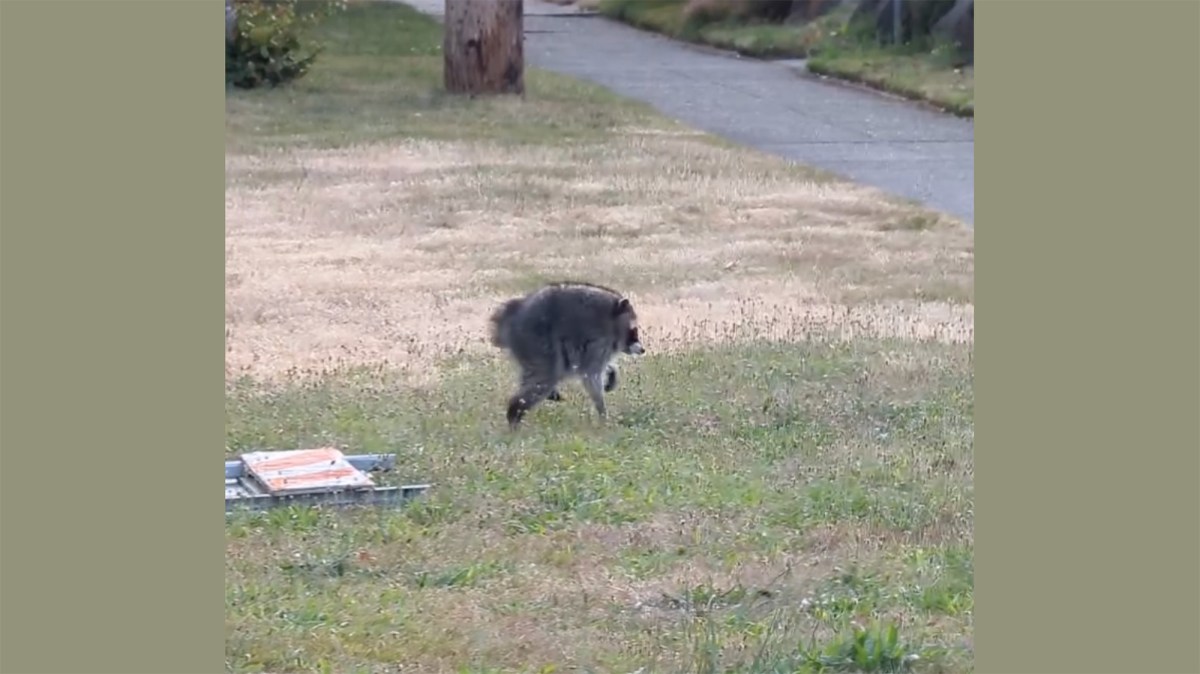
Jimothy first came to public attention when Kiana Hall, a Seattle resident, captured a video of the unusual raccoon near a Goodwill store in Ballard, Washington. Initially mistaking him for a cat huddled under a car, Hall was struck by his peculiar shape. "I initially thought I saw a cat under a car and wanted to have a closer look," Hall recounted to Popular Science. "Then I realized it wasn’t the shape of a cat at all." Upon closer inspection, Hall recognized the telltale markings of a raccoon, and the name "Jimothy" simply felt right. The video quickly gained traction, racking up millions of views and spawning a dedicated fanbase. This appreciation has manifested in various forms, from affectionate nicknames like "King Jimothy" to fan art, tattoos, and the now-iconic meme, "Hot Jimothy Summer."
The unusual appearance that propelled Jimothy to stardom is attributed to a rare genetic condition known as short spine syndrome. This condition, while visually striking, presents significant challenges for affected animals.
Understanding Short Spine Syndrome
Short spine syndrome is a congenital disorder characterized by a severe shortening and compression of the vertebral column. Dr. Julian D. Avery, an ecologist at Penn State University, explains that the condition stems from a faulty recessive gene. For an animal to exhibit short spine syndrome, it must inherit two copies of this gene, one from each parent. "The odds of putting two individuals together that have it are generally pretty rare," Dr. Avery stated. "And probably rare in part because the animals with this condition will have significantly more challenges than a normally formed animal would have in any kind of context."
The development of the spine involves the differentiation of a long tube into distinct vertebrae. In animals with short spine syndrome, this process is disrupted. "That does not unfold properly in animals that have these faulty genes," Dr. Avery elaborated, likening the compromised development to repeatedly pinching a long tube of dough, preventing the formation of individual segments. This leads to a significantly shortened spine, with vertebrae that may be fused or abnormally formed.
The rarity of documented cases in wild animals like raccoons is likely due to the severe survival disadvantages associated with the syndrome. Animals with such pronounced physical limitations often struggle to forage, evade predators, and reproduce, making their lifespan in the wild considerably shorter. Jimothy, however, appears to be an anomaly – an individual who has navigated the developmental challenges of short spine syndrome with remarkable success. "He seems to have made it through this developmental process in a way that allows him to be pretty successful," Dr. Avery observed. "He or she. I don’t think anyone knows whether it’s male or female."
Jimothy’s Journey: From Obscurity to Internet Stardom
Jimothy’s emergence into the public eye can be traced back to his initial sightings in Ballard, a vibrant neighborhood in Seattle known for its eclectic mix of residential areas and commercial hubs. His discovery near a Goodwill store placed him in a relatively urbanized environment, where encounters with humans are more frequent. The timeline of his rise to fame began in earnest when Kiana Hall’s video was posted online, rapidly gaining traction throughout July. The "Hot Jimothy Summer" meme, which playfully combines his distinctive look with popular summer trends, further cemented his cultural presence. Online commentators have even drawn comparisons to mythical creatures, dubbing him a "cryptid" and evoking figures like Bigfoot and the chupacabra, highlighting the unique and almost fantastical nature of his appearance.
Prognosis and Potential Challenges
Despite his unconventional physique, the outlook for Jimothy appears cautiously optimistic, according to wildlife experts. "There’s no reason to think the lungs are compromised or the brain is compromised," Dr. Avery assured. "I would expect that Jimothy would have a normal life." Animals with short spine syndrome generally retain normal brain function and internal organ development, meaning Jimothy possesses the capacity for a full range of cognitive and physiological processes.
The adaptability of raccoons as a species plays a crucial role in Jimothy’s potential for a long and fulfilling life. "Raccoons are crazy resourceful," Dr. Avery remarked. "They’re one of those species that is generalized enough that they can make a go in many kinds of situations and be successful." Evidence from the viral videos supports this, showing Jimothy actively foraging and moving with apparent ease, demonstrating his ability to adapt to his physical circumstances.
However, the greatest threat to Jimothy’s well-being may not stem from his genetic condition, but from human intervention. "When people start feeding wild animals, then they start hanging around in unsafe ways," Dr. Avery warned. This habituation can lead to raccoons losing their natural wariness of human-related dangers, such as traffic. Animals that become too accustomed to human presence are also more likely to be captured and removed by wildlife officials if they are perceived as a nuisance or a danger. "They’re not wary enough of those threats coming at them, and then they suffer," he added.
Raccoons in the wild typically have a lifespan of two to three years, though in captivity, they can live significantly longer, sometimes up to 20 years. Jimothy’s unique situation, combining a genetic anomaly with a burgeoning human fanbase, places him at a critical juncture where public admiration must be balanced with a respect for his wild nature.
Official Stance and Community Engagement
Wildlife authorities in Washington state echo the sentiment of a hands-off approach. A spokesperson for the Washington Department of Fish and Wildlife stated in a written communication to CBC News, "We do encourage folks to leave the animal alone as it does appear to be getting around fine, unassisted, with the apparent congenital defect." This official guidance emphasizes the importance of allowing wild animals to navigate their environment without undue interference.
The phenomenon of Jimothy has transcended viral fame and is now entering the realm of civic recognition. Seattle City Councilmember Alexis Mercedes Rinck has announced plans to present an official proclamation in Jimothy’s honor on July 26, commemorating what she has dubbed "Jimothy Summer." This initiative includes a community art competition, further integrating Jimothy into the cultural fabric of Seattle and celebrating the joy he has brought to many.
Kiana Hall, the discoverer of Jimothy, hopes that the raccoon’s newfound fame will inspire a greater appreciation for local wildlife. "It has been so fun watching Jimothy bring some joy and silliness to the world," she shared. "And I hope this encourages people to go out for walks in their neighborhood and observe the wildlife around them." Her sentiment underscores the broader impact of Jimothy’s story: fostering curiosity and connection with the natural world that exists just beyond our doorsteps.
The Ethical Considerations of Wildlife Admiration
Dr. Avery’s perspective highlights a crucial ethical consideration: the balance between admiration and intervention. While the public’s fascination with Jimothy is understandable and, in many ways, beneficial for raising awareness about wildlife, it’s essential to ensure that this admiration does not translate into actions that harm the animal. "If more people are going to see Jimothy and doing so at a respectful distance, that’s awesome," Dr. Avery said. "That’s more people that have seen a raccoon and are then going to get hooked on wanting to see a porcupine or robins nesting in their shrubs. Those sorts of things really get people invested and caring about what’s going wrong in the world around us."
The "hands-off" philosophy recommended by experts like Dr. Avery is rooted in a deep understanding of ecological principles. Natural variation within a population, even if it results in conditions like short spine syndrome, is a fundamental aspect of evolution. Interfering with this natural process, even with good intentions, can have unintended consequences.
Jimothy’s story serves as a powerful reminder that the wild world is full of wonders, both ordinary and extraordinary. His unique condition has not only captivated the internet but has also provided an educational opportunity, prompting discussions about genetics, wildlife, and our responsibility as stewards of the environment. As Jimothy continues his life in Seattle, his legacy will likely be one of bringing smiles, sparking conversations, and perhaps, inspiring a deeper connection to the diverse and resilient creatures with whom we share our planet.
In Popular Science‘s Ask Us Anything series, we delve into the most intriguing questions about science, technology, and the natural world. Have you ever wondered about a phenomenon that seems out of this world? Submit your questions to us, and we’ll do our best to provide insightful, fact-based answers.
Related posts: