Ice Age Origins: Archaeological Evidence Pushes Human Betel Nut Use Back 25,000 Years

The human relationship with mind-altering substances is ancient, complex, and deeply embedded in the history of our species. For centuries, conventional archaeological and anthropological frameworks suggested that the systematic consumption of psychoactive plants and fermented beverages blossomed hand-in-hand with the rise of agriculture during the Neolithic era, roughly 10,000 to 13,000 years ago. However, groundbreaking research published in the journal Science Advances has upended this long-held consensus. By examining rare skeletal remains recovered on the Indonesian island of Sulawesi, scientists have discovered that modern humans were consuming psychoactive betel nuts as early as 25,000 years ago during the height of the last Ice Age. This startling revelation pushes the timeline of humanity’s oldest known drug habits back by more than 23,000 years, forcing researchers to rethink how Paleolithic hunter-gatherers interacted with their surrounding ecosystems.
Main Facts of the Discovery
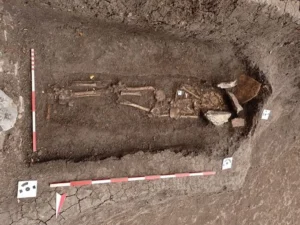
The study centers on the analysis of dental remains taken from two early human foragers discovered in cave sites on Sulawesi. The older of the two individuals lived between 25,000 and 16,000 years ago, while the younger individual dates back approximately 7,600 to 6,300 years.
Upon examining the teeth of these ancient foragers, researchers noted an unusual pattern of severe dental wear. Unlike typical wear-and-tear caused by chewing coarse or gritty food, these teeth featured deep, curved grooves. After evaluating various hypotheses, the research team—led by prominent archaeologists and biochemists, including Adam Brumm of Australia’s Griffith University—concluded that the deterioration was the result of a repetitive, lifelong habit: regularly sucking on whole, abrasive betel nuts (Areca catechu).
To confirm whether unprocessed betel nuts could yield psychoactive effects without the modern preparation method of combining them with slaked lime (calcium hydroxide) and tobacco, the research team conducted laboratory experiments. They exposed betel nut compounds to artificial saliva and tested the resulting mixture on cloned human receptors grown from frog egg cells. The results demonstrated that simply sucking on raw betel nuts releases sufficient quantities of arecoline—the primary neuroactive alkaloid in the nut—to trigger neural activity and physiological changes. Furthermore, biochemical analyses detected actual traces of arecoline embedded directly within the dental calculus of the ancient Sulawesi skeletons.
Chronology of Human Intoxicant Use
To understand the magnitude of this discovery, it is necessary to examine the traditional timeline of human substance use and how the new findings alter the historical record.
- Circa 25,000 to 16,000 Years Ago (Upper Paleolithic / Ice Age): As evidenced by the Sulawesi skeletal remains, early human hunter-gatherers in Island Southeast Asia regularly consume unprocessed betel nuts, likely utilizing them for both mild stimulation and natural pain relief.
- Circa 13,000 Years Ago (Neolithic Transition): Traditional archaeological models place the dawn of human intoxicant use here, tied directly to the domestication of crops, the invention of pottery, and the intentional fermentation of primitive alcoholic beverages.
- Circa 1,500 BCE (Bronze Age): Prior to the Sulawesi discovery, the earliest widely accepted and documented evidence of betel nut chewing and processing dated back to this period, associated with agricultural societies spreading across Southeast Asia and the Pacific.
- Present Day: The betel nut stands as one of the most widely consumed psychoactive substances on Earth. Current epidemiological estimates indicate that approximately one in ten people globally regularly use betel nut preparations, placing its popularity directly behind caffeine, alcohol, and nicotine.
Supporting Data and Biochemical Analysis
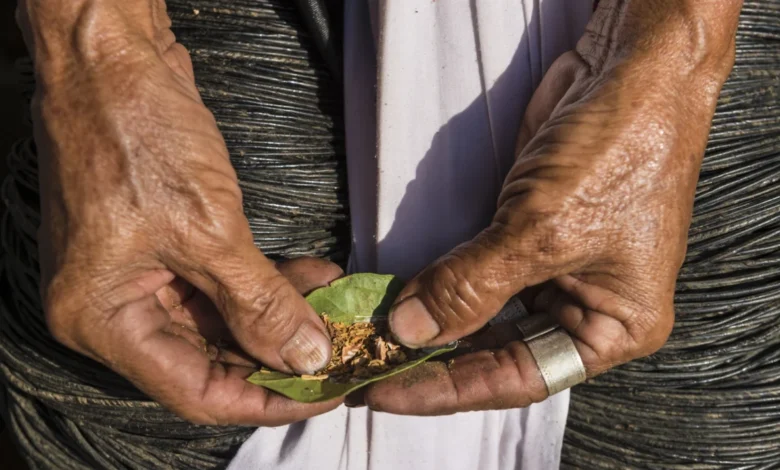
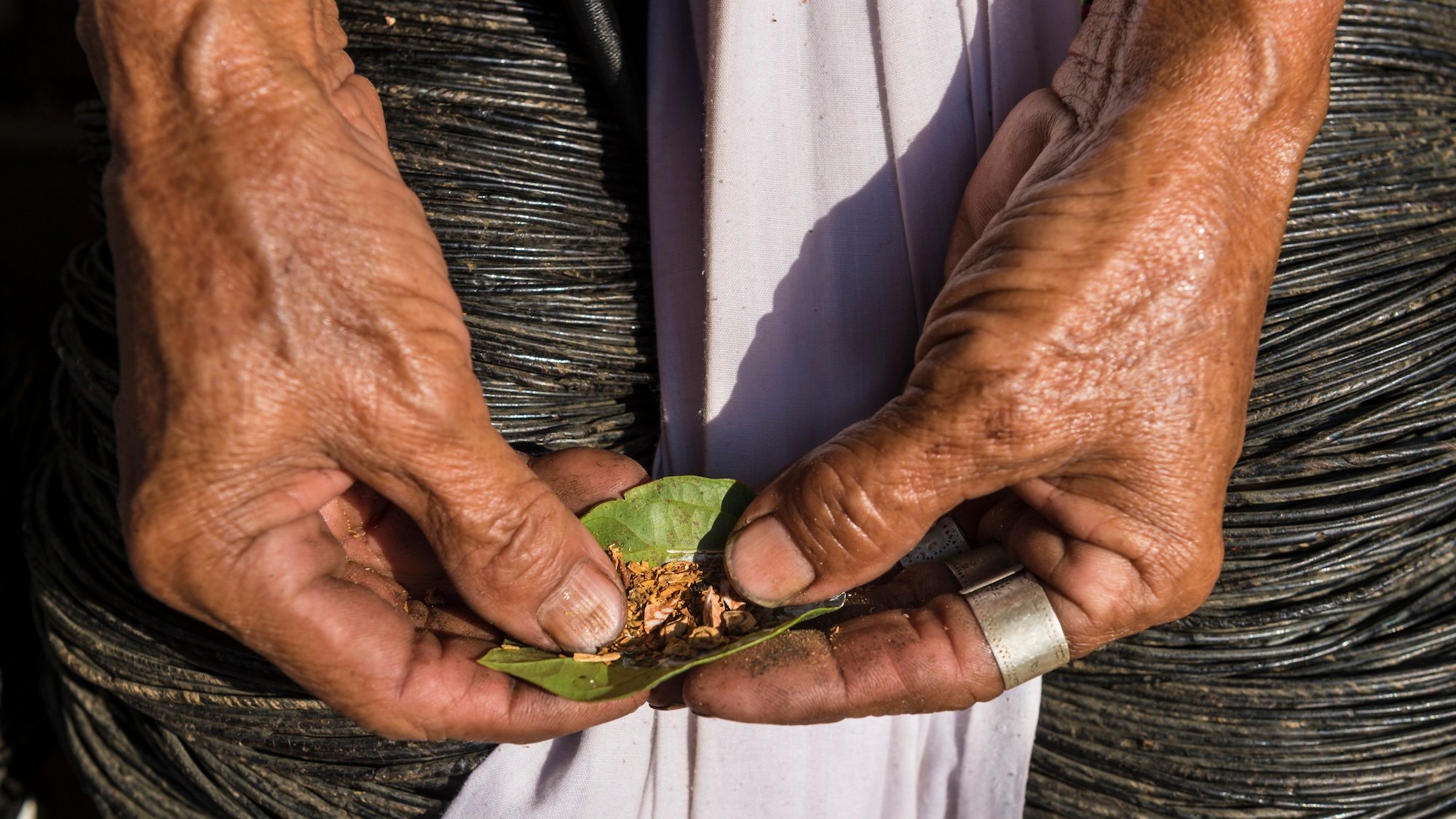
The areca nut is indigenous to tropical regions of Asia, the Pacific, and parts of East Africa. Today, modern consumers typically process the nut by slicing, crushing, or grinding the seed, wrapping it in a betel leaf alongside slaked lime, and occasionally adding tobacco or spices to form a "quid." This mixture is then chewed over extended periods, releasing alkaloids that act as central nervous system stimulants, increasing heart rate, alertness, and physical endurance.
For decades, toxicologists and anthropologists maintained that arecoline—the primary psychoactive compound in the nut—remained biologically inactive or imperceptible to the human body unless activated by an alkaline substance like slaked lime. This chemical catalyst was thought to be a mandatory prerequisite for any drug-seeking behavior involving the plant.
The Griffith University-led study challenges this dogma. By proving that raw, unprocessed betel nuts release active alkaloids through simple mechanical action and saliva, the researchers demonstrated that complex chemical recipes were not necessary for Paleolithic humans to experience the drug’s neurological rewards. The biochemical identification of arecoline traces preserved inside the fossilized dental plaque of the Sulawesi foragers provides empirical proof that this chemical interaction occurred thousands of years before the agricultural revolution.
Official Responses and Expert Perspectives
The implications of the Sulawesi discovery have generated significant discussion within the anthropological and archaeological communities. Co-author Adam Brumm emphasized that the traditional view—which links all early drug use to the sedentary lifestyle of early farmers—is fundamentally flawed.
"This theory fails to account for the possibility that very ancient drug-taking lies at the roots of our most commonly used psychoactive substances," Brumm stated in a university profile detailing the findings.
However, the motivation behind Ice Age betel nut consumption may not have been purely recreational. The researchers suggest a compelling, albeit painful, hypothesis regarding why these foragers engaged in the habit despite the catastrophic damage it caused to their teeth.

"Sucking these hard, abrasive seeds wore down the foragers’ teeth so badly that in some cases the inner pulp chamber became completely exposed," Brumm explained. "So while this habit may have been a remedy for toothache, years of prolonged nut-sucking eventually caused much worse dental health problems, creating a cycle of continued habitual use."
Because arecoline acts as a natural analgesic, the betel nuts likely served as a primitive form of self-medication for dental pain. Once a tooth was damaged by sucking on a nut, the resulting agony prompted the individual to continue the habit to numb the pain, inadvertently worsening the structural integrity of their teeth in a self-reinforcing loop.
Broader Impact and Implications
The identification of Ice Age betel nut use forces a significant paradigm shift in how researchers understand Pleistocene human behavior, resource exploitation, and cultural transmission.
First, it demonstrates that Paleolithic foragers possessed an intimate, sophisticated understanding of the pharmacological properties of their local flora. Long before the advent of written language, organized medicine, or specialized chemistry, human communities identified complex chemical interactions within wild plants and integrated them into daily survival strategies.
Second, the findings bridge a massive gap in the cultural continuity of Island Southeast Asia. The deep historical roots of betel nut consumption in the region are now shown to span across major climatic shifts, including the transition from the end of the last Ice Age through the warming periods of the Holocene and the subsequent arrival of Neolithic farming populations from mainland Asia.
Finally, the study underscores a fundamental aspect of the human condition: the drive to alter consciousness, manage pain, and modify physiological states is not a byproduct of civilization, agriculture, or urban stress. Rather, it is a deeply ingrained behavioral trait that accompanied human ancestors through the freezing landscapes of the last glacial maximum and continues to shape global societies today. As researchers continue to analyze ancient skeletal collections with advanced biochemical and microscopic techniques, science may uncover even earlier chapters in humanity’s long, complex history with psychoactive substances.