Bill Skarsgard expresses fatigue with villain roles and clarifies absence from James Bond casting process

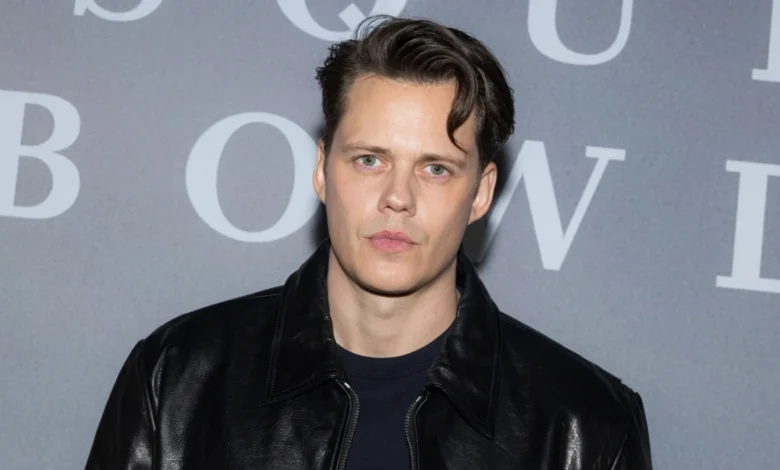
The landscape of modern cinema has been defined in large part by the singular intensity of actor Bill Skarsgard, whose ability to embody the macabre and the malevolent has made him one of Hollywood’s most sought-after performers for antagonist roles. However, as his career enters a new phase, the 36-year-old Swedish actor has signaled a significant pivot in his professional trajectory. During a candid appearance on the Happy Sad Confused podcast, hosted by Josh Horowitz, Skarsgard revealed that he is increasingly "spent" when it comes to portraying villains, effectively calling for a shift toward more diverse character work.
This revelation comes at a moment of transition for the actor, who has spent the better part of the last decade establishing a reputation for unsettling, high-concept performances. From his breakout turn as the shapeshifting entity Pennywise in Andy Muschietti’s two-part adaptation of Stephen King’s It, to his visceral portrayal of Eric Draven in The Crow, and the aristocratic menace of the Marquis Vincent Bisset de Gramont in John Wick: Chapter 4, Skarsgard has become synonymous with onscreen darkness. Yet, he now finds himself at a creative crossroads where the allure of the traditional villain has begun to wane.
The Evolution of a Typecast Performer
The archetype of the "movie villain" is a difficult one to sustain for a prolonged period, as actors risk being boxed into specific tonal categories. Skarsgard’s filmography reflects a rapid ascent into this territory. His performance as Pennywise in 2017’s It shattered box office records, grossing over $700 million globally and cementing his status as a marquee talent. By the time he appeared in John Wick: Chapter 4 in 2023, his reputation as a master of cold, calculated, and often terrifying characters was solidified.
In his conversation with Horowitz, Skarsgard addressed the necessity of evolution. "For a villain, it would have to be something that felt original to me, that was something that I hadn’t done before," he explained. "I feel, kind of, spent with those things." This sentiment is not necessarily a rejection of the genre, but rather an admission of the emotional and psychological toll that such roles demand. The process of inhabiting characters who represent the antithesis of moral goodness requires a depth of commitment that, over time, can become creatively taxing. He noted that while he is not ruling out future antagonist roles, the bar for acceptance has been raised significantly. The character must offer a novel narrative or psychological hook that separates it from his previous work.
The James Bond Connection and Casting Speculation
The discussion naturally drifted toward one of the most coveted roles in the industry: the antagonist in the James Bond franchise. For years, fan speculation has linked Skarsgard to the series, with many enthusiasts noting that his unique blend of ethereal presence and physical intimidation would make him an ideal foil for the next iteration of 007.
Addressing the rumors with a touch of wry humor, Skarsgard confirmed that he had never been approached by the Eon Productions team, which manages the Bond franchise. "Yeah! Well, because they didn’t call me about James Bond. I don’t know what that was about," he said. "Maybe they were like, ‘We can’t do a Swede for this guy.’ I wasn’t even thrown into the mix."
This lack of contact is particularly noteworthy given the current climate of the Bond franchise. As the producers look to redefine the series following Daniel Craig’s five-film tenure—which concluded with 2021’s No Time to Die—the casting process has been characterized by extreme secrecy and a broad search for fresh faces. Skarsgard’s clarification effectively puts to rest the theory that he was ever in serious contention for a role, despite the public’s clear appetite for his involvement.
Furthermore, Skarsgard clarified his own ambitions regarding the franchise. He expressed a lack of interest in the grueling, multi-film commitment required to lead the series as the titular agent, a role that typically demands a decade or more of an actor’s life. Instead, he identified the "one-off" villain role as the most appealing entry point. He pointed to the performances of fellow Scandinavian actor Mads Mikkelsen (Le Chiffre in Casino Royale) and Javier Bardem (Raoul Silva in Skyfall) as the gold standard for what a memorable, singular Bond antagonist should look like.
The Current State of the 007 Search
The search for the next James Bond remains the most significant ongoing story in the film industry, with reports suggesting that the producers are nearing a final decision. The recent uptick in activity surrounding the franchise includes the reported screen testing of several high-profile actors. According to sources at The Hollywood Reporter, the shortlist has included names such as Callum Turner, Jack Lowden, and Josh O’Connor.
The plot thickens with the recent revelation that Robert Pattinson has also participated in screen tests for the role. Furthermore, Nicholas Hoult has emerged as a consistent frontrunner in the eyes of industry analysts. The inclusion of such diverse talent underscores the producers’ desire to find an actor capable of carrying the legacy of the franchise into a new era, potentially under the directorial vision of Denis Villeneuve. The implications of this search are vast; the Bond franchise remains a global cultural juggernaut, and the choice of the next lead will dictate the creative tone of the series for the foreseeable future.
Beyond the Villain: A Career Pivot
While Skarsgard may be stepping back from the shadows of his villainous past, he is certainly not stepping away from the spotlight. His recent project, The Mosquito Bowl, directed by Peter Berg, marks a departure from his usual genre fare. Based on the nonfiction book by Buzz Bissinger, the film explores the intersection of professional football and the realities of World War II.
The film, which is currently in theaters and scheduled for a November 25, 2026, release on Netflix, provides a glimpse into the kind of roles Skarsgard is now prioritizing: grounded, historical, and ensemble-driven. This project demonstrates an attempt to diversify his portfolio, moving away from the heightened, often fantastical environments of his previous work into more nuanced, humanistic storytelling.
Analysis: The Implications of Skarsgard’s Shift
From an industry perspective, Skarsgard’s "spent" comment serves as a reminder of the fragility of star power in the age of franchise cinema. Actors often find themselves victims of their own success; the more effectively they play a villain, the more producers pigeonhole them into similar roles. By publicly stating his desire to move on, Skarsgard is actively attempting to reclaim his agency.
This move mirrors the career paths of other actors who successfully transitioned from "genre heavy" roles to broader, more critically acclaimed work. His ability to navigate this transition will depend on his success in smaller, character-driven projects like The Mosquito Bowl. Should he find success in these roles, he could redefine his brand from a "horror/thriller specialist" to a "versatile leading man."
Furthermore, his comments regarding the Bond franchise highlight the disconnect between fan expectations and actual industry practices. While the public often views casting as a meritocracy of fan-casting and social media buzz, the reality remains a closed, highly controlled process. Skarsgard’s admission that he was "never in the mix" serves as a sobering, if humorous, dose of reality for those following the 007 rumors.
As the industry moves forward, the "Skarsgard phenomenon" remains a case study in how modern actors manage their public perception. His pivot is not merely a change in choice of script; it is a strategic repositioning in a market that is increasingly hungry for actors who can transcend the constraints of the roles that made them famous. Whether he finds his way back to the mainstream as a hero, a romantic lead, or simply a different kind of character actor, his next few years will be defined by the very selectivity he has now publicly embraced.