Madison Square Garden Fires Back After Macklemore Claims Major US Venues Blocked Free Palestine Benefit Tour

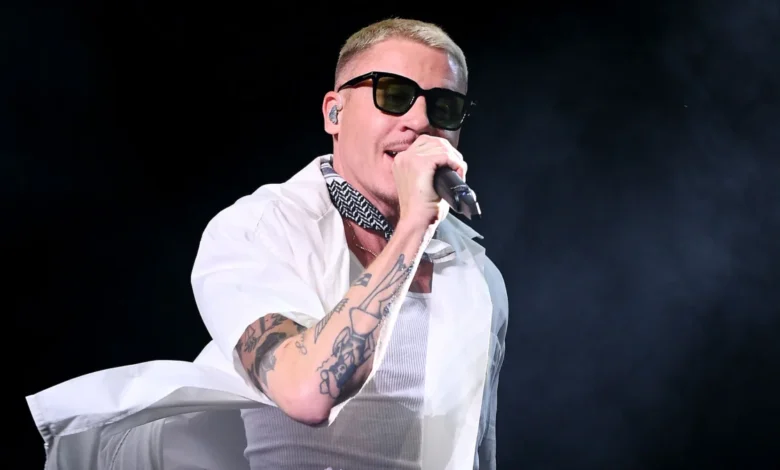
The ongoing controversy surrounding rapper Macklemore and his politically charged concert series escalated significantly when Madison Square Garden issued a sharp response to allegations that the iconic New York venue deliberately blocked his upcoming benefit shows. The dispute highlights a growing, highly polarizing intersection between live entertainment, geopolitical activism, and corporate venue management in the United States.
The exchange of statements stems from Macklemore’s public accusations that multiple premier American arenas conspired to reject his Free Palestine Tour. According to the artist, several high-profile entertainment hubs—including Madison Square Garden, the Prudential Center, Barclays Center, UBS Arena, Intuit Dome, the Kia Forum, Crypto.com Arena, Chase Center, and Climate Pledge Arena—abruptly rescinded available dates once management realized the concerts were designated as benefit events supporting Palestinian humanitarian causes.
In response to these allegations, a spokesperson for Madison Square Garden firmly denied any political motivation behind the venue’s refusal to host the tour. Instead, the MSG representative attributed the rejection to standard scheduling constraints and a contentious assessment of the artist’s commercial drawing power in the U.S. market.
“We have some of the busiest venues in the world with extremely limited availability, and he’s not an arena-level act,” the MSG spokesperson stated.
This claim, however, sits in stark contrast to the artist’s recent international ticket sales. Just last month, Macklemore rapidly sold out arena-level shows for the same tour in major European cities, including Dublin, Paris, and London. Industry observers have pointed out that dismissing a multi-platinum-selling artist who historically commands arena audiences as "not an arena-level act" runs counter to standard touring metrics, further fueling speculation that the rejection was driven by corporate risk aversion rather than logistics or drawing power.
The Genesis of the Controversy: Ed Sheeran, Gillette Stadium, and Tour Fallout
To fully understand the current standoff between Macklemore and major U.S. venue operators, one must examine the chain of events that began earlier in the autumn. The origins of the Free Palestine Tour trace back to late summer, when Macklemore was abruptly dropped from Ed Sheeran’s touring lineup.
The separation occurred following intense public outcry and media scrutiny surrounding Macklemore’s outspoken, onstage remarks advocating for Palestinian rights during previous performances. The situation intensified behind the scenes when Robert Kraft, owner of Gillette Stadium—one of the venues slated to host the Sheeran tour—reportedly mobilized a coalition of venue stakeholders and stakeholders to issue an ultimatum regarding the controversial opener.
Faced with mounting pressure, Ed Sheeran and his management team parted ways with the rapper. Sheeran subsequently released a public statement attempting to distance himself from the direct decision-making process, maintaining that the removal was ultimately a "promoter’s decision." Rather than stepping back from his activism, Macklemore leveraged the incident to launch an independent initiative: the Free Palestine Tour, explicitly designed to raise funds and awareness for Palestinian civilians caught in the ongoing Middle Eastern conflict.
Chronology of the Arena Rejections
The friction between the tour organizers and North American venue management unfolded across a specific timeline that Macklemore’s team has documented publicly:
- Mid-September: Macklemore formally announces the creation of the Free Palestine Tour, framing it as a direct response to his removal from the Sheeran itinerary and positioning the concerts as dedicated benefit events.
- Late September to Early October: Booking inquiries are sent out to top-tier indoor arenas across major metropolitan markets in the United States, targeting venues on both the East and West Coasts.
- Mid-October: According to the artist’s public statements, booking agents initially received positive responses, with several arenas providing open dates through the remainder of the calendar year.
- Late October: Once venue executives allegedly identified the shows as explicitly tied to Palestinian advocacy, negotiations stalled or were terminated entirely. Tour organizers report that previously available calendar slots were suddenly declared unavailable or closed for booking.
- Late November: Macklemore publicly names the specific venues that turned down the tour, accusing corporate ownership groups of censorship and ideological blacklisting.
- Early December: Madison Square Garden and other targeted entities respond to the public backlash, defending their scheduling policies and commercial assessments.
The Artist’s Allegations of Corporate Censorship and Boycotting
Macklemore did not mince words when addressing the barriers he encountered while attempting to secure venues for the benefit concerts. In a strongly worded public address, he expressed deep disillusionment with the corporate music industry and accused venue executives of prioritizing business ties over human rights.
“By mid-September, we received available dates at these arenas through the end of the year. But once they found out these were my benefit shows for Palestine, those dates were suddenly off the table,” Macklemore stated. “The doors were closed. The conversations were all different, but the result was the same. The shows were not going to be allowed to happen in these venues.”
The rapper expanded his critique beyond logistics, framing the issue as a fundamental test of free speech and corporate ethics within the American entertainment landscape. He questioned the willingness of industry leaders to suppress certain viewpoints while championing others.
“I’d rather lose every opportunity in this industry than spend another day protecting people who value their business relationships with Israel more than they value Palestinian human life,” Macklemore declared. “We live in a country that prides itself on freedom of speech. Yet we’ve reached a point where a handful of billionaires can decide which causes are acceptable, which voices are welcome, and which human lives are worth defending. Today it’s Palestine. What will it be tomorrow?”
Broader Implications for Live Entertainment and Political Activism
The public clash between a major recording artist and premiere venue operators like Madison Square Garden underscores a widening fault line in the live entertainment industry. As geopolitical conflicts increasingly spill over into cultural spaces, artists, promoters, and venue owners find themselves navigating unprecedented pressures.
For venue operators—many of which are owned by massive conglomerates, sports franchise billionaires, or corporate entities—mitigating reputational risk and maintaining harmonious relationships with diverse corporate sponsors, investors, and local communities are paramount priorities. Hosting explicitly political benefit concerts, particularly regarding deeply divisive international conflicts, represents a potential public relations and financial liability that many risk-averse venues prefer to avoid.
Conversely, advocates for artistic freedom and free speech argue that the collective refusal of major arenas to host a specific tour constitutes an informal yet effective blacklist. Critics of the venue policies contend that when a handful of corporate-controlled arenas dominate the live performance infrastructure in major U.S. markets, their refusal to book an artist based on political expression effectively curtails that artist’s constitutional right to free speech and diminishes the diversity of thought within the public sphere.
As the debate continues to unfold across cultural and legal commentaries, the controversy serves as a stark reminder of the complex realities facing modern musicians who choose to merge commercial art with controversial geopolitical advocacy. Whether this standoff will lead to alternative routing strategies for politically active performers, or prompt legal scrutiny regarding venue booking practices, remains one of the most pressing questions facing the contemporary entertainment industry.