House passes Russia sanctions bill despite Democrat concerns over presidential tariff authority

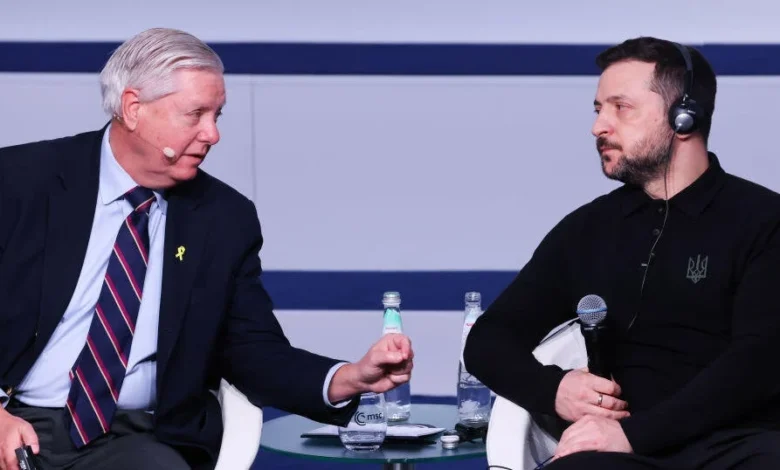
The United States House of Representatives approved a sweeping sanctions package targeting Russia and Iran on Wednesday, marking a significant legislative milestone in the final session before the November 2026 elections. The vote, which concluded with a tally of 262 to 159, represents the culmination of over a year of intense geopolitical negotiation. The bill, formally titled The Lindsey O. Graham Sanctioning Russia and Iran Act of 2026, now advances to the desk of President Donald Trump for his signature.
The legislation’s passage follows a contentious debate within the House, where Democratic leadership voiced strenuous objections regarding the expansion of executive branch powers. Despite these concerns, the bill secured bipartisan support, with 58 Democrats crossing party lines to join the Republican majority. Seven Republicans voted against the measure, reflecting a narrow but notable divide within the GOP regarding the economic implications of the bill’s tariff provisions.
The Legislative Path and Legacy of Senator Lindsey Graham
The momentum behind this legislation accelerated significantly following the sudden death of Senator Lindsey Graham in July 2026. A stalwart of foreign policy in the Senate, Graham had spearheaded the negotiations with the White House, aiming to create a robust economic deterrent against the continued Russian offensive in Ukraine. His final diplomatic mission, a visit to Kyiv, served as the catalyst for the finalized version of the bill.
The legislative chronology highlights the urgency felt by proponents:
- Summer 2025: Initial discussions begin in the Senate regarding enhanced sanctions on Russian energy buyers.
- July 2026: Senator Lindsey Graham passes away shortly after announcing a tentative deal with the White House.
- August 2026: The Senate passes the act with overwhelming bipartisan support.
- September 16, 2026: The House of Representatives holds a final vote, narrowly navigating a procedural hurdle before the legislative recess.
The bill’s namesake, Senator Graham, had long argued that traditional sanctions were insufficient to curb the flow of revenue to the Kremlin. By incorporating tariff authorities, the act seeks to provide the executive branch with "teeth" that are harder for international entities to circumvent.
Economic Mechanics and Strategic Scope
The core of the legislation revolves around the authorization for the President to impose tariffs of up to 100% on the world’s top five purchasers of Russian oil and natural gas. This is a significant escalation from existing sanction regimes, which typically focus on asset freezes or banking restrictions.
The act provides a specific carve-out for nations that demonstrate a commitment to energy independence. Countries importing less than 15% of their natural gas from Russia, provided they are taking "significant" steps to reduce that dependency, may be granted exceptions. This provision is designed to allow the U.S. to maintain diplomatic flexibility with European allies while strictly targeting major global buyers, such as China and India, which have remained primary consumers of Russian crude oil throughout the conflict.
According to data from the Centre for Research on Energy and Clean Air, China and India have become the primary lifelines for the Russian fossil fuel industry. While the European Union has made aggressive strides to decouple its economy from Russian gas, the global market remains saturated with Russian supply, keeping prices lower than they might otherwise be without these illicit or grey-market sales.
The Debate Over Executive Authority
The opposition from House Democratic leadership, including Minority Leader Hakeem Jeffries, Whip Katherine Clark, and Caucus Chair Pete Aguilar, focused not on the objective of punishing Russia, but on the potential for economic fallout. In their joint statement, the leaders expressed deep skepticism regarding the President’s discretion.
"The President has shown no willingness to be strong on Russia," the leaders stated. "He cannot be entrusted with new powers to impose tariffs that will further raise costs for American families."
This argument found resonance with progressive and moderate Democrats alike, who fear that granting the White House broad, unchecked tariff authority could lead to inflationary pressures. Reps. Gregory Meeks, Don Beyer, and Richard Neal articulated this concern in a separate statement, arguing that the administration already possesses sufficient authority to penalize Russia without creating a new, permanent expansion of presidential power that could affect domestic consumer prices.
Conversely, supporters of the bill, including Rep. Michael McCaul of Texas, argued that the urgency of the war in Ukraine necessitates unconventional measures. McCaul emphasized that the resilience of the Russian economy to previous rounds of sanctions has necessitated a shift in strategy. "As we’ve heard from President Zelenskyy’s team, you can evade sanctions, but you cannot evade tariffs," McCaul remarked during the floor debate.
Procedural Hurdles and Political Coalitions
The bill’s passage was not guaranteed. A procedural vote on Tuesday nearly derailed the effort as a faction of conservative members expressed hesitation, and the Democratic whip operation initially indicated widespread opposition. The survival of the bill was secured largely through the intervention of moderate Democrats, such as Rep. Jared Golden of Maine and Rep. Marie Gluesenkamp Perez of Washington.
Rep. Golden, speaking on the floor, noted the high stakes for Ukraine. "The stakes for Ukraine are too high to let this good bill die as a result of a procedural vote," he said. Rep. Gluesenkamp Perez highlighted the importance of standing by her constituents, many of whom have direct ties to the region.
Broader Implications and Future Outlook
The enactment of this legislation will fundamentally alter the landscape of U.S. foreign economic policy. By tying energy sanctions to tariff enforcement, the United States is essentially signaling a move toward a more protectionist and aggressive use of economic statecraft.
Key Implications:
- Global Energy Markets: If implemented in full, the threat of 100% tariffs could cause a major shift in global trade routes. Major oil-importing nations will face a stark choice: maintain current energy contracts with Russia and risk severe U.S. tariffs, or accelerate the transition to alternative suppliers.
- Executive-Legislative Relations: The debate over the scope of the President’s tariff power sets a precedent for future legislation. By granting this power, Congress is essentially delegating a significant portion of its constitutional mandate to regulate commerce to the executive branch.
- Support for Ukraine: The bill provides a clear diplomatic win for the Ukrainian government, which has long lobbied for more aggressive measures to dry up the funding sources for the Russian military. The support of President Volodymyr Zelenskyy was a decisive factor for many members of Congress who remained on the fence.
As the bill moves to the White House, the focus will shift to how the Trump administration intends to utilize the waiver authority provided in the text. The act allows the President to waive the sanctions if he certifies to Congress that it is in the national interest of the United States. This "off-ramp" is expected to be a focal point of future oversight hearings, particularly if the administration chooses not to enforce the tariffs against specific nations.
Ultimately, the passage of the Lindsey O. Graham Sanctioning Russia and Iran Act of 2026 signifies a bipartisan consensus—albeit a fragile one—that the current trajectory of the war in Ukraine requires a more aggressive economic response. Whether these new authorities succeed in curbing Russia’s war machine or result in the inflationary challenges warned of by opponents remains a central question for the coming year. For now, the legislation stands as a testament to the influence of the late Senator Graham and the enduring pressure on Congress to act decisively in an increasingly volatile global environment.