The Odyssey Receives Unexpected Endorsement from Ben Shapiro Amidst Conservative Backlash

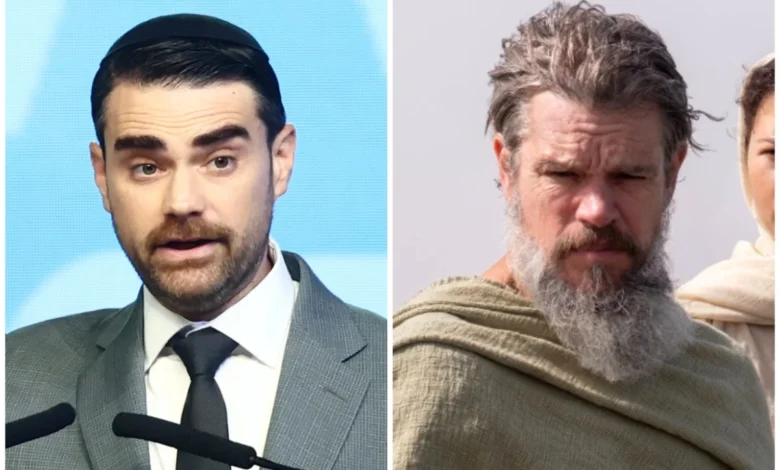
Conservative commentator Ben Shapiro has publicly lauded Christopher Nolan’s ambitious cinematic adaptation of Homer’s epic poem, “The Odyssey,” calling it a “masterpiece” in an 18-minute video review posted to his YouTube channel on Saturday. This endorsement comes as the film has ignited significant debate and criticism from various segments of the conservative online sphere, particularly concerning its casting choices and perceived deviations from historical accuracy. Shapiro’s assessment, however, stands in stark contrast to the prevailing outrage, offering a nuanced perspective that acknowledges both the film’s artistic merit and the controversies surrounding it.
Shapiro’s Defense of Nolan’s Vision
In his detailed review, Shapiro unequivocally praised Christopher Nolan’s directorial prowess, stating, “Nolan is unparalleled. He’s the best director working today, without a doubt. He just creates iconic movie after iconic movie.” This high praise sets the stage for his appreciation of the film’s broader artistic achievements. Shapiro’s positive remarks extended to the film’s central performance, with particular commendation for Matt Damon’s portrayal of the titular hero, Odysseus. “I think he’s great in nearly everything. He sort of disappears into the part in a way that he doesn’t in a lot of other movies. He’s great as Odysseus,” Shapiro remarked, highlighting Damon’s ability to embody the complex character.
The commentary also delved into the supporting cast, with Shapiro expressing strong approval for several key actors. Robert Pattinson was lauded for his role as Antinous, described as an “excellent antagonist. He’s sleazy and gross.” Tom Holland’s performance as Telemachus was deemed “excellent, well cast,” and Anne Hathaway received praise for her depiction of Penelope. These specific acknowledgments underscore Shapiro’s appreciation for the ensemble’s contribution to the film’s overall impact.
Addressing Casting Controversies
A significant portion of Shapiro’s review was dedicated to directly confronting the conservative criticisms surrounding the film’s casting, most notably the decision to cast Lupita Nyong’o as Helen of Troy. He addressed the outcry that Nyong’o’s appearance did not align with traditional depictions or perceived Greek ethnicity, stating, “So, I know a lot of people were like, ‘Oh my god, Lupita Nyong’o is supposed to look like Diane Kruger.’ I don’t know. Diane Krueger doesn’t look very Greek. She’s German.” Shapiro then defended Nyong’o’s casting by emphasizing her beauty and by referencing the film’s narrative justification for the casting. “Lupita Nyong’o is a beautiful woman. But here’s the thing, actually, in the script, Nolan goes out of his way to explain that the war wasn’t really launched over Helen being gorgeous.” This point suggests that Nolan’s interpretation of the epic may prioritize thematic resonance over strict visual adherence to ancient conventions, a narrative strategy Shapiro found compelling.
However, Shapiro did express reservations about one particular casting choice: Elliot Page as Sinon. He characterized Page’s role as an “absolute puzzler,” citing the actor’s physical stature and vocal characteristics as incongruous with the character. “He is about 5’2 and 105 pounds soaking wet and has the voice of a woman. It doesn’t work,” Shapiro stated, indicating a specific point of artistic contention for him within an otherwise positive review.
Nolan’s Stance on Backlash
Christopher Nolan himself has addressed the online furor surrounding “The Odyssey,” including criticisms from prominent figures like Elon Musk. In a recent interview with The Telegraph, Nolan expressed a sense of detachment from such backlash, framing it as an inherent aspect of creating large-scale cinematic projects. “Online backlash comes with the territory,” he explained. He drew a parallel to his experience with the Batman trilogy, stating, “Remember, I spent 10 years of my life dealing with Batman. When I came on ‘Begins,’ writers and artists had been working on this beloved character for almost 65 years, and a lot of freighted thoughts were out there about what he represents. And what I learnt over my time on that trilogy is you can’t worry about any of that at all. What you have to do is honor the original text by interpreting it in the strongest way you personally can.” This perspective suggests that Nolan views such criticism as noise that can be disregarded in favor of artistic integrity and personal interpretation of source material.
The Odyssey: A Cultural Touchstone and Modern Adaptation
Homer’s “The Odyssey,” an ancient Greek epic poem, has been a cornerstone of Western literature for millennia. It recounts the arduous ten-year journey of Odysseus, King of Ithaca, as he strives to return home after the Trojan War. The poem is celebrated for its intricate narrative, its exploration of themes such as loyalty, perseverance, temptation, and the human condition, and its vivid characterizations. Over centuries, “The Odyssey” has been translated, retold, and reinterpreted in countless forms, each reflecting the cultural and societal values of its time.
Christopher Nolan’s decision to adapt this seminal work into a modern film represents a significant undertaking, aiming to bridge the gap between ancient mythology and contemporary audiences. The epic scale of the original narrative, with its divine interventions, mythical creatures, and profound human struggles, presents both immense opportunities and considerable challenges for cinematic translation. Nolan, known for his intellectually stimulating and visually spectacular films such as “Inception,” “Interstellar,” and “Dunkirk,” brings his signature approach to complex storytelling and grand-scale filmmaking to this project.
The Landscape of Conservative Critique and Modern Hollywood
The conservative backlash against “The Odyssey” reflects a broader trend of scrutiny directed at major Hollywood productions. In recent years, certain conservative commentators and audiences have voiced concerns about what they perceive as a proliferation of “woke” ideology, identity politics, and historical revisionism in mainstream entertainment. These criticisms often center on casting choices that deviate from traditional portrayals of characters, particularly when it involves diversifying established roles. The argument frequently posits that such casting is driven by social agendas rather than artistic merit or faithfulness to source material.
However, defenders of these casting decisions argue that they reflect a more inclusive and representative modern society, and that artistic interpretation should not be constrained by outdated notions of ethnicity or appearance. They contend that the power of storytelling lies in its ability to reimagine and broaden perspectives, and that diverse casting can bring new depth and relevance to classic narratives. The debate surrounding “The Odyssey” thus becomes a microcosm of this larger cultural conversation about representation, artistic freedom, and the evolving standards of cinematic storytelling.
The Significance of Ben Shapiro’s Review
Ben Shapiro’s endorsement of “The Odyssey,” particularly in light of his conservative platform, carries significant weight. While he remains a prominent voice within conservative circles, his willingness to praise a film that has drawn fire from some within those same circles suggests a degree of intellectual independence. His detailed breakdown of the film’s strengths, including Nolan’s direction and key performances, provides a counter-narrative to the prevailing criticism. By acknowledging the film’s artistic achievements and offering specific defenses against common objections, Shapiro’s review challenges the monolithic nature of some conservative critiques and highlights the possibility of nuanced appreciation across ideological divides.
His specific criticism of Elliot Page’s casting, however, indicates that his endorsement is not unqualified. This allows for a more balanced perception of his review, suggesting that his praise is rooted in genuine artistic appreciation rather than a wholesale endorsement of every aspect of the film. This distinction is important in understanding the complexities of contemporary cultural commentary, where even within specific ideological frameworks, individual opinions can diverge.
Broader Implications and Future Reception
The debate surrounding “The Odyssey” and Ben Shapiro’s review has broader implications for how films are discussed and received in the current media landscape. It underscores the power of online platforms like YouTube to shape public discourse and provides a platform for diverse voices to engage with cinematic works. Furthermore, it highlights the ongoing tension between artistic vision and audience expectations, particularly when dealing with highly revered source material.
Christopher Nolan’s consistent success in delivering blockbuster films that also spark intellectual discussion suggests a unique ability to navigate these complex waters. His measured response to criticism, emphasizing artistic integrity and personal interpretation, aligns with a long tradition of creative reinterpretation that has kept classic narratives alive and relevant. As “The Odyssey” continues its theatrical run and eventual release on home platforms, its reception will likely remain a subject of considerable debate, reflecting not only the film’s artistic merits but also the evolving cultural dialogue surrounding representation and interpretation in Hollywood. The fact that a prominent conservative commentator like Ben Shapiro has publicly championed the film, despite its controversies, suggests that its impact may extend beyond its immediate critical and commercial performance, fostering a more layered and potentially less polarized discussion about its place in contemporary cinema.