Gene Schwam, the veteran Hollywood publicist who shaped the careers of legends from Elvis Presley to Julie Andrews, has died at the age of 96.

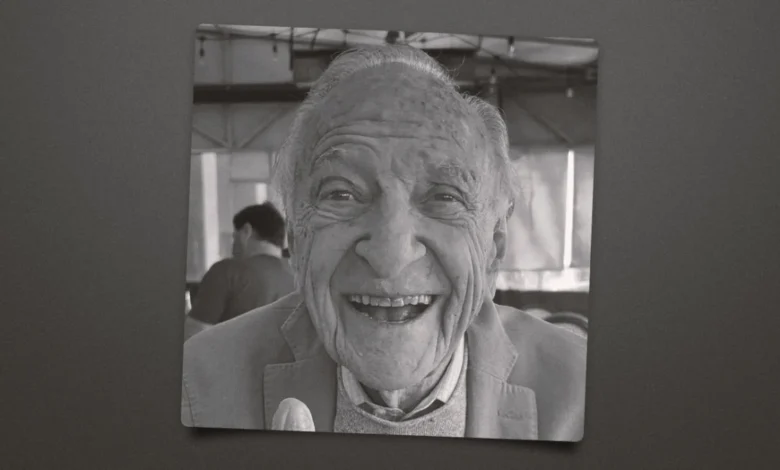
The passing of Gene Schwam, which occurred this past Friday in Los Angeles following a brief illness, marks the conclusion of a career that spanned more than six decades of seismic shifts in the entertainment industry. Schwam was a bridge between the Golden Age of Hollywood and the modern era of celebrity management, a figure whose influence extended far beyond the press releases and red-carpet campaigns he masterminded.
The Architect of Stardom: A Career Chronology
Gene Schwam’s entry into the world of publicity was rooted in the pragmatic, post-war era of the 1950s. In 1954, Schwam was earning a modest salary of $35 per week while working under fellow publicist Stanley Cowan. Recognizing that the traditional agency structure was limiting his potential, Schwam made the pivotal decision to venture out on his own.
In 1955, he partnered with Adeline Hanson to establish Hanson & Schwam Public Relations. This launch occurred during a transitional period for the industry, as television began to challenge the absolute dominance of the studio system. The firm initially focused on the hospitality and nightlife sectors, representing local restaurants and musicians. This foundation was vital, as it taught Schwam the importance of relationship management—a skill that would later become the hallmark of his success.
As the agency grew, it pivoted toward the burgeoning television and recording industries. The roster quickly expanded to include high-profile talent such as Nancy Wilson and Lou Rawls, and the firm became a fixture in the Hollywood social scene through its management of the legendary Cocoanut Grove nightclub. By the 1960s and 1970s, Schwam had solidified his reputation as a "fixer" and a strategic advisor, working with a pantheon of stars including Elvis Presley, Judy Garland, Julie Andrews, Barbara Eden, and Blake Edwards.
Strategic Philosophy: Who Knows You
Schwam’s approach to publicity was often counterintuitive to those who viewed the profession as a game of aggressive promotion. In an extensive interview with The Hollywood Reporter in April 2021, Schwam distilled his philosophy into a singular, defining maxim: "There’s a mistake people make when they think it’s about who you know in Hollywood, but it isn’t about that—it’s about who knows you."
This perspective reflected a career built on the cultivation of long-term professional intimacy. Schwam did not merely promote his clients; he acted as a custodian of their public image. His methodology relied on the "reverse-engineering" of success. "Begin with the end of the game and work your way backward," he explained. "Figure out what it is that we want to do, such as win an Oscar, then we figure out how to get there."
This analytical, goal-oriented approach differentiated him from the more transactional publicists of his era. Schwam emphasized that in a personal service business, growth was not derived from digital marketing or cold-calling, but from the power of the referral—a testament to the trust he maintained with his clients over decades.
A Legacy of Collaboration: The Blake Edwards Connection
Perhaps no professional relationship better illustrated the depth of Schwam’s influence than his long-standing partnership with director Blake Edwards. Their bond was so profound that it transcended the typical client-agent dynamic, evolving into a genuine, decades-long friendship.
The depth of this relationship was immortalized in Edwards’ 1981 satirical comedy, S.O.B., which offered a biting critique of the Hollywood system. The character of the publicist in the film was explicitly inspired by Schwam, a meta-commentary that highlighted the publicist’s role as the person who navigated the chaotic machinery of the studio system on behalf of the creative visionaries. This connection serves as a historical marker for the era, capturing the symbiotic—and often fraught—relationship between filmmakers and the PR apparatus that marketed their work.
Beyond the Silver Screen: Humanity 101
While his professional legacy is firmly rooted in the entertainment industry, Schwam’s later years were defined by a commitment to social ethics through his creation of "Humanity 101." An initiative under the umbrella of Arizona State University’s Project Humanities, the program was designed to instill core values in the public consciousness, specifically focusing on compassion, empathy, forgiveness, integrity, kindness, respect, and self-reflection.
This endeavor reflected a shift in Schwam’s priorities during his twilight years. Having spent a lifetime navigating the often-cutthroat environment of Hollywood, he sought to apply his communication skills toward the betterment of human discourse. His involvement in academia served as a bridge between his past as a PR mogul and his future as a humanitarian advocate, demonstrating an evolution from managing reputations to cultivating character.
Implications and Industry Impact
The passing of Gene Schwam signals the end of a specific archetype in Hollywood public relations. Today’s PR landscape is dominated by multinational conglomerates, social media algorithms, and data-driven metrics. In contrast, Schwam’s success was rooted in the "personal service" model, where the strength of a handshake and the reliability of a referral were the ultimate currencies.
Industry analysts note that while the tools of the trade have changed, the fundamental principles Schwam championed—strategic planning and the "who knows you" ethos—remain relevant. His ability to manage icons as diverse as Elvis Presley and Julie Andrews speaks to an adaptability that is rare in any industry. By shifting from the high-pressure environment of the 1950s and 60s to the reflective, ethical focus of his later years, Schwam proved that the skills of a publicist—storytelling, audience analysis, and relationship building—could be applied to any sector, including social activism.
Family and Final Arrangements
Gene Schwam’s impact extended to his personal life, where he is survived by a close-knit family. He leaves behind his wife, Myrna Schwam, his daughter, Stephanie Schwam Adams, his stepchildren, Adam London, Greg London, and Linda London, and four grandchildren.
The tributes currently emerging from the entertainment community underscore the respect in which he was held. Unlike many behind-the-scenes figures who are eventually forgotten by the public, Schwam remained an active participant in the industry discourse until the end of his life. His 2021 interview remains a key reference for scholars and professionals interested in the history of public relations, serving as a masterclass in professional development.
Analysis of the "Schwam Method"
When reviewing the career of a figure like Schwam, one must analyze the efficacy of his methods in the context of the 20th-century entertainment explosion. In the 1950s and 60s, Hollywood was a centralized power structure. A publicist’s influence was measured by their access to the print media—the Los Angeles Times, Variety, The Hollywood Reporter, and the major columnists of the time.
Schwam’s success was predicated on his ability to curate access. He understood that a star’s value was not merely talent, but the perception of that talent in the public eye. By focusing on the "end game," he ensured that his clients were positioned for longevity rather than fleeting fame. This is perhaps why he was able to represent such a diverse array of talent; he understood the unique branding requirements of a musician like Lou Rawls versus the dramatic requirements of an actor like Gene Barry.
Conclusion
Gene Schwam lived through almost every significant development in the history of modern American entertainment. From the rise of the television age to the dawn of the internet, he adapted, thrived, and remained a constant, steady hand for some of the world’s most famous individuals. His life serves as a case study in the power of professional integrity.
As the industry continues to evolve, the lessons provided by Schwam—the importance of long-term strategy, the necessity of personal reputation, and the value of human-centric communication—remain foundational. He leaves behind a legacy of not only professional success but also a commitment to the very qualities he championed in his final years: kindness, empathy, and integrity. He was, in every sense of the word, a legend of the public relations industry, and his absence will be felt by those who understand the true architecture of Hollywood fame.