Congressional stalemate over artificial intelligence safeguards stalls legislative progress as midterm pressures mount

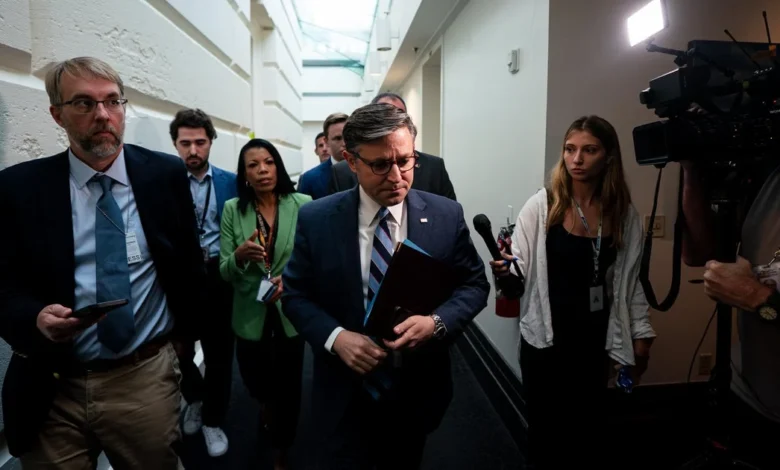
The intersection of rapidly advancing artificial intelligence technology and the legislative machinery of the United States government has reached a critical juncture. As the House of Representatives prepares to enter a recess period stretching through early November, a vocal coalition of Democratic lawmakers is mounting an urgent campaign to compel Speaker Mike Johnson to postpone the break. Their objective is to force a floor vote on a suite of comprehensive AI safety measures, arguing that the technological landscape is evolving with such velocity that congressional inaction poses an existential risk to public safety, economic stability, and national security.
The standoff highlights a profound divide in Washington regarding the role of government in regulating frontier technologies. While proponents of immediate action emphasize the need for transparency, auditing, and emergency "kill switches" to prevent catastrophic system failures, House leadership and the Trump administration are prioritizing American competitiveness, specifically in relation to the ongoing geopolitical rivalry with China.
The Legislative Impasse and the Call for Action
The push for legislative intervention is being spearheaded by a group of House Democrats who issued a formal statement this week, underscoring the urgency of the moment. "Reasonable minds may disagree about precisely how Congress should regulate this rapidly evolving technology. We cannot disagree about the imperative for Congress to act," the group stated. Their proposal for a delay in the recess is intended to create a window of opportunity to codify safety standards before the technology reaches a point of no return.
The legislative proposals currently under consideration are broad in scope. They range from mandatory algorithmic transparency reports and third-party security audits to the implementation of a federal oversight body. More controversial proposals, such as Senator Bernie Sanders’ call for a complete pause on the development of superintelligent AI, have gained traction among certain segments of the Democratic party. Sanders argues that without federal safety rules, the uncontrolled growth of artificial intelligence could lead to unforeseen societal disruptions, including mass labor displacement and the amplification of disinformation.
The Administration’s Stance: Competitiveness Above Oversight
Speaker Mike Johnson has remained steadfast in his refusal to truncate the legislative calendar, citing the dangers of reactive policy-making. During an appearance on CNN’s State of the Union, Johnson articulated a perspective shared by many in the current administration: that hurried regulation could inadvertently handicap the United States in the global race for technological supremacy.
"If Congress just races in and does some sort of emergency session to try to regulate AI, we will lose the race to China, and that is a threat to every single American," Johnson warned. This sentiment was echoed by President Trump, who dismissed the alarmist rhetoric from some industry leaders during a recent press engagement at his golf course in Ireland. Trump framed the development of AI as a zero-sum game, asserting that the United States must maintain its status as the world’s most sophisticated technological power.
"Whoever wins AI wins," the President told reporters, downplaying the risks cited by tech executives and suggesting that the negative voices currently dominating the discourse are counterproductive to national interests. While the administration has clarified that it is not ignoring potential risks, it has consistently signaled a preference for market-driven solutions over heavy-handed federal intervention.
The Role of Industry and the "Self-Regulation" Debate
A key figure in the administration’s approach is former AI czar David Sacks, who has advocated for a hands-off regulatory philosophy. Sacks has publicly urged major AI developers to move forward with their research and safety protocols independently, stating, "I support your decision to be responsible, but stop pretending you need anyone else’s permission."
This philosophy of self-regulation stands in stark contrast to the views held by many civil society organizations and a growing number of lawmakers who argue that private companies cannot be expected to prioritize public safety over profit motives. The debate is expected to intensify as the White House prepares for a high-stakes summit next week between President Trump and Chinese President Xi Jinping. With the competition between the two nations reaching a boiling point, the question of who sets the global standards for AI governance has moved to the forefront of international diplomacy.
Campaign Trail Implications and Political Polarization
The impasse in Congress is increasingly spilling over into the 2026 midterm election cycle. As the political stakes rise, the issue of AI governance is being used as a wedge to highlight the perceived failures of current leadership. Former President Barack Obama, speaking at a fundraiser alongside House Democratic Leader Hakeem Jeffries, emphasized that while AI offers significant benefits, its development in private hands requires robust oversight to prevent potential dangers.
Democratic Senate candidate for Michigan, Abdul El-Sayed, has emerged as one of the most prominent voices calling for a fundamental shift in policy. During a recent appearance on Face the Nation, El-Sayed threw his support behind Senator Sanders’ proposal for a moratorium on frontier AI research. "We need to act, and we need to act now," El-Sayed argued, emphasizing the necessity of public oversight to ensure that technological advancements are aligned with democratic values and safety protocols.
Chronology of Recent Developments
The current tension is the result of months of accelerating developments:
- Mid-2026: Leading AI firms announce breakthroughs in "frontier models," leading to a surge in public concern and congressional inquiries.
- August 2026: A bipartisan group of lawmakers begins drafting legislation aimed at creating a federal regulatory framework for large language models and autonomous systems.
- Early September 2026: Industry leaders testify before Congress, offering conflicting views on the necessity of government oversight, with some requesting clear rules and others urging caution.
- September 14, 2026: House Democrats formally request an extension of the legislative session to address the AI crisis, meeting immediate resistance from House leadership.
- Upcoming: President Trump and President Xi Jinping are scheduled to meet to discuss, among other topics, the ethical and security implications of AI development.
Analytical Perspective: The Economic and Security Trade-Off
The fundamental challenge for policymakers is the "trilemma" of AI governance: balancing innovation, national security, and safety.
- Innovation: Excessive regulation risks stifling the startups and research institutions that drive economic growth. The United States’ technological lead is built on an ecosystem that rewards risk-taking and rapid deployment.
- National Security: As Speaker Johnson noted, the race against China is a primary driver of government policy. Any slowdown in domestic AI development could cede the advantage to an adversary that may not adhere to the same ethical or safety constraints.
- Safety: The risks associated with advanced AI—ranging from cybersecurity vulnerabilities and automated weaponry to the manipulation of democratic discourse—are tangible and growing.
The current congressional paralysis reflects the difficulty of finding a middle ground. While proponents of regulation point to the potential for catastrophic failure, critics of regulation point to the catastrophic cost of losing the technological edge.
Future Outlook
As the recess approaches, the window for legislative action in the current session is rapidly closing. Whether the pressure from the Democratic caucus will be sufficient to sway Speaker Johnson remains to be seen. If no action is taken before the November return, the debate is expected to become a central theme of the midterm campaigns.
The outcome of the Trump-Xi summit will likely provide further context for the administration’s strategy. If the two leaders reach a bilateral understanding or a framework for cooperation, it could potentially lower the temperature of the domestic debate. However, if the summit results in further escalation of the AI arms race, the call for immediate, restrictive legislation will almost certainly intensify, setting the stage for a dramatic post-recess legislative session.
In the absence of federal action, the burden of setting standards may fall to the private sector and individual state legislatures, creating a patchwork of rules that could complicate the regulatory landscape for years to come. For now, the nation watches as its representatives grapple with a technology that is fundamentally transforming the fabric of modern society, while the clock ticks down on the current legislative window.