The federal crackdown on organized insurance fraud in Louisiana reached another milestone as a former personal injury attorney was handed a significant prison sentence for his role in orchestrating a widespread staged-collision ring. Danny Patrick Keating Jr., once a licensed lawyer operating in the greater New Orleans area, was sentenced to two years and eight months—totaling 32 months—behind bars for his direct involvement in a criminal conspiracy designed to milk insurance companies and commercial trucking enterprises through fabricated traffic accidents.
U.S. District Judge Nannette Jolivette Brown, presiding in the U.S. District Court for the Eastern District of Louisiana, delivered the sentence following Keating’s earlier guilty plea. In addition to his prison term, Keating faces three years of mandatory supervised release upon his eventual discharge. Furthermore, the court ordered the disgraced attorney to pay $657,405 in financial restitution to the victims of the fraud, alongside a $100 special assessment fee. The sentencing underscores the aggressive stance federal prosecutors and judicial authorities are taking against professional intermediaries who exploit the legal system to facilitate large-scale financial crimes.
The Case Against Danny Patrick Keating Jr.
The legal downfall of Danny Patrick Keating Jr. is part of a sprawling federal investigation that has steadily dismantled organized insurance fraud rings operating within Louisiana. According to court documents and statements released by the office of U.S. Attorney David I. Courcelle, Keating actively participated in a scheme that systematically targeted commercial 18-wheelers and large transport trucks.
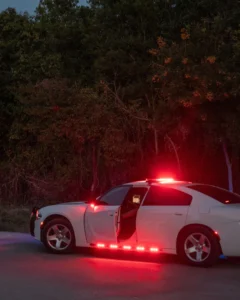
Rather than relying on legitimate legal practice, Keating utilized his position as an officer of the court to legitimize fraudulent claims. Prosecutors established that Keating paid off associates who functioned as recruiters and organizers. These individuals were tasked with deliberately driving vehicles into the paths of commercial semi-trucks, executing sudden, calculated maneuvers to cause collisions, and subsequently bailing out of the cars or shifting drivers to place accomplices behind the wheel before law enforcement arrived on the scene.
Once the staged crashes were documented by local police reports—which often lacked the context of the premeditated nature of the collisions—Keating stepped in to represent the individuals riding in the struck vehicles. He filed numerous lawsuits in both Louisiana state and federal courts, masking the fraudulent nature of the claims behind the veneer of routine personal injury litigation. To secure payouts, Keating knowingly coached his clients, coaching them to provide false testimony during depositions regarding the nature of the accidents, their purported injuries, and the extent of their subsequent medical treatments.
Chronology of the Investigation and Legal Proceedings
The trajectory of Keating’s legal troubles spans several years, mapping out a slow but deliberate path toward accountability within the federal judicial system.
November 2020: A federal grand jury formally indicted Danny Patrick Keating Jr., bringing his illicit activities to light in a public charging document that detailed systemic fraud within his personal injury practice. The indictment shocked elements of the local legal community, as it exposed how deeply compromised certain legal practices had become in the region.
June 2021: Recognizing the weight of the evidence compiled against him by federal investigators, Keating appeared in court to enter a formal plea of guilty. He admitted to one count of conspiracy to commit mail and wire fraud, acknowledging that he coordinated with intermediaries, filed fraudulent civil lawsuits, and presented fabricated claims to insurance carriers.
October 2023 through September 2026: As the broader federal probe, often colloquially tracked under code names like "Operation Sideswipe," continued to unfold, Keating’s sentencing was pushed through various procedural stages. During this multi-year interim, Keating officially resigned from the practice of law, surrendering his credentials to avoid disbarment proceedings while awaiting his final day in court.
October 16, 2026: The U.S. Attorney’s Office for the Eastern District of Louisiana issued a comprehensive public update outlining the finalized parameters of the investigation’s ongoing sentencing phase, highlighting Keating as a prime example of an attorney who crossed ethical and criminal lines.
October 23, 2026: Judge Nannette Jolivette Brown formally handed down the 32-month prison sentence, finalizing the criminal chapter of Keating’s professional collapse.
Financial Scope and Broader Operational Metrics
The scale of the operation run by Keating and his co-conspirators highlights the lucrative nature of systemic insurance fraud, as well as the devastating financial toll it imposes on commercial enterprises, transportation companies, and consumers alike.
According to investigative findings presented by federal prosecutors, Keating’s involvement extended across dozens of distinct fraudulent incidents:
- Thirty-One Collisions: Keating admitted to utilizing his network to stage a total of 31 deliberate traffic accidents involving commercial trucks.
- Seventy-Seven Plaintiffs: Across these incidents, Keating officially represented 77 distinct plaintiffs who claimed to have sustained severe physical injuries and emotional trauma.
- Seventeen Resolved Claims: Of the 31 staged crashes, Keating successfully pushed through and resolved claims for 17 of the incidents before federal intervention halted the pipeline.
- $1.5 Million in Settlements: Through these 17 resolved matters, Keating and his clients managed to extract approximately $1.5 million in settlement payouts from commercial trucking insurance carriers.
- $358,000 in Attorney’s Fees: For his role in organizing, filing, and prosecuting the fraudulent claims, Keating personally lined his pockets with roughly $358,000 in legal fees derived directly from the illicit settlements.
The broader federal sweep of which Keating’s case is a part remains one of the most comprehensive insurance fraud crackdowns in modern Louisiana legal history. As of the latest updates from the U.S. Attorney’s Office, a staggering 63 distinct defendants have been criminally charged in connection with the sprawling staged collision conspiracy. These defendants include not only lawyers like Keating, but also commercial truck drivers who acted as willing participants, organizers who coordinated the logistics of the crashes, and medical providers who allegedly billed for treatments that were either inflated or never rendered at all.
Official Responses and Legal Representation
The investigation and subsequent prosecution have been spearheaded by the U.S. Attorney’s Office for the Eastern District of Louisiana, in close collaboration with federal investigative agencies, including the Federal Bureau of Investigation (FBI) and the National Insurance Crime Bureau (NICB).
Attempts by journalistic entities, including Law360, to secure immediate comments from the U.S. Attorney’s Office regarding the finer operational details of the sentencing yielded no immediate statements beyond the official press releases. Similarly, defense counsel for Keating—represented by attorney Brian J. Capitelli of the prominent New Orleans firm Capitelli & Wicker—was approached for a statement regarding whether an appeal would be pursued or if his client expressed remorse beyond the mandatory courtroom admissions. No response was provided by the defense team prior to publication.
Legal analysts note that in high-profile white-collar and fraud cases of this magnitude, attorneys defending individuals who have already entered guilty pleas typically focus on securing downward departures in sentencing guidelines, highlighting cooperation, lack of prior criminal history, or personal rehabilitation efforts. However, the severity of Judge Brown’s 32-month sentence indicates that the court viewed Keating’s breach of professional responsibility as an aggravating factor that warranted significant incarceration rather than mere probation or home confinement.
Broader Impact and Implications for Personal Injury Law
The prosecution of Danny Patrick Keating Jr. serves as a watershed moment for the legal profession, particularly within states like Louisiana that have historically struggled with high auto insurance rates driven, in part, by excessive litigation and fraudulent claims.
Insurance industry watchdogs and transportation associations have long pointed out that Louisiana—and the New Orleans metropolitan area in particular—ranks among the most expensive jurisdictions in the United States for commercial auto insurance. Industry stakeholders frequently attribute these inflated premiums to the prevalence of aggressive personal injury advertising, litigious environments, and, most damagingly, organized criminal rings that treat public roadways as profit centers by engineering collisions with vulnerable heavy-duty trucks.
When a licensed attorney participates in a fraud ring, the ramifications extend far beyond the immediate financial losses suffered by insurance companies. It inflicts severe collateral damage on the public trust, degrades the integrity of the judicial system, and casts an unwarranted shadow of suspicion over honest, hardworking personal injury attorneys who zealously represent genuinely injured clients every day.
Legal ethics experts emphasize that attorneys are bound by strict oaths to uphold the Constitution, respect the rule of law, and maintain absolute honesty in their dealings with tribunals. By conspiring to present fabricated evidence, suborn perjury from clients, and exploit the court system to launder illegitimate insurance payouts, Keating fundamentally violated the core tenets of the legal profession.
As federal authorities continue to comb through the remaining strands of the multi-defendant investigation, the message to the legal community is unmistakable. The federal government’s willingness to pursue criminal indictments against attorneys who cross the ethical line demonstrates that a law degree does not provide immunity from prosecution. Instead, courts appear increasingly inclined to impose harsher penalties on professionals who abuse their specialized knowledge and officers-of-the-court status to perpetrate systemic fraud against the public.