Renowned Chinese Filmmaker Zhang Yimou Appointed as Jury President for the 2026 Busan International Film Festival Main Competition

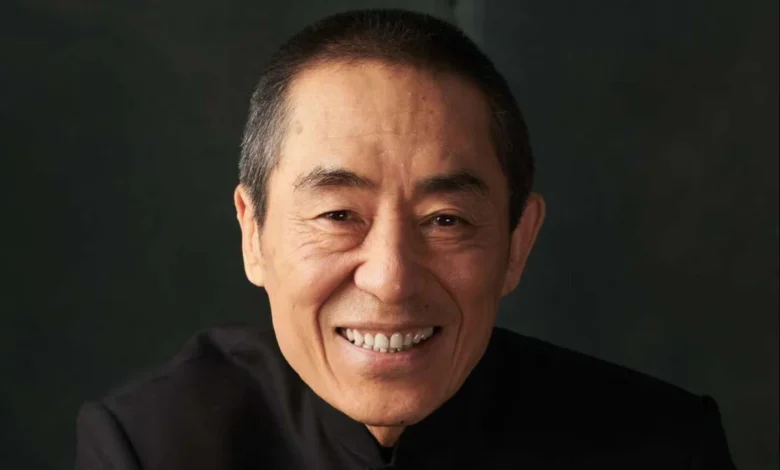
The 31st edition of the Busan International Film Festival (BIFF) has officially announced that acclaimed Chinese director Zhang Yimou will serve as the Jury President for its flagship main competition section. The festival, which stands as one of Asia’s most prestigious cinematic gatherings, is scheduled to run from October 6 to October 15, bringing together international filmmakers, industry professionals, and cinephiles from around the globe. Zhang’s appointment places a towering figure of world cinema at the helm of a high-stakes judging panel tasked with evaluating some of the most anticipated international feature films of the year.
Alongside Zhang, BIFF organizers have unveiled a diverse and accomplished international jury panel representing the pinnacle of contemporary global filmmaking. The jury includes fellow Chinese filmmaker Bi Gan, whose 2025 feature Resurrection competed in Busan last year, and South Korean actress Moon Choi, celebrated for her dual roles in producing and acting in Bedford Park, which is slated for screening at this year’s festival. The panel is further strengthened by the inclusion of Japanese director Kei Ishikawa, known for A Pale View Of Hills; South Korean director July Jung, director of Dora; Vietnamese producer Tran Thi Bich Ngoc, celebrated for Skin Of Youth; and acclaimed Kazakh actress Samal Yeslyamova, internationally recognized for her harrowing and award-winning performance in Ayka.
This distinguished assembly of cinematic minds will be tasked with viewing a previously announced competition selection consisting of 13 carefully curated feature films. The jury will evaluate these works across five distinct competitive categories: Best Film, Best Director, Special Jury Prize, Best Actor, and Artistic Contribution. Winners will share a total cash prize pool of $80,000, equivalent to approximately 110 million South Korean Won, providing vital financial support and international recognition to the victorious filmmakers and their respective projects.
Evolution of the Busan International Film Festival Main Competition
The inclusion of a robust, fully-fledged competition section is a relatively recent structural milestone for the Busan International Film Festival, having been introduced for the first time just last year. During the inaugural competition cycle, Chinese director Zhang Lu’s celebrated feature Gloaming In Luomu captured the coveted Busan Award for Best Film, setting a high standard for subsequent years.
The introduction of the competition section was designed to elevate Busan’s status from a premier exhibition and networking hub—often dubbed Asia’s Cannes—into a major competitive launchpad for global art-house and independent cinema. By securing luminaries like Zhang Yimou to lead the jury, festival organizers continue to signal their commitment to artistic excellence and global prestige, drawing intense media scrutiny and international participation to the coastal South Korean metropolis.
Significant Oscars Impact and Regulatory Changes
A monumental development accompanying this year’s festival is the recent shift in Academy Awards criteria, which significantly magnifies the stakes for films participating in the Busan competition. In May, the Academy of Motion Picture Arts and Sciences introduced crucial modifications to the criteria for the Best International Feature Film category at the Oscars. Under these updated guidelines, films that capture the Best Film Award at select premier international festivals—including the Busan International Film Festival—will now be automatically submitted to the Best International Feature category.
This regulatory evolution transforms Busan from a regional powerhouse into a direct, vital gateway to the Academy Awards. Winning the top honor in Busan no longer merely brings prestige and a cash prize; it now offers a streamlined, highly coveted pathway toward the global industry’s ultimate accolade. Consequently, filmmakers competing under Zhang Yimou’s watchful eye carry the potential weight of an Oscar campaign, a factor that is expected to drastically heighten competition among the selected 13 feature films.
Comprehensive Jury Lineups Across Festival Sections
Beyond the main competition, the Busan International Film Festival has finalized the composition of several other vital juries presiding over its specialized sections. The Vision and Asia section, dedicated to spotlighting emerging cinematic voices from across the continent, has appointed specialized panels to oversee distinct honors.
The Network for the Promotion of Asian Cinema (NETPAC) jury will comprise Nina Kochelyaeva, Matthew Poon, and Lee Dongha. Simultaneously, the International Federation of Film Critics (FIPRESCI) jury brings together Ma Xingxu, Teresa Vena, and Roh Chul-Hwan to evaluate cutting-edge independent storytelling.
In the realm of documentary filmmaking, the BIFF Mecenat Award jury for the Feature Documentary Competition features a stellar international lineup consisting of Rintu Thomas, Kim Taeil, and Zhou Hao. Meanwhile, the prestigious Sonje Award Jury, which honors outstanding short films, will be decided by Anuparna Roy, Abinash Bikram Shah, and Lee Ranhee. Each of these independent juries underscores the festival’s comprehensive approach to celebrating every facet of cinematic creation, from sweeping feature narratives to incisive documentaries and intimate short-form storytelling.
Historical Context and the Legacy of Zhang Yimou
To fully understand the significance of Zhang Yimou’s appointment, one must examine his monumental contributions to global cinema. Emerging as a leading figure of China’s "Fifth Generation" of filmmakers in the 1980s, Zhang first gained international acclaim as a cinematographer and actor before directing masterworks such as Red Sorghum (1987), which won the Golden Bear at the Berlin International Film Festival.
Over a career spanning more than four decades, Zhang has consistently bridged the gap between intimate, human-centric historical dramas and breathtaking martial arts epics. Films like Raise the Red Lantern (1991), The Story of Qiu Ju (1992), Hero (2002), and House of Flying Daggers (2004) not only dominated the international box office but also redefined the visual lexicon of Asian cinema. His presence as Jury President brings an unparalleled level of critical authority, aesthetic discernment, and historical understanding to the Busan deliberations.
Industry Implications and Future Outlook
The convergence of top-tier talent, a lucrative prize pool, newly minted Oscar qualification pathways, and the leadership of Zhang Yimou positions the 31st Busan International Film Festival as one of the most critical cinematic events of the decade. Industry analysts note that as traditional distribution models shift, regional festivals holding direct pathways to major international awards are becoming increasingly indispensable for independent filmmakers seeking global visibility.
As filmmakers, producers, and critics prepare to descend upon Busan this October, expectations are exceptionally high. The decisions made by Zhang Yimou and his fellow jurors will not only crown the cinematic achievements of the year but may very well chart the course for the upcoming Academy Awards race, cementing Busan’s status as an absolute epicenter of global film culture.
Related posts: