Barbara Barrie, Oscar Nominee, Tony Nominee, and Barney Miller Star, Dies at 95

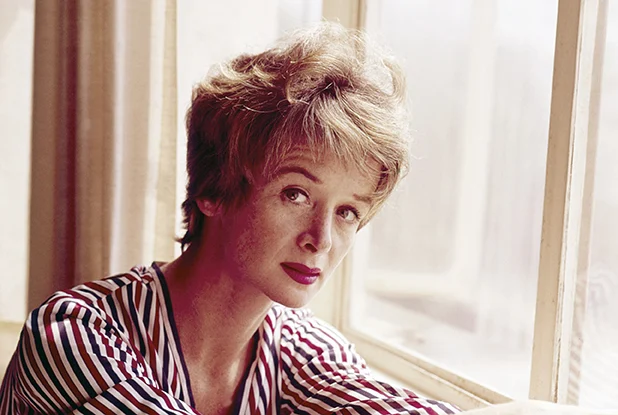
Barbara Barrie, a versatile and esteemed actress whose remarkable career spanned stage, film, and television, passed away today at her home in Manhattan at the age of 95. Her death was confirmed to The New York Times by her daughter, Jane Harnick, who stated that the cause was medically assisted following a diagnosis of terminal cancer.
Throughout a career that stretched across more than half a century, Barrie earned critical acclaim and mainstream recognition across multiple mediums. She achieved the rare distinction of receiving major accolades in both film and theater, securing an Academy Award nomination for her poignant work in the 1979 coming-of-age film Breaking Away and a Tony Award nomination for her performance in the original 1970 Broadway production of Stephen Sondheim’s landmark musical Company. To television audiences, she became a familiar and beloved presence as Elizabeth Miller, the sharp-witted, supportive wife of Captain Barney Miller, played by Hal Linden, in the hit ABC sitcom Barney Miller.
A Life in the Arts: Early Beginnings and Theater Roots
Born Barbara Ann Berman on May 23, 1931, in Chicago, Illinois, Barrie developed an early interest in performance. She pursued her passion for acting academically, earning a Bachelor of Fine Arts degree from the University of Texas at Austin, followed by a Master of Fine Arts from the Yale School of Drama. These rigorous educational foundations prepared her for the demanding New York theater scene, where she would eventually make her mark.
Barrie made her professional Off-Broadway debut in the 1950s, quickly establishing herself as a dedicated stage actress capable of handling both dramatic and comedic material. Her early work in New York theaters laid the groundwork for a prolific career that would see her return to the stage repeatedly, even as her television and film profiles grew.
Her theatrical breakthrough came when she was cast in the original Broadway production of Company, directed by Harold Prince. Playing the role of Sarah—one of the married friends revolving around the central bachelor, Robert—Barrie showcased her ability to balance sharp comedic timing with emotional vulnerability. Her performance earned her a 1971 Tony Award nomination for Best Featured Actress in a Musical, cementing her status as a theatrical powerhouse.
Transition to Film and the Academy Award Recognition
While Barrie maintained a steady presence on stage, Hollywood soon took notice of her distinct screen presence, naturalism, and depth. She appeared in a variety of film and television roles throughout the 1960s and 1970s, often portraying grounded, relatable women whose inner strength anchored the narratives around them.
Her defining cinematic moment arrived with the release of Peter Yates’s 1979 film Breaking Away. Written by Steve Tesich, the film centers on a group of working-class teenagers in Bloomington, Indiana, and their obsession with competitive bicycle racing. Barrie portrayed Evelyn Stohler, the mother of the protagonist, Dave (played by Dennis Christopher), and the wife of a former stonecutter (played by Paul Dooley).
Barrie’s performance was widely praised by critics for its warmth, realism, and emotional depth, particularly in her interactions with her on-screen husband and son. The role earned her an Academy Award nomination for Best Supporting Actress at the 52nd Academy Awards in 1980. Though the Oscar ultimately went to Meryl Jones for Kramer vs. Kramer, Barrie’s nomination elevated her profile internationally and affirmed her status as one of Hollywood’s most reliable and respected character actresses.
Her filmography extended far beyond Breaking Away. Over the decades, she appeared in notable motion pictures including One Potato, Two Potato (1964), for which she won the Best Actress award at the Cannes Film Festival; The Sentinel (1977); Private Benjamin (1980) alongside Goldie Hawn; and Her Alibi (1989) starring Tom Selleck.
Television Stardom: Barney Miller and Beyond
While Barrie enjoyed immense respect in film and theater, millions of television viewers came to know her best through her recurring role on the acclaimed ABC sitcom Barney Miller, which ran from 1975 to 1982.

Set in a fictional Greenwich Village police precinct, the show was celebrated for its smart writing, ensemble cast, and realistic portrayal of urban policing blended with workplace humor. Barrie played Elizabeth Miller, the intelligent, independent, and grounded wife of police captain Barney Miller. Although her appearances were recurring rather than a full-time series regular, Barrie made a lasting impression. Her character provided a crucial domestic counterbalance to the chaotic environment of the precinct, offering sharp wit, unwavering support, and a glimpse into the captain’s life outside the badge.
Barrie’s television career was expansive and eclectic, featuring appearances in dozens of high-profile projects. In 1981, she starred in the television sitcom Stockard Channing in Just Friends, and later transitioned into matriarchal roles that showcased her warmth. She played the mother of Brooke Shields’ character in the NBC sitcom Suddenly Susan from 1996 to 1999, introducing her talent to a new generation of television viewers.
Her television resume also included memorable guest appearances and recurring roles in classic series such as The Twilight Zone, Naked City, The Defenders, Law & Order, ER, and Dead Like Me. Her versatility allowed her to transition effortlessly from period dramas to contemporary comedies without missing a beat.
Later Years, Writing, and Personal Life
In addition to her extensive acting credits, Barrie demonstrated her creativity through writing. She authored several books, including children’s literature and memoirs that offered candid reflections on her life, career, and personal battles, including her successful recovery from alcoholism and her experiences as a cancer survivor. Her literary work was praised for the same honesty, wit, and grounded perspective that defined her performances on screen and stage.
Barrie was married to director and producer Jay Harnick from 1964 until his death in 2007. The couple raised two children, Jane and Aaron. Throughout her life, Barrie remained deeply connected to the New York artistic community, residing in Manhattan where she continued to support cultural institutions and mentor younger generations of performers.
Reactions and Tributes
Following the announcement of her passing, tributes from colleagues, cultural figures, and fans poured in across social media and through formal statements. Industry peers remembered Barrie not only as a consummate professional possessing extraordinary technical skill, but also as a kind, generous, and fiercely intelligent colleague who elevated every project she touched.
Theater historians and critics highlighted her contribution to the golden era of American television and Broadway, noting that her ability to inhabit complex, everyday women made her an essential figure in the evolution of realistic acting on screen. Unlike actors who relied on flashy transformations, Barrie grounded her characters in truth, making ordinary lives appear deeply cinematic and profoundly theatrical.
Broader Industry Impact and Legacy
Barbara Barrie’s passing marks the end of an era for a specific generation of American character actors who successfully bridged the gap between traditional theatrical training and the mass-media explosion of television and modern cinema. Her career serves as a masterclass in longevity and adaptability.
In an industry often obsessed with youth and transient stardom, Barrie carved out a sustainable, respected path built entirely on artistic integrity. Whether performing Stephen Sondheim’s complex musical numbers on Broadway, navigating the comedic timing of a network television sitcom, or delivering a wrenching dramatic performance in an Oscar-nominated film, she approached every role with the same unwavering dedication.
As the entertainment world mourns her loss, her body of work remains preserved across film archives, television reruns, and theatrical history. Barbara Barrie leaves behind a rich legacy that continues to inspire actors, writers, and audiences who value authenticity, depth, and unwavering commitment to the craft of storytelling. Information regarding memorial services or public tributes will be announced by her family in the coming days.
Related posts: