Why Voting in the 2026 Midterm Elections Is Critically Important for the Future of American Governance

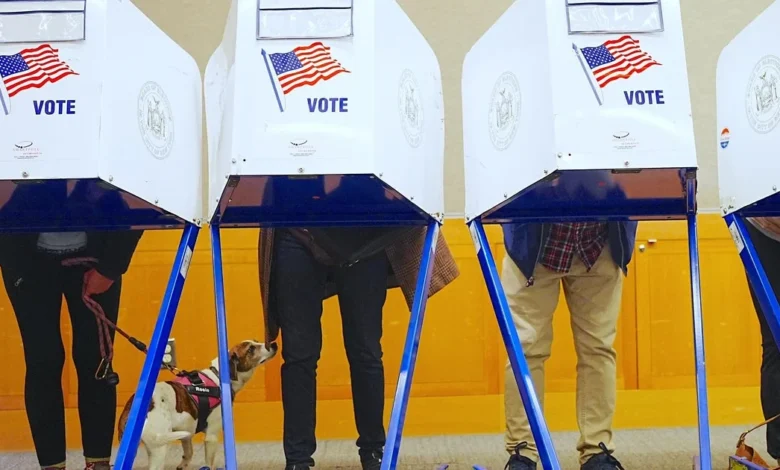
As the nation approaches the final countdown to Election Day on November 3, 2026, the political landscape is defined by a profound sense of urgency and, in many corners, a lingering disillusionment. Across the country, early voting has already commenced, offering citizens the opportunity to weigh in on a pivotal slate of contests that will determine the trajectory of the United States for the remaining two years of President Donald Trump’s current term. With every seat in the House of Representatives on the ballot, alongside high-stakes Senate races in 35 states and gubernatorial contests in 36, the 2026 midterms represent far more than a routine administrative exercise; they serve as a fundamental referendum on national policy.
For voters like Brody Saner, a college student in Kansas, the act of casting a ballot remains a civic imperative. "If there’s something you’re not happy with, go out and vote," Saner says. "Do your part to change it." However, this sentiment is not universally shared. A recent CBS News/YouGov poll underscores a growing trend of voter apathy, revealing that a majority of the electorate feels disconnected from both major political parties, expressing skepticism that either side possesses a coherent strategy to improve the financial well-being of the average American household.
The Anatomy of the 2026 Midterm Landscape
The 2026 midterms are characterized by razor-thin margins and the potential for a seismic shift in power. History suggests that the president’s party faces significant headwinds during midterm cycles. In 37 of the past 41 midterm elections, the incumbent president’s party has lost seats in Congress. This year, the stakes are heightened by the narrow composition of the current legislative bodies.
Republicans currently hold a fragile majority in the House of Representatives. For the Democratic Party, the objective is a net gain of just three seats to flip the chamber, a threshold that is well within the margin of historical midterm volatility. In the Senate, the math is slightly steeper, with Democrats needing a net gain of four seats to secure a majority. Should these shifts occur, the dynamic between the executive and legislative branches would be fundamentally altered, effectively transforming Congress from a body that currently aligns with the administration into a potential check on presidential power.
The implications of these results extend well beyond Washington. Across 40 states, voters will decide on more than 150 ballot measures. These initiatives cover a wide spectrum of issues, from local taxation and school funding to complex infrastructure mandates. Notably, there are 41 ballot initiatives focused specifically on data center development across 13 states, a reflection of the growing intersection between state-level energy policy and the burgeoning artificial intelligence sector.
The Paradox of Participation: Why Midterms Matter
While presidential elections routinely draw higher turnout—historically reaching 65% in 2024 compared to 46% in the 2022 midterms—political scientists argue that midterms offer a more direct return on investment for the individual voter. Professor Donald Green of Columbia University, who has studied electoral behavior for three decades, suggests that the "smaller the pond, the more weight each drop carries."
"Midterm elections are arguably more opportune moments for voters to get what they want," Green explains. "Because the total number of participants is lower, relatively small shifts in the overall vote can lead to dramatic, tangible shifts in policy."
The history of American elections is replete with examples of races decided by mere handfuls of ballots. In 2020, an Iowa House seat was determined by a margin of only six votes. In 2024, California’s 13th Congressional District was decided by 187 votes, and during the 2022 midterms, Rep. Lauren Boebert retained her seat in Colorado by a margin of 546 votes. These instances serve as a reminder that the "every vote counts" mantra is not merely rhetorical but a statistical reality in hyper-competitive districts.
The Socio-Political Divide and Voter Discouragement
The current climate of cynicism is perhaps the most significant challenge facing turnout efforts. Many voters, particularly those in rural communities like the one inhabited by Kansas farmer Mandy Sieren, feel that the political establishment has lost touch with the concerns of working-class families. "I just don’t trust anybody at this point enough to vote for them, Republican or Democrat," Sieren says. "I think they’re all crooked."
This sense of alienation creates a feedback loop that concerns analysts. When specific demographic groups—such as younger, lower-income, or disillusioned voters—consistently abstain from the process, politicians are less incentivized to address the issues unique to those populations. "It may be surprising to them how attentive politicians are to which groups vote at high rates and which groups don’t," Professor Green notes. "Issues important to young and poor people are often devalued because those groups do not show up at the polls with the same consistency as older, wealthier cohorts."
Historical Context and Future Implications
The 2026 election cycle is set against the backdrop of several critical national debates. Central to the discourse is the ongoing involvement in the Iran War. The outcome of the congressional races will dictate the level of support, funding, and diplomatic backing the U.S. provides in the conflict. Furthermore, the legislative approach to artificial intelligence—specifically regarding safety protocols, ethical deployment, and regulatory oversight—is expected to be a primary task for the newly elected Congress.
At the state level, the influence of governors has never been more pronounced. With competitive races in states ranging from Ohio to Georgia, the executive power of governors over industrial policy is significant. Governors hold the authority to approve moratoriums on large-scale infrastructure projects, such as data centers, or to provide tax incentives that can dictate the economic future of a region for decades.
A Legacy of Struggle
For some, the importance of voting transcends the immediate political issues of the day, rooted instead in the historical struggle for enfranchisement. Sandra Strother, a poll worker in New York City, views the act of voting as a tribute to those who sacrificed their lives to secure the right. Her uncle, who was killed in Alabama in the 1950s while attempting to register to vote, remains her primary motivation.
"That’s my great motivator," Strother says. "I make time not just to vote myself, but to ensure others can too." Her perspective highlights a recurring theme in American democracy: the tension between the perceived failings of the current political system and the intrinsic value of the electoral process itself.
Conclusion: The Road to November 3
As the clock ticks toward Election Day, the choice facing the American public is multifaceted. The data confirms that midterm elections are the most potent instruments for those seeking to alter the course of federal and local governance. While the current polling indicates a populace weary of partisan polarization, the structural reality remains: power in a democracy is not given, but claimed.
Whether the electorate chooses to engage or abstain, the results of the 2026 midterms will define the legislative landscape through 2028. As the country moves toward the close of the current presidential term, the decisions made by voters in the coming days will echo through the halls of Congress, the chambers of state governors, and the daily lives of citizens across the nation. For those who view their vote as their voice, November 3 represents the final opportunity to ensure that voice is heard in the ongoing narrative of the American experience.