Food Safety Takes Center Stage as a Partisan Flashpoint Ahead of the Midterm Elections

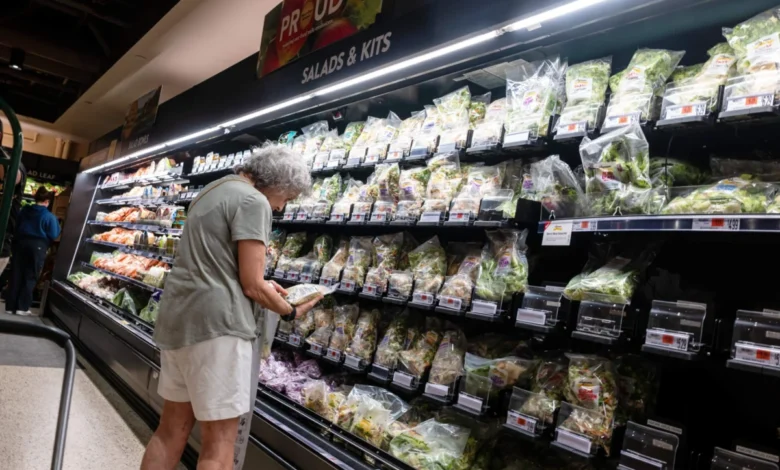
The political landscape leading up to the United States midterm elections has transformed into an unexpected battlefield centered on the safety of the American food supply. Following a tumultuous summer marred by a massive, record-breaking foodborne illness outbreak and extensive meat import recalls, the fundamental question of whether everyday consumers can safely order a salad or a burger has evolved from a routine public health concern into a high-stakes national political issue.
While voters have historically prioritized pocketbook issues such as grocery prices and inflation during midterm cycles, the recent spate of contamination events and product withdrawals has fundamentally shifted public anxieties toward food safety. This growing unease has created a sharp partisan divide. Democratic lawmakers have aggressively seized on the crisis to criticize the Trump administration’s regulatory priorities, staffing cuts, and public health policies. In contrast, administration officials and defenders have vehemently pushed back, accusing their political opponents of exploiting public health anxieties to score cheap political points and misrepresenting official data.
A Chronology of the Summer’s Food Safety Crisis
The current political friction is rooted in a series of severe public health events that unfolded over the spring and summer months. The crisis was catalyzed by an unprecedented outbreak of cyclosporiasis linked to contaminated lettuce, which ravaged the agricultural and restaurant sectors between May and August. According to data compiled by the Centers for Disease Control and Prevention (CDC), the outbreak resulted in nearly 20,000 laboratory-confirmed cases of illness spanning 21 states. This figure dwarfs the 1,180 cases recorded during the identical four-month window in the previous year, securing its place in epidemiological records as the largest recorded outbreak of the parasitic infection in U.S. history.
The sheer scale of the outbreak forced immediate commercial repercussions. Major national chain restaurants, including popular brands like Chipotle and Taco Bell, preemptively pulled lettuce, jalapeños, and other vulnerable ingredients from their menus nationwide to protect consumers and mitigate liability. Meanwhile, late-night television programs and social media platforms amplified graphic jokes about the gastrointestinal symptoms associated with the outbreak, injecting the crisis firmly into popular culture.
Simultaneously, the U.S. Department of Agriculture’s Food Safety and Inspection Service (FSIS) announced the recall of tens of thousands of pounds of imported raw beef products originating from foreign suppliers, including Argentina and Brazil. These compounding events saturated the news cycle, prompting food safety advocates, academic scientists, and concerned consumers to question the structural integrity of the federal regulatory apparatus designed to safeguard the nation’s food supply.
Statistical Analysis: Recalls, Consumer Confidence, and Divergent Data
To understand the political firestorm, public health analysts emphasize the necessity of examining both empirical recall statistics and shifting consumer sentiment indices. Data compiled by consumer watchdog groups, such as the U.S. Public Interest Research Group (PIRG), indicate that the absolute number of food recalls in 2026—hovering around 200 incidents—is roughly on par with the pace observed at the same point in previous years.
However, a broader look at multi-year federal data reveals a more complex trend. Total food recalls overseen by the Food and Drug Administration (FDA) and the USDA increased from 296 incidents in 2024 to 320 in 2025, representing a broader 21% upward trajectory in total recalls over a four-year span from 2021 to 2025. Furthermore, this multi-year rise has been heavily driven by an increase in Class I recalls—the highest priority classification reserved for products that present a reasonable probability of causing serious adverse health consequences or death.
Despite the nuanced nature of recall metrics, consumer confidence has plummeted. A nationwide survey conducted in July by Quinnipiac University revealed that a majority of registered voters harbor little to no confidence in the federal government’s oversight of food safety. This skepticism is heavily polarized along party lines, with Democrats expressing significantly higher levels of distrust than Republicans. A separate study released in September by researchers at the University of Illinois and Purdue University showed that the percentage of consumers who strongly agree that the U.S. food system reliably produces safe food plummeted from 40% in November to approximately 30% by August. Additionally, a survey by GS1 US found that 94% of American adults are concerned about the mounting frequency of food recalls.
Official Responses and the Data Discrepancy Dispute
As public concern mounted, federal agencies and administration officials mounted a vigorous defense, accusing critics of spreading misinformation. The FDA utilized social media to assert that food recalls for fiscal year 2026 have dropped to some of the lowest levels recorded in over a decade, sharing charts indicating a decline from nearly 4,000 recalls in fiscal 2013 down to 1,836 in fiscal 2026. Calley Means, a senior adviser at the Department of Health and Human Services (HHS), doubled down on these assertions on social media, arguing that Health and Human Services Secretary Robert F. Kennedy Jr. has successfully managed the agency, leaving political operatives to manufacture attacks against routine regulatory functions.
However, independent public health experts and former federal officials immediately contested these claims. Susan Mayne, who served as the director of the FDA’s Center for Food Safety and Applied Nutrition from 2015 to 2023, pointed out via professional networks that the agency’s overarching recall totals conflate food products with pharmaceuticals, medical devices, and veterinary items. Public health scholars argued that utilizing aggregate data that includes non-food items to claim an improvement in food safety is fundamentally misleading.
Political Fallout: The Congressional Offensive
Capitalizing on public anxiety, Democratic lawmakers have launched a coordinated legislative and rhetorical offensive against the Trump administration’s budgetary priorities and regulatory rollbacks. The Democratic National Committee utilized social media to publish a running list of recent food recalls, explicitly calling for the resignation of HHS Secretary Robert F. Kennedy Jr. and branding his leadership a failure.
Prominent congressional Democrats have similarly directed their ire at the executive branch. Senator Elizabeth Warren (D-Mass.) took to social media to directly link the historic cyclospora outbreak to federal budget cuts, writing that slashed food safety agencies directly enabled the public health crisis. Earlier, Warren formally initiated a congressional inquiry demanding answers regarding the administration’s handling of the outbreak.
Other members of Congress echoed these sentiments. Representative Gabe Amo (D-R.I.) publicly called on the administration to halt the reduction of regulatory personnel and restore FDA inspection workforces. Similarly, the campaign for Representative Judy Chu (D-Calif.) released statements criticizing the systematic reduction of funding and staffing allocated to food oversight bodies during a period of heightened consumer vulnerability.
In response to these allegations, HHS officials maintain that frontline inspection and investigative capabilities remain robust. Grace Davis Jamison, an HHS spokesperson, stated that neither FDA outbreak investigators nor the CDC laboratories supporting foodborne illness surveillance experienced reductions in force. She emphasized that the administration has maintained a rapid, coordinated response across all 50 states to identify sources of contamination and provide actionable safety data to the public.
Policy Shifts and Broader Economic Implications
Beyond political rhetoric, the administration’s recent policy adjustments have intensified scrutiny from food safety advocates and industry stakeholders. In late August, President Trump announced initiatives designed to streamline the regulatory process for small-scale livestock operations, permitting them greater autonomy in slaughtering and processing their own meat. While proponents argue this measure supports independent ranchers, food safety leaders have warned that relaxed oversight could introduce inadequately inspected beef into commercial channels.
Concurrently, the administration authorized the resumption of increased beef imports from Argentina and Brazil. This decision drew immediate comparisons to international standards, particularly given that the European Union maintains a strict ban on Brazilian beef imports due to noncompliance concerns regarding antibiotic use and localized food safety protocols. Furthermore, the USDA officially withdrew a proposed Biden-era regulatory framework aimed at capping allowable levels of salmonella in commercial raw poultry products. The administration also delayed compliance deadlines for traceability rules under the Food Safety Modernization Act—moving implementation from January 2026 to July 2028—citing the need to provide industry stakeholders with additional time to adapt their supply chain recordkeeping systems.
Public health advocates argue these cumulative policy changes create a dangerous paradox. Sandra Eskin, chief executive of the nonprofit organization Stop Foodborne Illness, noted the contradiction between the administration’s stated goals of encouraging healthier diets rich in fresh produce and the weakening of preventative regulatory guardrails. Eskin pointed out that consumer revulsion and fear have led to severe agricultural waste, with farmers in some regions forced to plow under entire fields of lettuce because consumer demand plummeted in the wake of the summer outbreaks.
As the midterm elections approach, the intersection of food safety and partisan politics illustrates the profound impact that systemic public health failures can exert on the national psyche. With millions of Americans continuing to experience foodborne illnesses annually, the debate over how best to balance regulatory efficiency, commercial flexibility, and consumer protection is poised to remain a defining issue for voters at the ballot box.