Hilton Honors Introduces Elite Black Diamond Tier Amidst Broader Loyalty Program Restructuring

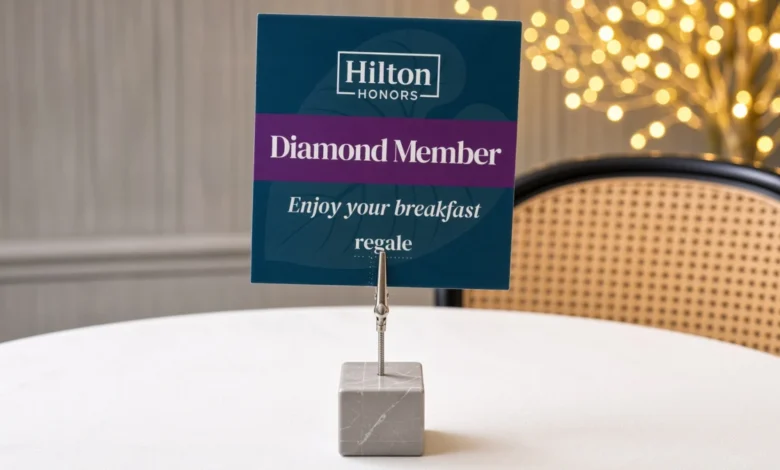
The hospitality sector is currently witnessing a significant evolution in loyalty program architecture as Hilton Worldwide Holdings Inc. continues to refine its Honors ecosystem. Following a period of aggressive adjustment regarding qualification thresholds for its established Diamond and Gold tiers, the hotel giant has introduced a new, ultra-exclusive tier designated as "Black Diamond." This development represents the latest step in a series of strategic shifts aimed at hyper-segmenting the company’s most valuable customer base and further differentiating the luxury experience within the Hilton portfolio.
A Chronology of Recent Loyalty Program Shifts
The emergence of the Black Diamond tier is not an isolated incident but rather the culmination of a year-long transformation of the Hilton Honors program. To understand the significance of this new hierarchy, it is necessary to examine the timeline of events that preceded its announcement.
In late 2023, Hilton began socialising the concept of "The Honors Society" in internal communications. This initiative appeared to be a pilot or an experimental branding exercise intended to foster a sense of exclusivity among top-tier members. By June 2024, the concept transitioned from internal memos to a formal marketing campaign, signalling a broader intent to elevate the perceived value of high-status membership.
Throughout this period, Hilton simultaneously lowered the bar for entry into its traditional elite tiers. By reducing the stay and spend requirements for Gold and Diamond status, the company successfully expanded its base of loyalty program participants. This dual-track strategy—lowering barriers to entry for mass-market elites while simultaneously creating "top-of-pyramid" tiers like The Honors Society and now Black Diamond—suggests a pivot toward a more tiered, multi-level luxury strategy designed to capture both the aspirational traveller and the ultra-high-net-worth individual.
The Anatomy of the Black Diamond Tier
While specific qualification metrics for Black Diamond have not yet been publicly codified in the standard Hilton Honors membership guide, the industry consensus suggests it functions as an invite-only or ultra-premium designation. Positioned at the apex of the hierarchy, it sits above the current Diamond status and the recently introduced Honors Society tier.
Industry analysts observe that this structure mimics the "secret" or "concierge" levels found in private banking and high-end credit card portfolios, such as the American Express Centurion. By placing a tier above the standard Diamond status, Hilton is effectively creating a new ceiling for its most loyal guests, likely offering bespoke benefits that extend beyond the traditional suite upgrades and lounge access, such as dedicated 24/7 personal travel managers, guaranteed inventory at sold-out properties, and exclusive access to non-public culinary or cultural experiences.
Broader Context: The Loyalty Program Arms Race
The introduction of Black Diamond occurs within a highly competitive landscape. Major hotel chains are increasingly reliant on direct bookings to mitigate the influence of Online Travel Agencies (OTAs) and to own the customer data necessary for personalized marketing.
As of the third quarter of 2026, loyalty programs are no longer merely reward schemes; they are sophisticated data-collection and revenue-management tools. By segmenting customers into tiers like Black Diamond, Hilton is able to predict travel patterns, personalize ancillary offerings, and ensure that their most profitable guests remain within the Hilton ecosystem rather than exploring competitive offerings from Marriott Bonvoy or Hyatt’s World of Hyatt.
Data from the hospitality analytics firm STR suggests that loyalty-driven revenue now accounts for over 50% of total bookings for major global hotel brands. Consequently, every incremental change to a loyalty tier structure is a calculated move to maximize Lifetime Value (LTV).
![Hilton May Add “Black Diamond” Above Diamond Reserve—Pushing Diamond Status Further Down [Roundup]](https://viewfromthewing.com/wp-content/uploads/2026/09/cV0De.jpg)
Financial Optimization and Consumer Participation
Parallel to the news of the new tier, savvy travellers continue to utilize third-party portals and cashback platforms to optimize their travel expenditures. Platforms such as Rakuten have become essential tools for the modern traveller, allowing them to stack rewards. By routing gift card purchases for major travel brands—such as Uber, DoorDash, Southwest Airlines, or Delta—through these portals, consumers can effectively recover a significant portion of their spend.
For example, purchasing a $50 gift card through a portal offering a 100% cashback or points equivalent effectively creates a "net-zero" cost for the consumer. While these tactics are often categorized as "travel hacking," they are becoming increasingly mainstream, forcing loyalty programs to offer more tangible, high-value rewards to remain relevant against the backdrop of rising inflation and increased travel costs.
Public Reception and Industry Feedback
The reaction from the travel community has been mixed, reflecting a tension between those who appreciate the added prestige of a Black Diamond tier and those who fear "status inflation."
On social media platforms like X (formerly Twitter), frequent flyers and travel enthusiasts have engaged in a robust discourse regarding the state of airline and hotel amenities. While recent anecdotal reports praise improvements in some areas—such as meal quality on domestic flights, as noted in recent high-profile user feedback regarding American Airlines—the general sentiment remains focused on the value proposition of loyalty status.
Industry experts note that while the introduction of the Black Diamond tier is intended to reward the most frequent guests, it carries the risk of alienating the "standard" Diamond members who may feel their status is being diluted by the creation of higher tiers. However, from a corporate perspective, the strategy is sound: it provides a roadmap for the company’s highest-spending clients to consolidate their travel budgets exclusively within the Hilton portfolio.
Implications for the Future of Hospitality
The move to introduce a Black Diamond tier signals a long-term shift in the hospitality sector. We are moving toward an era of "hyper-loyalty," where the rewards for the top 0.1% of customers are vastly different from the benefits afforded to the average elite member.
The implications for the broader industry are threefold:
- Increased Personalization: As Hilton gathers more data on the behaviors of its Black Diamond members, the company will likely deploy AI-driven personalization to anticipate guest needs before they arrive on property.
- The Decline of "One-Size-Fits-All" Status: Future loyalty programs will likely move away from simple status tiers and toward bespoke, variable-benefit models that change based on individual spend and preferences.
- Consolidation of Spend: By creating a "Black Diamond" ceiling, Hilton is essentially incentivizing the most profitable segment of its clientele to ignore competitors, as the perceived loss of the "Black Diamond" benefits would be too costly to abandon.
Conclusion
The evolution of the Hilton Honors program, culminating in the introduction of the Black Diamond tier, reflects a broader trend toward exclusive, high-touch luxury within the global travel industry. While the company continues to welcome a larger base of elite members through lower qualification requirements, the creation of a new, ultra-elite designation ensures that the most valuable customers have a distinct reason to maintain their allegiance.
As the industry continues to navigate the complexities of post-pandemic travel and changing consumer expectations, the success of these tiers will depend on the actual, tangible value provided to members. For now, the introduction of Black Diamond stands as a testament to the fact that in the world of global travel, the battle for customer loyalty is becoming increasingly focused, sophisticated, and exclusive. As we head into the next fiscal year, all eyes will be on how the market responds to these changes and whether other major hotel chains will follow suit with their own "black card" equivalents.