The Mirage of Responsible Gaming: How Sportsbook Design Hooks and Keeps the Modern Gambler

It was late May, the French Open was in full swing, and DraftKings was aggressively courting engagement. A push notification pinged on my smartphone: "BET & GET," it boomed, promising to amplify potential profits if I wagered on the clay courts of Paris. The message was punctuated by a cartoon stack of cash—a visual shorthand for easy wealth. I was already two hours into a compulsive betting spree, firing off 64 separate wagers from my home office in New York. A $75 bet on a specific point in a tiebreak; a $300 wager on a single game outcome. I was losing, but the velocity of the activity was the point. For ten weeks, I had been operating as an undercover reporter for ProPublica, simulating the behavior of a high-stakes, out-of-control gambler to test the efficacy of the "responsible gaming" guardrails touted by major industry players.

The Anatomy of a Spiral
The growth of legal sports betting in the United States has been nothing short of explosive. Since the Supreme Court struck down the federal ban on sports wagering in 2018, the industry has expanded into 39 states and the District of Columbia. In that time, Americans have put more than $600 billion into play. This rapid normalization has brought with it a significant public health challenge: as the barrier to entry drops, the risks of gambling disorder rise. According to the Siena Research Institute, roughly 25% of active sportsbook account holders report that their betting losses have hindered their ability to meet essential financial obligations.
My experiment was designed to determine if platforms like DraftKings could actually stop a user in the midst of a downward spiral, or if the underlying business model—driven by the need to maximize lifetime customer value—precludes effective intervention. Working with a panel of addiction specialists and professional bettors, I mirrored the classic markers of a "degen": chasing losses, jumping between sports, increasing wager frequency, and moving into higher-risk products like parlay and prop bets.

The results were alarming. Within weeks, I had deposited over $21,000. Despite hitting clear red flags—frequent, escalating deposits and loss-chasing patterns—the app’s intervention system remained largely toothless. The "responsible gaming" prompts I received were easily dismissed with a single tap, often followed immediately by new marketing promotions designed to bring me back to the table.
The VIP Pipeline: Incentivizing Risk
Perhaps the most troubling aspect of the experience was the transition to "VIP" status. Far from being a red flag for the company, my erratic and loss-heavy behavior qualified me for a personalized concierge service. Just three weeks into the experiment, after losing nearly $1,800 on a single night of NBA betting, I received an invitation to the "DraftKings VIP Showcase."

The loyalty structure is inherently paradoxical. To advance through the tiers—from bronze to the coveted Onyx level—users are encouraged to place "long-odds" wagers. These parlays, which link multiple events into a single bet, are statistically the most difficult to win but offer the highest potential payouts. As a researcher and analyst noted, these structures are designed to exploit the "near miss" psychological effect, keeping the user tethered to the platform by creating a false sense of progression.
When I reached out to Lori Kalani, DraftKings’ chief responsible gaming officer, regarding the company’s tendency to pair "take a break" notifications with immediate promotional offers for more betting, she stated that the company would review the feedback. However, she maintained that the company’s internal tools are robust and that they proactively close accounts that show too many red flags. When pressed for data on how often these involuntary closures occur, the company declined to provide figures.

Industry Design and Dark Patterns
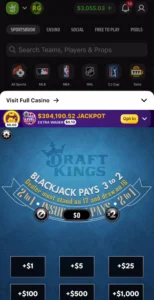
Computer scientists and behavioral psychologists describe the user interface of these apps as featuring "dark patterns"—design choices specifically engineered to make betting as frictionless as possible. The presence of quick-tap deposit buttons that default to increasingly large dollar amounts, and the "Double Down" button on digital blackjack tables, mirror the mechanics of slot machines. These features minimize the cognitive load of spending money, making it easier for users to lose large sums in seconds.
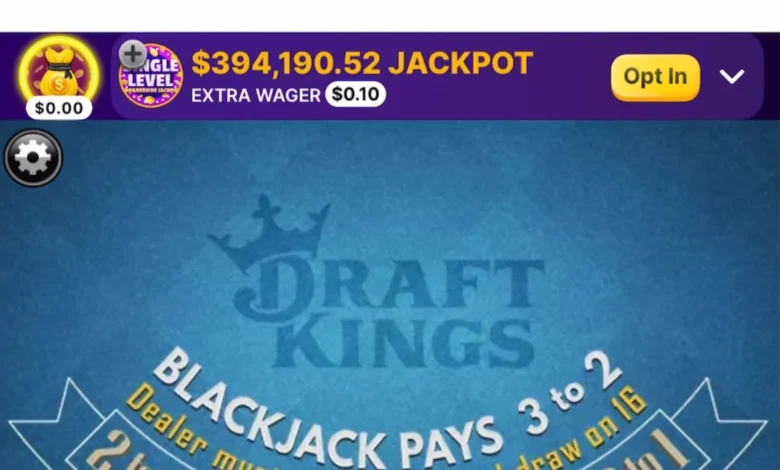
The cross-promotion of iGaming—casino games like blackjack and roulette—further complicates the landscape. In states where iGaming is legal, such as New Jersey, sportsbooks integrate these features directly into their sports apps. I found that my betting receipts often included "Suggested For You" links to sports-themed blackjack games, a clear attempt to keep the user engaged even when no live sports were available.

The Regulatory Disconnect
State regulators have largely left the specifics of "problem-gaming plans" to the companies themselves. While operators are required to submit these plans to state commissions, the details are often shielded from public view, citing proprietary or trade-secret protections. This leaves a significant gap in oversight.
Advocates like Brianne Doura-Schawohl argue that the current model, which relies on the user to "opt-in" to responsible gaming tools, is fundamentally flawed. "It’s a system built to appear to be doing something good while giving the company a free pass to do everything bad," said Rob Minnick, a former gambler and industry watchdog. The logic of the current system effectively places the burden of protection on the individual, even when the product itself is designed to impair decision-making.

The Reality of "Winning"
My experiment took an unexpected turn when, during the NBA Finals, my betting strategy—which involved backing the New York Knicks—resulted in a substantial win. Suddenly, I was up $16,000. From a behavioral standpoint, this was perhaps the most dangerous phase of the experiment. Addiction experts warn that winning can reinforce a gambler’s false belief that they have developed a "system" or a "winning edge," leading to even more reckless behavior.
Indeed, once I felt that "Superman" high, I was back to betting between $3,000 and $7,000 per day. My VIP rep, sensing my increased activity, continued to offer incentives, even going so far as to match a potential $25,000 deposit with extra "DK Dollars." The system, in my case, did not stop me; it accelerated with me.

Broader Implications and Future Outlook
The financial incentives for states to keep the industry growing are substantial. With billions in tax revenue at stake, there is little political appetite for the kind of aggressive regulation seen in other countries, such as the United Kingdom or Australia, where stricter limits on advertising and betting products are already in place.
However, the human cost is beginning to draw more attention. As diagnostic rates for gambling disorders rise, the pressure on lawmakers to address "microbetting" and VIP marketing tactics will likely increase. The industry’s $41 million investment in a political action committee suggests they are preparing for a protracted battle against these reforms.

By the end of my 10-week stint, I had lost $10,702. While I was able to withdraw the remaining balance and return it to ProPublica, the experiment served as a harrowing case study in how modern mobile technology, paired with sophisticated data analytics, creates a potent environment for addiction. The "responsible gaming" tools are, at best, a speed bump on a highway designed for high-speed, high-loss travel. Until the regulatory framework shifts from a focus on individual responsibility to one of product-based harm reduction, the industry’s promise to make betting "fun and safe" will likely remain a contradiction in terms.
Related posts: