A Bizarre Trail of Personal Belongings Causes Runway Security Alert at Hartsfield-Jackson Atlanta International Airport

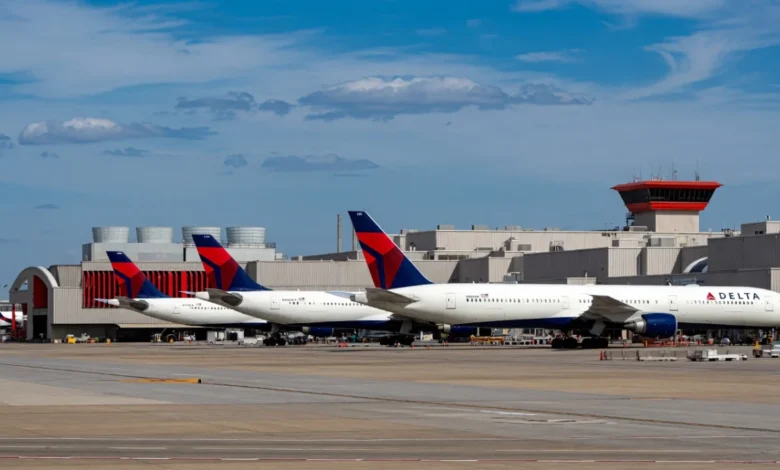
A routine departure from Hartsfield-Jackson Atlanta International Airport (ATL) turned into an unusual investigation of ground safety protocols when the crew of Delta Air Lines Flight 539, bound for Portland, reported a series of anomalous objects strewn across a taxiway. What began as a standard observation of Foreign Object Debris (FOD) quickly evolved into an investigation of a compromised baggage transport operation, as pilots identified a collection of personal items—including footwear, gloves, and hosiery—cluttered along the path of departure.
The incident, which occurred amidst the high-traffic operations of the world’s busiest airport, highlights the critical intersection between ground handling efficiency and flight safety. While the discovery of personal effects on a taxiway may appear comical in its specificity, it represents a significant operational failure that underscores the rigorous protocols surrounding aircraft movement and cargo security.
Chronology of the Discovery
The sequence of events commenced as Delta Flight 539 was maneuvering out of Ramp 2. The flight crew, maintaining their mandatory vigilance of the taxiway environment, identified a hat obstructing the pavement near the area where the aircraft’s high-bypass turbofan engines would typically exert significant suction. Upon further inspection, the crew noted a broader pattern of debris, which they communicated to ground control.
The exchange between the flight deck and Air Traffic Control (ATC) was captured and subsequently circulated via social media platforms, providing a rare glimpse into the professional yet incredulous tone of the personnel involved. As the pilots identified the items, the conversation shifted from a routine FOD report to a realization that a piece of checked luggage had likely suffered a structural failure or had fallen from a transport vehicle, spilling its contents across the tarmac.
The debris field included a shoe, gloves, and, most notably, a pair of pantyhose. The discovery prompted the ground controller to remark on the frequency of reports in that specific sector, noting that the flight crew of Flight 539 was at least the fifth party to report debris in the immediate vicinity. This observation suggested that the compromised luggage had been shedding items over a period of time, creating a hazard that persisted throughout the morning’s taxiing operations.
Understanding Foreign Object Debris (FOD)
To the general public, the term "FOD" may sound like industry jargon, but within the aviation sector, it is a primary safety metric. The Federal Aviation Administration (FAA) defines Foreign Object Debris as any object, live or inanimate, located in an inappropriate location in the airport environment that has the capacity to injure personnel or damage aircraft.
The risks associated with FOD are severe. When a jet engine is at idle or increased power settings, it acts as a massive vacuum. Objects ingested into the intake can cause catastrophic damage to compressor blades, leading to engine stalls, fires, or total loss of thrust. Furthermore, items left on taxiways can damage landing gear tires, causing blowouts that, at high speeds, can lead to loss of directional control or damage to the airframe from flying debris.
In the case of Flight 539, the items identified were of a "soft" nature—fabric and leather—which, while less likely to cause an immediate engine explosion than a large metal bolt, still pose a significant threat. A shoe or a piece of heavy clothing can easily be sucked into an engine’s intake, causing internal imbalances or sensor malfunctions that would force an emergency return to the gate. Consequently, the pilot’s decision to report the items was not merely a matter of convenience; it was a mandatory safety action required by standard operating procedures.
Analysis of the Ground Handling Failure
The incident at Hartsfield-Jackson raises questions regarding the security and integrity of baggage handling processes. Checked luggage is typically moved from the terminal building to the aircraft via automated conveyor systems and specialized tugs. For a suitcase to open and disperse its contents across a taxiway, a significant failure in either the baggage loading process or the transit phase must have occurred.
Modern airport logistics rely on a "closed loop" system designed to prevent exactly this type of occurrence. Luggage is usually contained in heavy-duty Unit Load Devices (ULDs) or stacked on carts with safety netting. The presence of loose items on a taxiway suggests that a cart may have been improperly secured, a latch may have failed, or a suitcase may have been crushed or snagged during transit.
From a regulatory perspective, this incident will likely trigger an internal review by the airline and airport authority to determine the point of failure. The fact that the debris was reported multiple times before the items were cleared suggests a lapse in the airport’s "sweeping" or inspection cycle. Hartsfield-Jackson, like all major hubs, maintains a constant presence of ground vehicles tasked with monitoring taxiways; however, the volume of traffic at the Atlanta hub can occasionally overwhelm these teams, leading to delayed response times for debris removal.
Professionalism Under Pressure: The ATC Exchange
The lighthearted nature of the radio communication—including the controller’s bemusement at the pilot’s ability to identify hosiery from the cockpit and the subsequent "touché" acknowledgement—serves as a reminder of the human element in aviation. While safety is the priority, the absurdity of the situation provided a moment of levity in an otherwise high-stress environment.
However, aviation experts note that such interactions also serve a practical purpose. By confirming the nature of the debris, the pilots assist ground crews in prioritizing the cleanup. A metal object requires an immediate cessation of taxiing; a piece of fabric, while still dangerous, allows for a more controlled approach. The pilot’s ability to discern the items from the cockpit is a testament to the heightened visual awareness required of commercial flight crews, who are trained to scan not only the skies but the surface environment for any deviation from the norm.
Broader Implications and Safety Protocols
The incident serves as a case study for the necessity of continuous vigilance in airport operations. As aviation traffic continues to increase post-pandemic, the strain on ground support equipment and personnel becomes more pronounced. Incidents involving FOD are not uncommon, but the visibility of this specific event has brought renewed attention to the "ground game" of aviation.
In the aftermath, the FAA and airport authorities typically emphasize the "Clean Ramp" initiative, which encourages all ground personnel—from baggage handlers to fuel truck drivers—to stop and pick up any debris they encounter. The reliance on pilots to report FOD is a secondary defense layer, but it is one that the industry cannot function without.
Furthermore, the incident highlights the importance of luggage maintenance. Passengers are frequently reminded of the weight limits and structural integrity of their bags, but rarely consider the safety implications of a suitcase failing while in transit on an active tarmac. Airlines may use this event as a teaching tool for ground crews, reinforcing the importance of inspecting the integrity of luggage carts and container latches before leaving the loading pier.
Conclusion
While the spectacle of personal items scattered across a taxiway at one of the world’s most sophisticated airports might seem like an anomaly, it is a reflection of the complex, interconnected nature of commercial aviation. Every item, from the smallest bolt to a traveler’s shoe, must be accounted for to ensure the safety of the flight.
Delta Air Lines and the management at Hartsfield-Jackson have not released specific details regarding the owner of the luggage or the exact mechanism of the spill, but the incident has been logged and addressed. As air travel continues to evolve, the necessity for robust ground-side security and maintenance protocols remains absolute. For the passengers on Flight 539, the delay was likely a brief inconvenience, but for the aviation safety community, it stands as a salient reminder that the journey begins long before the aircraft leaves the gate, and the safety of the flight depends on the integrity of every link in the logistical chain.
Moving forward, the aviation industry will likely continue to utilize such incidents to refine ground handling procedures, ensuring that the only things left behind on the tarmac are the echoes of jet engines and the memories of travelers.
Related posts: