Microsoft Reaping Billions From OpenAI Partnership Even as Tech Giants Pivot Toward Direct Competition

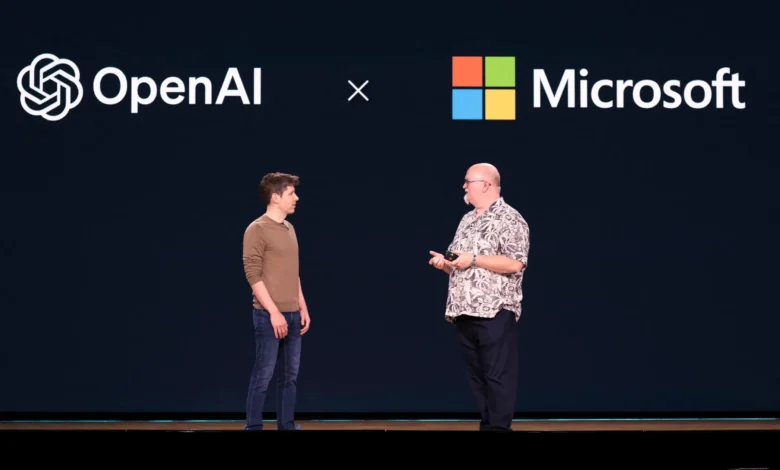
Microsoft generated a staggering $10 billion in revenue from its commercial arrangements with OpenAI, including critical revenue-sharing payments, during the fiscal quarter ending September 30, 2026. According to a regulatory filing released on Wednesday, this massive influx accounts for nearly 11% of Microsoft’s total quarterly revenue of $92.3 billion. The figures lay bare the profound financial interdependencies that continue to bind the two architecture giants of the artificial intelligence boom, even as they steadily pivot toward fierce, direct competition for the exact same enterprise and consumer customer bases.
Because Microsoft’s fiscal calendar begins in July, the quarter ending September 30 marked the official opening of its 2027 fiscal year. The scale of the financial pipeline is unprecedented: for the entirety of the preceding 2026 fiscal year, revenue derived directly from OpenAI reached $24.1 billion. Extrapolating from the latest quarterly pace, Microsoft is currently on track to pull in an astounding $40 billion annually from its web of OpenAI-related arrangements, cloud hosting contracts, and commercial partnerships.
Beyond quarterly revenues, the financial disclosures also spotlight outstanding obligations. Microsoft reported holding $7.2 billion in unpaid receivables from OpenAI at the close of September, marking an increase from the $6 billion recorded at the end of June. Financial analysts emphasize that this substantial sum represents money owed by OpenAI for services already rendered and previous transactions, rather than constituting additional new revenue for the tech titan.
An Evolving Partnership and Shifting Financial Dynamics
While the exact breakdown of how much of Microsoft’s revenue stems specifically from Azure cloud computing services versus direct revenue-sharing agreements remains opaque, the overarching financial architecture is well-documented. Under previous operational terms negotiated as part of Microsoft’s multi-billion-dollar investments, OpenAI reportedly shares approximately 20% of its expanding revenue streams with Microsoft. While neither entity has officially confirmed this precise percentage publicly, leaked documents and industry reports have consistently pointed to a revenue-sharing model that extends through the decade.
Under an updated agreement struck in April 2026, OpenAI remains legally obligated to continue sharing a portion of its revenue with Microsoft through 2030, subject to an established financial cap. This obligation persists despite OpenAI gradually gaining the operational freedom to collaborate with competing cloud infrastructure providers.
Microsoft’s equity stake in the artificial intelligence pioneer has experienced a subtle yet measurable dilution. The software giant’s ownership interest in OpenAI dipped from approximately 25% in June to 24% by the end of September. This downward trajectory follows a gradual decline from roughly 27% in the wake of a major corporate recapitalization that occurred in October 2025. While Microsoft has not publicly detailed the specific mechanics or triggers behind the ongoing dilution, market analysts view it as a natural byproduct of OpenAI’s surging private valuation, external funding rounds, and corporate restructuring.
A Chronology of Co-opetition: From Exclusive Alliance to Rivalry
The current state of affairs represents a dramatic evolution from the exclusive, tightly coupled alliance that first shocked and captivated the tech industry when OpenAI’s large language models caught the global mainstream imagination.
In the early days of their relationship, Microsoft positioned itself as the exclusive cloud provider and primary infrastructure backbone for OpenAI, funneling more than $13 billion into the startup in exchange for preferential access to cutting-edge models, integrated intellectual property rights, and deep Azure integration.
However, the dynamics of the partnership began to fundamentally shift in October 2025. Facing mounting regulatory scrutiny from antitrust watchdogs in multiple jurisdictions—including the United States, the European Union, and the United Kingdom—over Big Tech dominance and anticompetitive behavior, Microsoft voluntarily relinquished its direct board oversight and exclusive hold on OpenAI.
This strategic uncoupling was designed to grant the AI startup greater organizational independence, clearing the regulatory path for OpenAI to diversify its infrastructure and partner freely with competing cloud service providers. In a quid pro quo arrangement negotiated during that pivotal October 2025 restructuring, OpenAI committed to purchasing a staggering $250 billion worth of Azure cloud computing services over time, ensuring that Microsoft would remain its principal infrastructure landlord even as the relationship loosened.
The Transition to Open Market Rivalry
Despite the massive financial flows highlighted in the latest regulatory filings, the honeymoon phase between Microsoft and OpenAI has officially given way to an era of intense, direct market rivalry, frequently described by industry insiders as "co-opetition."
Over the course of 2026, the competitive friction between the two entities intensified visibly. Reports surfaced indicating that Microsoft had begun training its enterprise sales teams to actively pitch against OpenAI and competing foundational model developers like Anthropic, steering enterprise clients toward Microsoft’s proprietary AI offerings or alternative multi-model portfolios available on Azure.
Simultaneously, OpenAI has aggressively expanded its enterprise footprint, rolling out custom business solutions, workplace productivity tools, and direct API services that increasingly vie for the exact same corporate clients that Microsoft targets with its Copilot ecosystem. OpenAI’s concerted push to establish direct relationships with Fortune 500 companies has placed the two allies on a collision course, transforming what was once a synergistic vendor-partner dynamic into a head-on commercial clash.
Industry Implications and Future Outlook
The sheer scale of Microsoft’s OpenAI-derived revenue underscores a central reality of the current generative AI boom: the foundational infrastructure layers and the application layers remain deeply entangled, even as the companies building them seek independence.
For Microsoft, pulling in $10 billion in a single quarter from a single commercial relationship is a historic financial achievement that validates its early, aggressive bet on generative AI. It demonstrates that Azure and Microsoft’s broader enterprise ecosystem are successfully monetizing the surging demand for computational power, even as margins are tested by the immense capital expenditures required to build and maintain next-generation data centers.
For OpenAI, the ongoing revenue-sharing obligations and massive multi-billion-dollar cloud commitments to Azure illustrate the high cost of scaling frontier intelligence. As the startup navigates its path toward eventual public markets or alternative corporate structures, balancing these historical financial ties with its ambition to become an independent platform ecosystem will remain one of its most delicate strategic challenges.
As both companies continue to court the same enterprise customers, develop competing product roadmaps, and navigate shifting regulatory landscapes, the coming years will test whether this multi-billion-dollar economic engine can sustain itself amid escalating market rivalry. For now, the financial reporting makes one thing abundantly clear: while Microsoft and OpenAI are increasingly competitors in the marketplace, their financial fortunes remain inextricably linked at a scale without precedent in the history of the technology sector.
Related posts: