The Legacy of Jeremy Thomas: Remembering the Visionary Independent Producer Who Shaped Modern Cinema

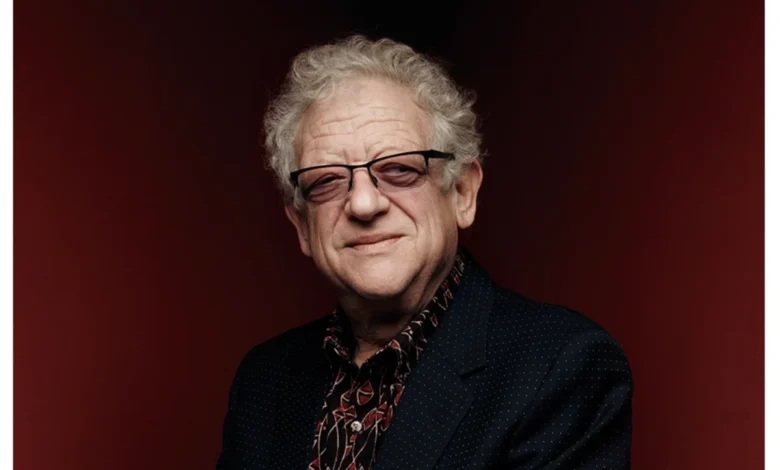
The global film community is mourning the loss of Jeremy Thomas, the trailblazing British independent producer whose fearless commitment to auteur-driven cinema yielded more than 80 credits, including Bernardo Bertolucci’s historic masterpiece The Last Emperor. Thomas passed away peacefully on September 11 at his country home in Oxfordshire, surrounded by his family and loved ones, at the age of 77. His death was officially announced by his family on September 12, coinciding with the final day of the 83rd Venice Film Festival—a poignant punctuation mark for a titan of international film culture who spent decades championing bold, uncompromising storytelling.
Throughout a career spanning over half a century, Thomas earned a reputation as a rare breed in the motion picture industry: a producer who fiercely protected artistic vision over commercial formulas. From the gritty landscapes of the Australian outback to the opulent historical courts of China, and from the avant-garde experiments of Tokyo to the glamorous red carpets of Cannes, Thomas left an indelible imprint on world cinema. As tributes flood in from across the globe, industry leaders are reflecting not only on his extraordinary filmography, but on his role as a relentless advocate for independent filmmakers and a singular human being whose boundless curiosity never waned.
Early Life and Cinematic Heritage
Born on July 26, 1949, Thomas entered the world steeped in the traditions of the British film industry. His father, Ralph Thomas, was a prolific director who helmed more than 40 feature films, including the classic 1935 and 1959 adaptations of The 39 Steps, as well as numerous installments in the popular comedic Doctor franchise. Meanwhile, his uncle, Gerald Thomas, cemented his own place in British cinema history by directing the legendary, long-running Carry On comedy series.
Growing up in such an environment offered Thomas a comprehensive, practical education in how movies were made. Rather than relying solely on nepotism, however, he immersed himself in the mechanics of filmmaking from the ground up. Following his education, he took on various entry-level positions within the industry before finding his footing in the cutting room.
His early career as an editor proved formative. Thomas earned assistant editor credits on notable features such as The Harder They Come and The Golden Voyage of Sinbad, and served as first assistant editor on Ken Loach’s acclaimed drama Family Life. These foundational experiences provided him with a deep, technical understanding of cinematic rhythm and narrative structure, assets that would later serve him well when he transitioned to the producer’s chair.
The Birth of a Maverick: Mad Dog Morgan and Recorded Picture Company
In 1974, at the age of 25, Thomas took the decisive leap into producing with the Australia-shot feature film Mad Dog Morgan, starring Hollywood icon Dennis Hopper. The gritty historical western set the tone for Thomas’s future career, demonstrating his appetite for challenging material, international locations, and complex characters operating outside traditional Hollywood conventions.
Shortly after his debut feature, Thomas established the London-based independent production house Recorded Picture Company (RPC). The newly minted company made a resounding international statement with its very first project: Jerzy Skolimowski’s psychological thriller The Shout (1978). Starring Alan Bates and John Hurt, the film competed at the Cannes Film Festival and won the prestigious Grand Prix du Jury, instantly establishing Thomas and RPC as major players on the European arthouse circuit.
Throughout the late 1970s and 1980s, Thomas solidified his reputation by collaborating with some of the most daring directors of the era. He forged a particularly fruitful partnership with visionary British director Nicolas Roeg, producing a string of psychologically complex and visually striking films including Bad Timing (1980), Eureka (1984), and Insignificance (1985). Concurrently, he produced Stephen Frears’ taut crime thriller The Hit (1984) and Nagisa Oshima’s groundbreaking Japanese prisoner-of-war drama Merry Christmas, Mr. Lawrence (1983), which notably featured rock legend David Bowie in a powerful lead role alongside Ryuichi Sakamoto and Takeshi Kitano.
The Crown Jewel: The Last Emperor
By the mid-1980s, Thomas possessed a strong reputation among European cinephiles, but he was about to orchestrate the defining achievement of his career. Embarking on a monumental gamble, Thomas set out to produce Bernardo Bertolucci’s epic historical biography The Last Emperor, chronicling the life of Pu Yi, the last Emperor of China.
The production was a logistical and financial labyrinth, requiring years of meticulous planning, complex international financing outside the traditional studio system, and unprecedented cooperation from the Chinese government to film inside Beijing’s Forbidden City. It took three years of intense labor to bring the vision to the screen.
The gamble paid off spectacularly. Released in 1987, The Last Emperor was both a critical triumph and a rare commercial success for an independently financed international co-production. At the 60th Academy Awards ceremony in 1988, the film swept the board, winning all nine of the Oscars for which it was nominated, including Best Picture and Best Director. For Thomas, standing on the Oscar stage to accept the industry’s highest honor was a validation of the independent production model.
Following the global triumph of The Last Emperor, Thomas maintained a lifelong creative partnership with Bertolucci. The pair reunited to produce several more ambitious international projects, including The Sheltering Sky (1990), Little Buddha (1992), Stealing Beauty (1996), and The Dreamers (2003).
Expanding Horizons: Hanway Films and Later Ventures
Never one to rest on his laurels, Thomas continued to diversify his business and creative interests as the film industry evolved. In 1998, recognizing the shifting dynamics of international film finance and distribution, he co-founded Hanway Films alongside Peter Watson and Stephan Mallmann. Hanway quickly grew into a prominent international sales and distribution entity, helping to shepherd dozens of independent titles to global audiences and further cementing Thomas’s influence over the pipeline of international cinema.
His eclectic production slate in the decades that followed demonstrated an ongoing appetite for provocative literature adaptations and collaborations with singular cinematic voices. Notable credits from this later period include Jonathan Glazer’s razor-sharp crime thriller Sexy Beast (2000), David Cronenberg’s controversial J.G. Ballard adaptation Crash (1996)—which won the Special Jury Prize at Cannes—and Takashi Miike’s brutal period action film 13 Assassins (2010).
Thomas’s deep connection to the Cannes Film Festival became legendary. For decades, his annual pilgrimage to the Croisette was an industry fixture, earning him status as a festival staple. His profound relationship with Cannes was immortalized in the 2021 documentary The Storms of Jeremy Thomas, directed by Mark Cousins, which followed the producer on his familiar festival journey and offered a window into his philosophy of filmmaking and life.
Global Industry Tributes
News of Thomas’s passing prompted an outpouring of grief, respect, and remembrance from industry heavyweights, studio executives, and filmmakers who had worked alongside him or been inspired by his career.
Tom Bernard, chief of Sony Pictures Classics, released an emotional statement reflecting on decades of friendship and collaboration:
“One of my great regrets is that he was never properly honored by one of the major festivals for his extraordinary contribution to our industry,” Bernard said. “I’ll always remember being with him at the Oscars when he won Best Picture — he was absolutely thrilled. He was a great friend to Sony Pictures Classics, but, above all, he was a great friend to me. I will miss him tremendously.”
Filmmaker and writer Whit Stillman took to social media to pay homage, describing Thomas as “a wonderful guy & last of the very greats,” adding that “he’ll likely continue to inspire many films.”
Scott Foundas, Amazon’s acquisitions chief, remembered Thomas on X as “a true maverick among independent producers and an equally singular human being.” Foundas wrote, “A tireless champion of the artists (and causes) he believed in; a seeker whose childlike wonder and curiosity never dulled, and who was at home wherever he went in the world (London, L.A., Cannes, Sydney, Tokyo). Jeremy, I shall treasure the times we spent together, and look forward to seeing you at the next crossing.”
Paul Ridd, head of the Edinburgh Film Festival, echoed those sentiments, characterizing Thomas’s death as an enormous loss to film culture globally. “Such a beautiful man and an extraordinarily generous supporter of the festival,” Ridd wrote. “What a legacy. I feel honoured to have known him and to have spent time with him. Condolences to all who knew him and loved him.”
Implications for Independent Cinema
The passing of Jeremy Thomas marks the fading of a specific, fiercely independent era in international filmmaking—an era when producers functioned less as corporate risk-mitigators and more as artistic impresarios, willing to mortgage their reputations and financial security to back visionary directors.
In recent years, despite battling cancer, Thomas maintained his rigorous work ethic. In interviews leading up to the premiere of Cousins’ documentary in 2021, he acknowledged that his time was limited, yet he continued to scout literary properties for adaptation, expressing a lingering desire to bring more J.G. Ballard works to the screen. Fittingly, his final professional appearance as a producer is tied to Werner Herzog’s Bucking Fastard, which screened in competition at the 83rd Venice Film Festival just as news of his passing broke.
Broader industry analysts note that the modern economic landscape for independent cinema—increasingly squeezed by streaming conglomerates and shifting theatrical windows—makes the career path forged by Thomas nearly impossible to replicate today. He operated in a transnational space where European co-productions, Asian artistry, and American distribution could intersect through sheer force of will and personal relationships.
Jeremy Thomas is survived by his wife, Eski Thomas (née Vivien Coughman), whom he married in 1982, and his three children: Jessica, film and television agent Jack, and Joshua. (He was previously married to Claudia Frohlich from 1977 to 1981.)
As the film world prepares to bid its final farewell, the legacy of Jeremy Thomas lives on not only in the glittering prestige of his Oscar-winning triumphs, but in the dozens of daring, unconventional films that would never have existed without his protection, passion, and indomitable spirit.