Busan International Film Festival Enters a New Era of Global Prestige with FIAPF Recognition and Oscar Pathway

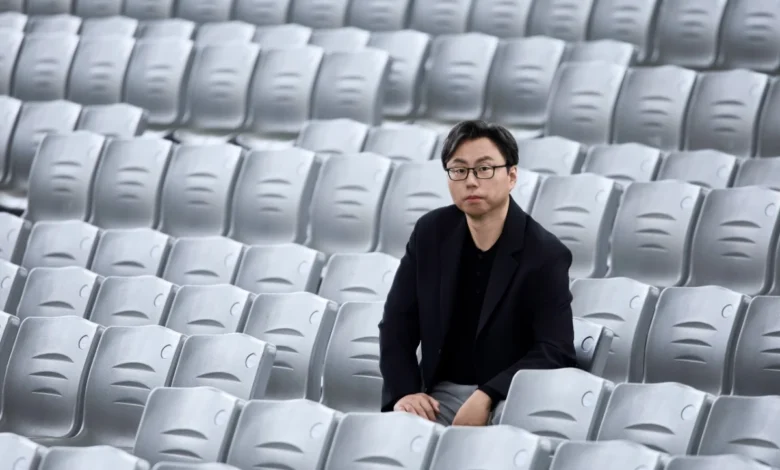
The 2025–2026 exhibition cycle marks a watershed moment for the Busan International Film Festival (BIFF). Following pivotal institutional milestones—including official recognition by the International Federation of Film Producers Associations (FIAPF) as an A-list festival and a newly minted pathway to the Academy Awards—Asia’s premier cinematic showcase has solidified its standing on the global stage. As the festival opens its doors for its largest lineup since 2019, featuring 246 films across multiple venues, the leadership under Festival Director Jung Hanseok is focused on stabilizing its competitive framework while navigating a recovering domestic box office.
A Transformative Year of Global Accolades
The momentum driving BIFF forward began earlier this year when FIAPF formally added the festival to its prestigious list of A-list competitive film events, aligning Busan with historical heavyweights like Cannes, Berlin, and Venice. Shortly thereafter, the Academy of Motion Pictures Arts and Sciences (AMPAS) announced that top-prize winners of six major international festivals—with Busan joining Cannes, Berlin, Venice, Sundance, and Toronto—will automatically qualify for consideration in the Best International Feature Film category at the Oscars.
These dual developments have profoundly altered the calculus for international filmmakers. According to Festival Director Jung Hanseok, who assumed leadership last year, the recognition has driven an immediate surge in both the quantity and caliber of submissions.
"These developments are already having a positive effect on both the number and quality of submissions to the festival," Jung noted. "They give filmmakers a meaningful additional incentive to submit their work to BIFF, and some filmmakers may now be able to envision a longer-term path that begins with winning the Busan Award for Best Film and continues into an Oscar campaign."
The Evolution of the Competition Section
BIFF introduced a fully-fledged official competition section only last year, handing out accolades across six categories: Best Film, Best Director, Special Jury Award, Best Actor, Best Actress, and an Artistic Contribution Award. In its inaugural year, the Best Film honor went to Gloaming In Luomu by Chinese-Korean filmmaker Zhang Lu, while Taiwan’s Shu Qi secured the Best Director prize for Girl.
Operating a new competition section alongside deeply entrenched European counterparts presented distinct hurdles. Jung acknowledged that an early challenge was rapidly establishing trust and communicating the intrinsic value of the section. However, the FIAPF accreditation and the Academy qualification pathway have significantly accelerated that maturation process.
This year, the 14-title competition lineup embraces a diverse geographical and cultural footprint, featuring works from China, Taiwan, Japan, Uzbekistan, Indonesia, and Iran. The formidable seven-person international jury, headed by renowned Chinese auteur Zhang Yimou, reflects the high stakes of the competition.
Territorial Impact and Regional Reception
The ripple effects of Busan’s elevated status are already visible across key Asian markets. In China, directors are showing heightened interest as invitations to A-list festivals bolster their prospects when applying for domestic public funding and support. Similarly, Japanese industry professionals have demonstrated a markedly more proactive and receptive attitude toward BIFF’s competition entries compared to previous years.
Korean filmmakers are also recognizing the strategic advantages of the new ecosystem. While Korea’s official Oscars committee has submitted Lee Chang-dong’s Possible Love—which is currently enjoying an Oscar-qualifying theatrical run before heading to Netflix—the theoretical possibility of a Busan Best Film winner securing secondary Oscar eligibility opens unprecedented doors for local creators.
A Expanded Lineup and Star-Studded Roster
Running from October 6 to October 15, the festival is screening 246 films, marking a five-film increase over the previous year and the largest program since 2019. To maximize audience convenience, the festival commenced one day earlier than historical schedules and expanded screening volumes from Thursday through Sunday, when attendance traditionally peaks. Early online ticket sales indicate that total festival attendance is on track to surpass last year’s figures.
The opening night on Tuesday, October 6, featured a screening of Kim Jong-kwan’s The Table: Day And Night, with Pachinko star Kim Minha hosting the opening ceremony. The star-studded roster of international and domestic guests includes:
- Michelle Yeoh, honored as the Asian Filmmaker of the Year.
- Ann Hui, recipient of the Camellia Award.
- Maggie Gyllenhaal, presenting her short film Flesh Impact in Special Screenings.
- Isabelle Huppert, engaging local audiences with her latest feature, All About Corinne.
- Majid Majidi, attending the festival for the first time with his competition entry, Midday Meal.
- Japanese animation pioneer Rintaro.
- Alfonso Cuarón, visiting for a special IMAX screening of Gravity alongside the Asian Premiere of Jonás Cuarón’s Campeón Gabacho.
Comprehensive Programming Across Diverse Sections
Beyond the main competition, BIFF’s robust programmatic structure caters to diverse cinematic tastes through several signature sections:
- Gala Presentation: Showcasing six high-profile titles, including Hirokazu Kore-eda’s Look Back and Yeon Sang-ho’s Paradise Lost.
- Icons: Featuring 16 works from master directors, such as Ira Sachs’s The Man I Love, Ryusuke Hamaguchi’s All Of A Sudden, Pedro Almodóvar’s Bitter Christmas, Christian Mungiu’s Fjord, and Lav Diaz’s Let Us Through, Dear Ancestors.
- On Screen: Presenting world premieres of initial episodes from highly anticipated streaming series, including Netflix’s The Blue Road and Dead-End Job, and Disney’s The Remarried Empress.
- Open Cinema: Offering free, open-air screenings at the iconic Busan Cinema Center, featuring eight films such as Banjong Pisanthanakun’s Inherit and the Annecy award-winning animation The Violinist.
- Special Programs: Paying tribute to the late Korean cinematic icon Ahn Sung-ki through the "Those Beautiful Years" retrospective, alongside a Japanese animation showcase titled "Masterpieces of Madness, Exhilarating Prospects 12+1" and the annual "Carte Blanche" guest selection program.
Navigating the Recovery of the Korean Film Industry
Against the backdrop of international celebration, BIFF also serves as a barometer for the health of South Korea’s domestic film industry. Following a prolonged post-pandemic slump characterized by declining box office revenues and audience apathy, the Korean market has experienced an encouraging revitalization since the Lunar New Year holiday in February.
A wave of domestic hits—including the historical drama The Kings Warden, Yeon Sang-ho’s Colony, Na Hong-jin’s Hope, and the horror feature Salmokji: Whispering Water—has drawn audiences back into physical auditoriums. Furthermore, Hur Jin-ho’s political thriller The Assassin(s) grossed nearly $18 million following its release over the Chuseok holiday, though the film was forced to withdraw from its scheduled BIFF appearance amid a political controversy regarding historical accuracy, which has since drawn the backing of the Directors Guild of Korea.
Despite these positive indicators, Festival Director Jung Hanseok maintains a pragmatic outlook on the industry’s recovery. While rising ticket sales and major Hollywood tentpoles like The Odyssey and Spider-Man: Brand New Day have habituated younger demographics back into regular theater-going routines, structural challenges remain acute for independent and mid-budget productions.
"The fact that cinema attendance is increasing compared with last year suggests that there are encouraging signs of recovery," Jung observed. "At the same time, it remains very difficult for small and mid-budget films both to secure financing and to obtain theatrical releases. Government policy in this area is becoming more active, but we will need more time before we can judge its effects."
Looking Ahead: The Asian Contents & Film Market
As BIFF unfolds across multiple venues in Busan, industry professionals will transition to the festival’s dedicated business platform, the Asian Contents & Film Market (ACFM), which runs from Saturday, October 10, through Tuesday, October 13. By balancing its newly established global pedigree with a steadfast commitment to Asian perspectives and regional cinematic development, the Busan International Film Festival continues to chart a confident course into the future.