Songwriters of North America Annual Awards Honor Industry Icons and Address the Pressing Challenges of the Digital Age

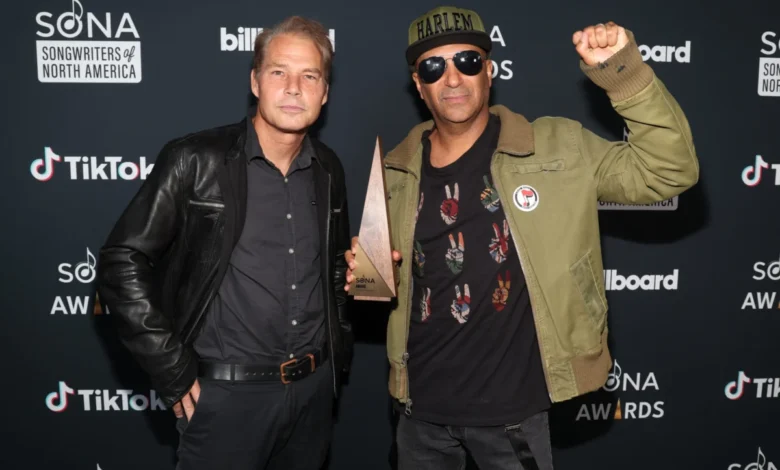
The Songwriters of North America (SONA) held its annual awards gala at the Skirball Cultural Center in Los Angeles this past Thursday, transforming an evening of industry celebration into a high-stakes forum on the future of creative labor. While the ceremony served to honor legendary figures such as Tom Morello, Annie Lennox, and Desmond Child, the subtext of the event was defined by an urgent mobilization against the dual threats of unchecked artificial intelligence and the erosion of intellectual property rights. As the organization continues to advocate for the professional interests of music creators, the 2024 awards ceremony underscored a growing consensus that the traditional songwriter’s role is at a pivotal, perhaps existential, inflection point.
A Legacy of Advocacy: Honoring the Architects of Culture
The evening’s primary focus was the recognition of individuals who have shaped both the sonic landscape and the political consciousness of their generations. Among the most anticipated honors was the presentation of SONA’s inaugural Freedom of Expression Warrior Award to Tom Morello, the guitarist best known for his work with Rage Against the Machine and Audioslave.
Introduced by Shepard Fairey, the visual artist globally recognized for his iconic “Hope” poster, Morello’s acceptance speech provided one of the night’s most potent moments. Drawing a direct line from the protest songs of the early 20th century to the political upheavals of the present day, Morello argued that music is not merely a background accompaniment to social change, but a foundational driver of it. He cited the historical weight of songs like “We Shall Overcome” during the American Civil Rights Movement and the use of his own catalog in recent political demonstrations in Brazil.
Morello’s rhetoric was explicitly defiant, rejecting the notion that musicians should remain apolitical. “Shut up and just play guitar? Sorry, but fuck you, I won’t do what you tell me,” he stated, channeling the lyrics of one of his most famous compositions to signal a commitment to the First Amendment. His message served as a rallying cry for attendees to view their creative work as a form of social activism.
The Evolution of the Songwriter’s Craft
While Morello focused on the intersection of music and dissent, the event also highlighted the immense technical and commercial contributions of songwriters whose work has defined the pop, rock, and global music markets. Desmond Child, a titan of the industry responsible for foundational hits such as KISS’s “I Was Made For Loving You,” Bon Jovi’s “Livin’ on a Prayer,” and Ricky Martin’s “Livin’ La Vida Loca,” was honored with the Warrior Award.
Paul Stanley, lead singer of KISS, introduced Child, emphasizing the distinction between a performer and a songwriter—the latter being the architect of the industry’s success. Child’s acceptance speech transitioned from professional reflection to policy advocacy. He asserted that “copyrights are human rights,” a sentiment that echoes SONA’s ongoing lobbying efforts in Washington D.C. for stricter protections against the unauthorized use of intellectual property by tech platforms.
The Looming Shadow of Artificial Intelligence
Perhaps the most significant theme of the evening was the industry’s collective apprehension regarding the rapid advancement of generative AI. Laurent Hubert, CEO of Kobalt Music and recipient of SONA’s Executive of the Year award, delivered a sobering assessment of the technological landscape. Hubert noted that the industry is currently in a race against time, warning that “AI is here, and it won’t wait for us to get comfortable with it.”
This sentiment was echoed by Annie Lennox, who received the Artist Songwriter Award. After a career spanning decades of innovation—from the Eurythmics to her solo work—Lennox framed the debate over AI not just as a financial issue, but as a moral one. She emphasized the sanctity of “lived experience,” arguing that human creativity is inherently tied to the finite, authentic nature of a human life.
“We’re the real deal, creative human beings,” Lennox remarked. “There is a difference, and that difference must be protected. Not only for writers like us, but for the future of all humanity.” Her performance of “Sweet Dreams (Are Made of This)” to close the evening served as a stark reminder of the unique, inimitable signature that human artists bring to their work—something that current AI models struggle to replicate with true emotional depth.
Industry Data and the Economic Landscape
The urgency of these speeches is rooted in concrete economic data regarding the modern music business. According to recent reports from the International Federation of the Phonographic Industry (IFPI), the global recorded music market has seen consistent growth, yet the distribution of that wealth remains a point of intense friction. Songwriters, who provide the foundational intellectual property for the entire industry, have historically struggled to secure a proportional share of streaming revenue.
Furthermore, the rise of AI-generated music—often trained on copyrighted works without compensation or consent—poses a secondary, more existential threat. Data from the U.S. Copyright Office indicates an exponential increase in filings related to AI-generated content, prompting a frantic search for a legal framework that can balance technological progress with the rights of human creators. SONA has positioned itself at the center of this debate, arguing that current copyright laws are insufficient to address the scale of the potential displacement of professional songwriters.
Chronology of the Event and Key Recipients
The ceremony followed a carefully curated sequence, moving from the recognition of global influence to the celebration of emerging talent:
- Opening Remarks: SONA leadership addressed the membership, highlighting the legislative milestones achieved in the past year, particularly concerning the Music Modernization Act and the ongoing battles over mechanical royalty rates.
- Global Impact Recognition: The songwriters behind the KPop Demon Hunters project—Melanie Fontana, Lindgren, Danny Chung, and Daniel Rojas—received the Global Impact Award, reflecting the borderless nature of modern songwriting and the massive influence of K-pop in Western markets.
- Emerging Talent: Chris Redding was honored with the Emerging Songwriter Award, serving as a reminder that the industry’s future relies on fostering the next generation of creative voices amidst an increasingly difficult economic climate.
- Executive Insight: Laurent Hubert’s keynote speech on the technological shifts in music publishing provided the intellectual framework for the evening’s panel-style discussions.
- Lifetime Achievement/Artist Recognition: The presentations for Child and Lennox concluded the evening, grounding the night in the history of the craft before looking forward to the future of the profession.
Broader Implications: A Call to Collective Action
The atmosphere at the Skirball Cultural Center was not merely celebratory; it was tactical. The awards show served as a de facto summit for songwriters to discuss the necessity of collective bargaining and unified lobbying. By inviting figures like Morello, whose brand is built on defiance, and industry executives like Hubert, who manage the business side of the craft, SONA is attempting to build a coalition that spans the entire music ecosystem.
The implications for the music industry are profound. If the creative community fails to establish clear guardrails for AI and secure higher royalty rates for streaming, the profession of "songwriter" faces a decline into obsolescence. The sentiment expressed by the evening’s honorees—that copyright is a fundamental right and that human creativity is an essential human trait—suggests that the industry is preparing for a long, protracted struggle.
As the gala concluded, the message to the industry was clear: the era of passive participation is over. Whether through the lens of political activism, as championed by Morello, or through the lens of legal protection, as emphasized by Child and Lennox, the consensus is that the songwriter must become an active participant in defining the rules of the digital economy. The night served as a reminder that while technology may change the delivery of music, the value of the human soul behind the composition remains the industry’s most critical, and most endangered, asset.