Beyond the Ballot Box: How 2026 State Measures Are Reshaping the Future of American Conservation

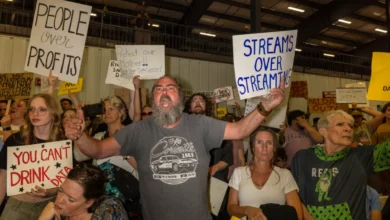
As the 2026 midterm elections approach, the focus of the American electorate is often fixed on federal legislative control and executive appointments. However, a significant portion of the nation’s environmental policy is being decided far from the halls of Congress. Across the United States, voters are preparing to weigh in on a suite of ballot initiatives that will fundamentally alter how states manage natural resources, protect endangered species, and fund climate resilience. With federal protections for wildlife and habitat currently experiencing significant retrenchment, these state-level decisions have become the frontline for conservation advocacy.
The political landscape surrounding these measures is defined by a vacuum in federal environmental oversight. Over the past several years, the current administration has systematically rolled back provisions of the Endangered Species Act and reduced the operational capacity of the National Park Service and the U.S. Forest Service. These federal agencies, which manage nearly 30 percent of the nation’s landmass, have seen their budgets tightened and their regulatory mandates weakened, shifting the burden of stewardship to state governments. Consequently, the 2026 ballot cycle represents an unprecedented opportunity for public intervention in the management of local ecosystems.
The Legislative Landscape: A State-by-State Overview
The following measures represent the most critical points of contention in the current electoral cycle, spanning from infrastructure bonds to fundamental changes in constitutional wildlife management.
California Proposition 45: The Speed vs. Stewardship Dilemma
Proposition 45 seeks to streamline the California Environmental Quality Act (CEQA) by accelerating review processes for projects deemed "essential." Supporters argue that the state’s housing and clean energy crises demand an expedited regulatory pathway. Critics, including major environmental organizations like the Sierra Club, contend that the "essential" designation is broad enough to facilitate the rapid destruction of fragile habitats. Data from previous infrastructure projects suggest that shortened review periods often bypass critical wildlife corridor assessments, potentially leading to long-term fragmentation of ecosystems that are already stressed by rising temperatures.
Georgia Amendment 1: Expanding Conservation Tax Incentives
Georgia’s proposed Amendment 1 aims to double the acreage cap—from 2,000 to 4,000 acres—for properties qualifying for the Conservation Use Valuation Assessment (CUVA) program. By incentivizing landowners to maintain large tracts of undeveloped land, the state hopes to preserve biodiversity in agricultural regions. Forest economists have noted that while this primarily serves as a tax relief mechanism for landowners, it effectively creates "private preserves" that support regional species, including the northern bobwhite quail. The success of this measure hinges on whether landowners opt for active ecological management or simply seek to minimize tax liability.
Massachusetts Question 6 and Colorado Proposition 137: Dedicated Revenue Streams
Both Massachusetts and Colorado are proposing the creation of dedicated conservation funds fueled by sales taxes on outdoor recreation equipment. In Colorado, where wildfire suppression costs have exceeded $1 billion over the last decade, Proposition 137 seeks to secure a consistent, non-partisan funding source for forest health. By tying conservation budgets to sporting goods revenue, these states are attempting to create a sustainable fiscal loop: as outdoor recreation grows, so does the investment in the very environments that make such activities possible.
Arkansas Issue 4: Infrastructure and Aquatic Health
Arkansas is putting forward a $500 million bond measure aimed at upgrading water treatment and wetland infrastructure. Unlike many conservation initiatives that focus on land acquisition, Issue 4 targets the "invisible" environment—the water systems that sustain the state’s biodiversity. Historically, wetland preservation has been a low priority in state budgetary cycles; however, the inclusion of this bond reflects a growing recognition that water quality is inextricably linked to both public health and wildlife survival.
Rhode Island Question 5: Climate Resilience Funding
Rhode Island’s Question 5 represents one of the most proactive climate adaptation measures on any state ballot this year. With a $55 million bond, the state intends to bolster coastal defenses against sea-level rise and invest $7 million specifically into the restoration of the Narragansett Bay watershed. This measure is a direct response to the increasing frequency of "nuisance flooding" and the encroachment of invasive aquatic species, which have been exacerbated by changing weather patterns.
The Constitutional Clash: Colorado Amendment 83
Perhaps the most contentious issue in the 2026 cycle is Colorado Amendment 83. While framed as a "Right to Hunt and Fish" initiative, the proposal has ignited a fierce debate regarding the definition of "traditional methods" and the authority of the state’s wildlife commissions.
The language of the amendment proposes that hunting and fishing be established as the "preferred means" of wildlife management. This phrasing is legally significant, as it could effectively subordinate scientific management practices—such as wildlife relocation, fertility control, or non-lethal deterrents—to lethal harvest methods. Furthermore, the lack of a clear legal definition for "traditional methods" has raised alarms among conservationists. As Dr. Rebecca Niemiec, co-director of the Animal-Human Policy Center at Colorado State University, observes, the ambiguity could invite legal challenges to existing bans on practices such as poisoning, leg-hold traps, and the use of bait and hounds.
Historically, Coloradans have demonstrated a strong preference for ethical wildlife management. In 1992, the state voted to restrict bear baiting and the use of hounds, and in 1996, it prohibited the use of leghold traps and snares. Amendment 83, if passed, could be interpreted as a direct repeal of the public’s historical stance on these issues. The measure has even created a rift within the sporting community, with several hunting and angling organizations formally opposing the amendment on the grounds that it undermines the ethical standards required for modern wildlife conservation.
Implications and Future Trends
The 2026 ballot measures reveal a growing trend in American politics: the transition of environmental policy from the legislative chamber to the public ballot. This shift reflects a deep-seated distrust in current political institutions to manage the complexities of a changing climate and dwindling biodiversity.
- Fiscal Sustainability: The trend toward "user-pays" funding models (as seen in Massachusetts and Colorado) indicates that states are looking for ways to fund conservation that do not rely on general tax revenue, which is often subject to political volatility.
- The Ethics of Management: The debate over Colorado’s Amendment 83 highlights a fundamental conflict between traditional extractive management models and modern, science-based conservation. As the human-wildlife interface becomes more complex due to urban expansion, the public is increasingly demanding a say in how that interface is regulated.
- Localizing Climate Action: With federal climate policy in flux, state-level resilience bonds, such as those in Rhode Island and Arkansas, serve as a decentralized hedge against environmental degradation. These measures suggest that states are prioritizing infrastructure resilience as a necessary component of economic stability.
Conclusion
The results of the 2026 midterm elections will provide a snapshot of the American public’s environmental priorities. While ballot measures offer a direct path to policy change, they also bring the risk of oversimplification. Complex ecological issues—such as the balance between human recreation, habitat protection, and sustainable wildlife management—are often difficult to distill into a single "yes" or "no" vote.
As voters head to the polls, the impact of these decisions will extend far beyond the November election. They will set the regulatory and financial precedents for the next decade of conservation, determining whether the nation’s wild spaces are viewed as resources to be managed or ecosystems to be protected. The legislative outcome of these measures will ultimately reveal whether the American public is ready to embrace a more nuanced, scientifically informed, and ethically conscious approach to the natural world.
Related posts: