The Quiet Crisis in the Pacific: Scientists and Conservationists Sound the Alarm Over Plummeting Gray Whale Populations

NEWPORT, Oregon — In a nondescript conference center overlooking the rugged Pacific coastline, several hundred scientists, government researchers, and environmental advocates converged last week for an extraordinary two-day summit. The gathering was entirely dedicated to a single, rapidly deteriorating ecological metric: the precipitous decline of the Eastern North Pacific gray whale.
For decades, the story of the gray whale was celebrated as one of modern conservation’s greatest triumphs. Driven to the brink of extinction by 19th- and 20th-century commercial whaling, the species mounted an inspirational recovery following international harvesting bans and rigorous domestic protections enacted in the 1970s. By 1994, the U.S. government deemed the population sufficiently robust to remove it from the Endangered Species Act (ESA) list entirely.
Today, however, that hard-won victory is unraveling. Along the U.S. West Coast, gray whale populations have plummeted by roughly 50 percent over the past decade, crashing from a peak estimate of 25,000 to 30,000 individuals in 2016 down to current estimates ranging between 11,700 and 17,000. This alarming downward spiral has transformed what was once a conservation poster child into a frontline indicator of accelerating marine ecosystem collapse.
A Gathering Marked by Tension and Silence
The atmosphere inside the Newport conference rooms was thick with anxiety. While the agenda nominally focused on sharing the latest marine biology data, participants described a palpable undercurrent of caution. The tension was not merely a product of the ecological emergency at hand, but of the political minefield surrounding federal environmental policy.
Presentations were overwhelmingly tailored to hard science, steering strictly clear of policy debates. According to Mark Palmer, co-director of the marine mammal protection project at the Earth Island Institute, conference organizers explicitly warned attendees at the outset that policy discussions were off-limits.
The self-censorship stemmed largely from professional vulnerability. Many of the scientists in attendance were federal employees or researchers whose institutions rely heavily on federal grants. Since taking office in 2025, the Trump administration has implemented sweeping staff reductions and budget cuts across the National Oceanic and Atmospheric Administration (NOAA) to align with partisan objectives. Furthermore, the administration has proposed eliminating the Marine Mammal Commission—an independent agency established to advise the federal government on marine mammal protection—and has rolled back foundational habitat protections under the Endangered Species Act, contributing to a backlog of roughly 400 species awaiting federal listing decisions.
"People were walking on eggshells there," Palmer observed, noting the acute nervousness among researchers regarding potential professional retaliation or funding retractions. NOAA itself declined to comment on inquiries regarding the summit or its regulatory timelines.
Chronology of a Crisis: From Peak Abundance to Record Lows
The modern crisis facing gray whales is rooted in a cascading series of environmental shifts, primarily driven by rapid climatic alterations in the Arctic.
Historically, Eastern gray whales undertake one of the longest migrations of any mammal. Every summer, they feed intensively on benthic crustaceans in the cold, nutrient-rich Arctic waters near Alaska. In the winter, they migrate thousands of miles south to the warm lagoons of Mexico to mate and give birth.
In recent years, however, climate change has caused Arctic sea ice to melt at a rate nearly four times faster than the global average. This systemic disruption has triggered a collapse in the availability of the whales’ primary prey. Arriving in northern feeding grounds only to find diminished food sources, whales are failing to accumulate the necessary fat reserves to sustain themselves through the grueling migration cycle.
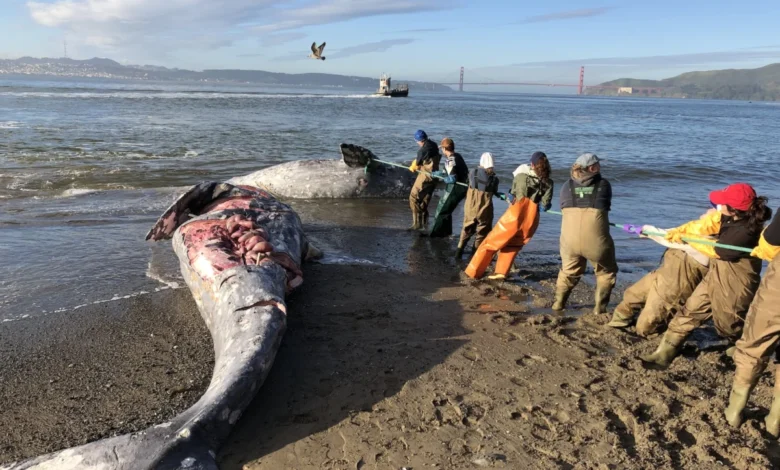
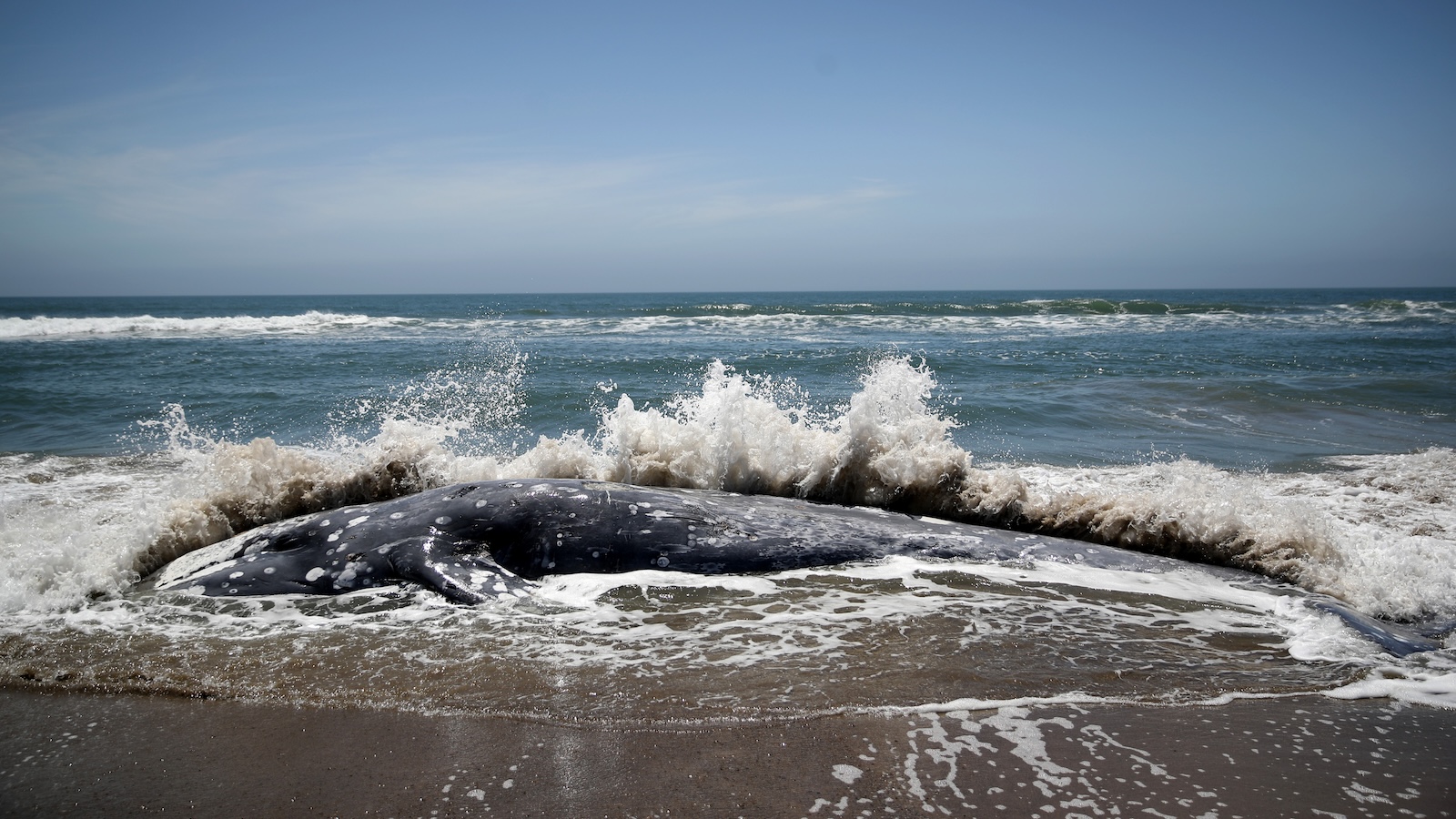
The physical toll of this nutritional deficit has been starkly visible. This past summer alone, 187 gray whale carcasses washed ashore along the U.S. West Coast. Furthermore, the reproductive capacity of the population has tanked. While a healthy population typically yields around 1,000 calves annually, scientific surveys from the previous year estimated a historic low of just 85 births.
Compounding these natural stressors are anthropogenic hazards along migration corridors. Malnourished whales are increasingly venturing into high-risk, nearshore environments to forage, heightening their exposure to fatal vessel strikes and commercial fishing gear entanglements. In the San Francisco Bay Area, where scientists have tracked a surge in strandings, shipping traffic claims the lives of an estimated 20 percent to 50 percent of all whales that enter the bay. Biologists emphasize that many more carcasses sink silently to the ocean floor before ever reaching a beach to be counted.
Legal Battles and Regulatory Drag
As the ecological data darkens, a parallel conflict is playing out in the legal arena. Under the Endangered Species Act, concerned citizens and organizations can petition the federal government to grant formal protections to imperiled wildlife. Richard Steiner, a prominent marine conservation biologist, formally submitted a petition to relist Eastern gray whales under the ESA.
However, NOAA has missed the legally mandated deadline to respond to the petition. Frustrated by bureaucratic delays and administration inertia, three major conservation groups—including the Center for Biological Diversity and the Earth Island Institute—filed a formal notice of intent to sue at the end of August. The action initiates a strict two-month window for the federal government to act before a federal lawsuit is formally launched.
Miyoko Sakashita, an attorney with the Center for Biological Diversity who is spearheading the impending litigation, emphasized that a federal listing is a critical administrative prerequisite for recovery. "Once a species is formally protected, federal agencies are generally required to develop a recovery plan," Sakashita explained. "Listing also opens the door to federal funding for monitoring, research, and efforts to protect or restore habitat. That could buy us some time for us to solve that bigger climate change problem."
Sakashita noted that if the administration rejects the petition or continues to stall, the legal battle will inevitably proceed to the courts. "The law says they have to use the best available science when deciding which species are endangered," she stated. "When we look at this terrible population decline, it seems like there cannot be any other answer than to proceed forward with a threatened or endangered listing."
Adding to the controversy, NOAA recently published population models indicating that the whale population may have rebounded by approximately 5,000 individuals over the past year. Independent scientists, including Palmer, have expressed profound skepticism regarding these figures. Given the documented low birth rates and high mortality numbers, critics argue that such a rapid biological rebound is mathematically and physically impossible. Compounding distrust, NOAA is currently months overdue in releasing its official annual count of gray whale calf births.
Grassroots Mitigation and Technological Interventions
While policymakers grapple with regulatory paralysis and legal threats, conservation technologists and maritime organizations are rushing to implement localized, practical safeguards to reduce immediate mortality risks.
Rachel Rhodes, a scientist with the Benioff Ocean Science Laboratory at the University of California, Santa Barbara, leads Whale Safe—an innovative initiative that maps real-time whale locations in busy shipping lanes using advanced sonar, thermal imaging cameras, and satellite telemetry tags.
"In an ideal world, ships would be able to avoid whales entirely," Rhodes said. "But waterways are often too busy and confined for that to be possible. So the next best thing is to ask ships to slow down to 10 knots or less."
Mandatory speed limits for large vessels have already been successfully implemented along the U.S. East Coast to protect critically endangered North Atlantic right whales. On the West Coast, however, speed restrictions remain largely voluntary. Programs such as "Blue Whales Blue Skies" have achieved localized success by offering financial incentives and public recognition to shipping lines that voluntarily reduce vessel speeds in sensitive zones. Despite these efforts, compliance remains inconsistent, with certain commercial operators and cruise ships continuing to transit high-density whale zones at hazardous speeds.
Broader Implications for Marine Ecosystems
The plight of the gray whale serves as an ominous barometer for the health of the broader marine biosphere. Biologists point out that the historical extinction of the Atlantic gray whale centuries ago—noted as the only documented extinction of a baleen whale species in human history—demonstrates just how acutely vulnerable these animals are to cumulative anthropogenic pressures.
"The science on this is perfectly clear," Steiner asserted. "As goes Arctic sea ice, so goes the gray whale population. And Arctic sea ice will continue its decline throughout this century." Without aggressive, global reductions in greenhouse gas emissions, Steiner warns that the ecological consequences could prove apocalyptic not only for gray whales, but for a vast array of interconnected marine species.
As the legal deadlines approach and the scientific community presses for urgent administrative action, the future of the Eastern gray whale hangs in a delicate balance. For now, the burden rests heavily on policymakers to translate empirical warning signs into binding conservation mandates before one of the ocean’s most resilient travelers is pushed permanently past the point of no return.
Related posts: