Suki Waterhouse Embraces the Prospect of Nepotism for Her Daughter with Robert Pattinson

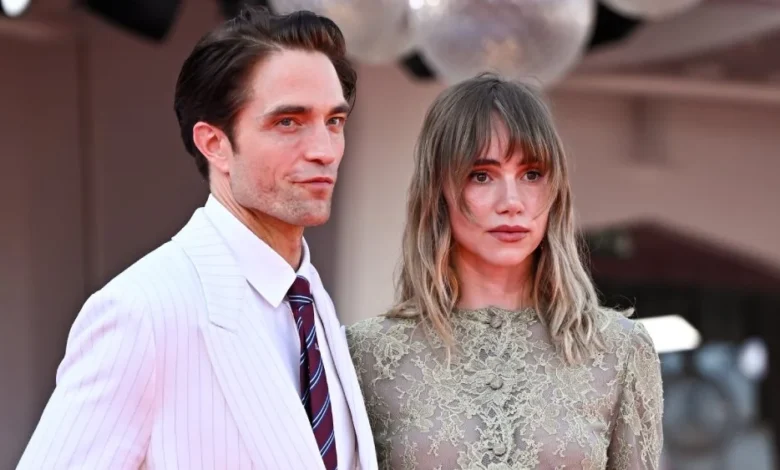
Suki Waterhouse and Robert Pattinson, two of the most recognizable figures in modern entertainment, have long maintained a relatively private existence despite the global spotlight that follows their every professional move. However, in a candid recent interview with Nylon, Waterhouse offered a rare, humorous, and refreshingly honest glimpse into the future of their young daughter. When posed with the hypothetical question of whether she would support her child should she choose to pursue a career in the arts, Waterhouse did not hesitate. Her lighthearted admission—“Why would I advise against it? I’d be nepo-babying the hell out of her”—has reignited the ongoing cultural conversation surrounding nepotism in Hollywood, while simultaneously highlighting the practical realities of parenting within the high-stakes industry of global celebrity.
The discourse surrounding “nepo babies”—the colloquial term for children of celebrities who benefit from their parents’ established networks and visibility—has become a cornerstone of modern pop-culture analysis. By acknowledging that she would readily leverage her and Pattinson’s combined influence, Waterhouse has moved past the typical defensive stance often adopted by industry scions, choosing instead to lean into the inherent advantages of her position.
A Professional Overview: The Paths of Waterhouse and Pattinson
To understand the weight of Waterhouse’s comments, one must first consider the distinct career trajectories of both parents. Suki Waterhouse’s rise to prominence began in the fashion world, where she quickly became a fixture on international runways and in luxury campaigns. Her transition into acting was marked by roles in projects such as Love, Rosie and the acclaimed Amazon Prime series Daisy Jones & The Six, which garnered significant critical attention. Yet, it is her evolution into a musician that has defined her recent years. With the release of her third studio album, Loveland, in July, Waterhouse has solidified her identity as a serious artist capable of commanding sold-out crowds and international festival stages.
Robert Pattinson, conversely, represents one of the most successful transitions from teen idol to prestige actor in cinematic history. His breakout role as Cedric Diggory in Harry Potter and the Goblet of Fire served as the precursor to the massive cultural phenomenon of the Twilight saga. Since his departure from the role of Edward Cullen, Pattinson has meticulously curated a filmography defined by collaboration with visionary directors, appearing in works such as The Lighthouse, Good Time, and Tenet. His recent portrayal of Bruce Wayne in The Batman further cemented his status as a leading man of immense commercial and critical power. With the upcoming release of Mickey 17 and the film The Drama, followed by his role as Chris Hansen in Primetime, Pattinson’s influence on the industry remains as potent as ever.
A Whirlwind Year: Balancing Stardom and Parenthood
The context of Waterhouse’s recent interview is crucial to understanding her current mindset. Since welcoming her daughter in 2024, Waterhouse has navigated a period of intense professional activity that would be daunting for any artist, let alone a new mother. Her schedule following the birth of her child was nothing short of a whirlwind. In a matter of weeks, she managed to secure a cover for British Vogue, headline the Gobi stage at the Coachella Valley Music and Arts Festival, and serve as an opening act for Taylor Swift’s record-breaking Eras Tour in the United Kingdom.
In previous discussions with Variety, Waterhouse described this period as a “dream,” though she readily admitted to the difficulty of the pace. “When I had her, I had so many incredible things going on,” Waterhouse shared. “Maybe if I have another one, it will be a more peaceful moment. But I just knew that this time it was going to be a whirlwind. And I think as a result, everything has been so real that it hurts. It’s been amusing and so tender and fragile and hilarious and all the things.”
This professional intensity highlights the reality of the modern celebrity experience, where the boundaries between public persona and private milestone are increasingly porous. For Waterhouse, the ability to balance these responsibilities is not just a testament to her work ethic but also a reflection of the support systems available to those in the upper echelons of entertainment.
The Nepotism Debate: A Cultural Context
Waterhouse’s candid comment regarding “nepo-babying” her daughter taps into a broader, systemic critique that has permeated the entertainment industry. Data-driven analysis of Hollywood casting and project development often reveals that familial connections serve as a significant "accelerant" for emerging talent. While talent is undeniably a prerequisite for longevity, the initial barrier to entry—the “foot in the door”—is statistically lower for those with parents who are already established players.
Critics of nepotism argue that it restricts diversity and meritocracy, preventing those from outside the industry from gaining access to the same resources. Proponents, or those who take a more pragmatic view, argue that nepotism is simply a form of social capital, no different from family businesses in other sectors such as law, medicine, or trade. By speaking openly about her willingness to utilize her connections, Waterhouse acknowledges a reality that many choose to obfuscate. In doing so, she potentially mitigates the inevitable backlash that often accompanies the entry of a celebrity’s child into the industry.
The Practicalities of Industry Legacy
Should Waterhouse and Pattinson’s daughter eventually seek a path in the performing arts, she would enter a landscape that is increasingly wary of the “nepo baby” label. In recent years, public sentiment has shifted toward demanding transparency from those who benefit from their lineage. Actors like Maya Hawke, Maude Apatow, and Jack Quaid have faced varied public reactions, ranging from intense scrutiny to genuine appreciation for their craft.
For the daughter of two global stars, the expectation will undoubtedly be high. The path she chooses will be subject to intense public scrutiny, and the “nepo-baby” designation will likely be attached to her early career milestones. However, as evidenced by the success of second-generation stars who have managed to carve out their own artistic identities, the initial assistance provided by parents is often eventually overshadowed by the individual’s own body of work.
Analyzing the Future: Professional Implications
From a journalistic perspective, Waterhouse’s admission serves as a case study in modern celebrity branding. By choosing honesty over a PR-managed denial, she manages the narrative before it can be used against her. This approach is increasingly common among a generation of artists who value authenticity and direct communication with their fan base.
Furthermore, the integration of professional and personal life is a hallmark of this era. Fans are no longer satisfied with detached, untouchable icons; they demand to see the human side of the stars they follow. Waterhouse’s willingness to discuss the “intense” nature of her career alongside her motherhood and her humorous take on the nepotism debate creates a relatable image that likely strengthens her bond with her audience.
Looking Ahead
As Suki Waterhouse continues to promote her music and Robert Pattinson prepares for a slate of high-profile film releases, the focus will inevitably remain on their individual creative outputs. Yet, the brief glimpse into their life as parents serves as a reminder that even the most famous individuals are currently navigating the same fundamental questions about legacy, opportunity, and the future of their children.
Whether their daughter decides to pursue a career in the arts remains a question for the distant future. For now, the public is left with a refreshing moment of candor—a brief, unscripted acknowledgment that in an industry built on connections, being born into the heart of the machine is a reality that is difficult to ignore, and perhaps even harder to apologize for. As the discourse continues, it is likely that Waterhouse’s comments will be referenced as a pivotal moment where the industry’s most prominent figures began to view the “nepo baby” conversation with a level of irony and self-awareness that was previously absent from the public stage.
The trajectory of this conversation is indicative of a wider shift in how the public perceives the privilege inherent in celebrity. As the industry evolves, the intersection of talent, luck, and legacy will remain a central theme, and figures like Waterhouse and Pattinson will continue to be the primary subjects through which we analyze these complex cultural dynamics. For now, the couple remains focused on their respective projects, balancing the demands of global fame with the personal milestones that define their life behind the scenes.
Related posts: