Ex-Crypto King Samuel Bankman-Fried Asks U.S. Supreme Court to Overturn Fraud Conviction and Vacate $11 Billion Forfeiture Order

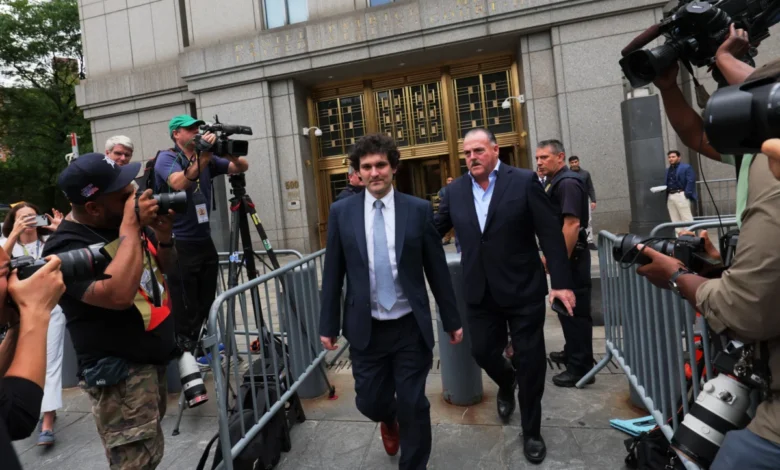
The legal saga surrounding the spectacular collapse of cryptocurrency exchange FTX reached a new milestone as disgraced founder Samuel Bankman-Fried formally petitioned the Supreme Court of the United States. Convicted in late 2023 on multiple counts of wire fraud, conspiracy, and money laundering, the former billionaire is seeking to completely overturn his criminal conviction and invalidate an unprecedented $11 billion forfeiture order. Currently serving a 25-year federal prison sentence, Bankman-Fried’s legal team argues that fundamental errors during his trial compromised his constitutional right to a fair proceeding and that his financial penalty violates the Eighth Amendment’s prohibition against excessive fines.
The petition, filed on a Thursday in September 2026 by Victor Li of the ABA Journal, underscores the ongoing legal battles that have defined the post-collapse era of the digital asset industry. In addition to his high-stakes appeal before the nation’s highest court, legal reports indicate that Bankman-Fried has concurrently pursued executive clemency by requesting a pardon from President Donald Trump. This dual-track strategy highlights both the desperation of the once-celebrated tech wunderkind and the profound legal precedents his case continues to test at the intersection of federal fraud law, constitutional protections, and the burgeoning cryptocurrency market.
The Core Arguments Before the Supreme Court
At the heart of Bankman-Fried’s Supreme Court petition is a complex legal challenge regarding how evidence of customer financial losses is handled in federal fraud trials. According to legal filings reviewed by Law360, Bankman-Fried’s defense counsel contends that the trial court erred significantly by admitting voluminous evidence regarding FTX customer losses. The core of the prosecution’s case centered on theories of fraudulent inducement, a legal framework where the prosecution maintains that the defendant misled investors or customers at the point of the transaction, rendering the ultimate financial outcome legally irrelevant to the determination of guilt.
Bankman-Fried’s lawyers argue that because fraudulent inducement does not legally require proof that the defendant intended to cause specific monetary losses, introducing visceral, emotional evidence of massive customer financial ruin unfairly prejudiced the jury. They maintain that the influx of such testimony created a wave of sympathetic bias that overshadowed the technical legal nuances of the charges, effectively denying him a fair trial.
In his petition, Bankman-Fried emphasized the broader systemic importance of resolving this evidentiary question for future white-collar defendants. "Establishing clear and equitable rules regarding how such cases may be presented to juries is essential, lest defendants like petitioner be unable to obtain fair trials (or even feel at liberty to demand trials in the first place)," Bankman-Fried wrote in the petition. His legal team is asking the Supreme Court to establish a definitive precedent that curtails what they view as prosecutorial overreach in complex financial crimes, where inflammatory victim-impact evidence can overshadow statutory elements.
Constitutional Challenges to the $11 Billion Forfeiture
Beyond attempting to dismantle the underlying conviction, Bankman-Fried’s petition launches a direct constitutional assault on the $11 billion forfeiture order imposed by the sentencing judge. His lawyers have characterized the staggering financial penalty as "crushing" and excessively punitive, arguing that it directly violates the Eighth Amendment of the U.S. Constitution, which bars cruel and unusual punishment and excessive fines.
Drawing upon historical jurisprudence, Bankman-Fried’s petition invokes deep-seated Anglo-American legal traditions to challenge the forfeiture amount. "The Eighth Amendment’s excessive fines clause enshrines the historical protection—dating back to Magna Carta—that fines ‘should not deprive a wrongdoer of his livelihood,’" the petition argues. The defense asserts that an $11 billion judgment is not merely a forfeiture of illicit proceeds, but a punitive measure that strips the petitioner of any potential future economic viability, serving as an unconstitutional state-sponsored financial annihilation rather than a proportional restitution.
Legal scholars note that while Eighth Amendment challenges to massive financial penalties are occasionally raised in white-collar defense, they rarely succeed before the Supreme Court. The judiciary has historically granted wide latitude to federal prosecutors and trial judges in calculating forfeiture amounts in cases involving multibillion-dollar fraud schemes, where vast sums of investor and customer capital were misappropriated and commingled across corporate entities like FTX and Alameda Research.
Chronology of the Fall of FTX and Samuel Bankman-Fried
To understand the weight of Bankman-Fried’s current Supreme Court petition, it is necessary to examine the rapid ascent and catastrophic fall of his crypto empire. The timeline of events traces a path from global digital finance dominance to federal penitentiary walls:
- May 2019: Samuel Bankman-Fried co-founds FTX, a cryptocurrency derivatives exchange, positioning it as a compliant, user-friendly alternative to existing global platforms.
- 2021–2022: Fueled by aggressive marketing, celebrity endorsements, and a booming digital asset market, FTX achieves a private valuation of $32 billion, propelling Bankman-Fried to the status of a multi-billionaire and a prominent political donor in Washington, D.C.
- November 2022: Investigative reports reveal deep financial entanglements between FTX and Alameda Research, Bankman-Fried’s affiliated hedge fund, which was secretly utilizing billions in customer deposits to cover risky investments and debts. A liquidity crisis ensues, leading to massive customer withdrawals and the rapid filing of Chapter 11 bankruptcy.
- December 12, 2022: Bankman-Fried is arrested by Bahamian authorities at the request of the U.S. government and subsequently extradited to the United States, where he is indicted on multiple counts of wire fraud, securities fraud, and money laundering.
- August 2023: Following repeated violations of his pre-trial release conditions—including alleged witness tampering—a federal judge revokes Bankman-Fried’s bail, remanding him to the Metropolitan Detention Center in Brooklyn, New York.
- November 2, 2023: A federal jury in the Southern District of New York returns a swift guilty verdict on all seven criminal counts against Bankman-Fried after a high-profile trial that captivated the financial and legal worlds.
- March 28, 2024: U.S. District Judge Lewis A. Kaplan sentences Bankman-Fried to 25 years in federal prison and orders the forfeiture of $11 billion, rejecting the defense’s argument that FTX customers did not suffer ultimate financial losses because bankruptcy proceedings might eventually recover funds.
- June 15, 2023 (and ongoing appeals): Throughout subsequent months, Bankman-Fried’s appellate attorneys mount various challenges in the U.S. Court of Appeals for the Second Circuit before escalating the dispute to the Supreme Court in late 2026.
Broader Implications for White-Collar Law and Cryptocurrency Regulation
The petition filed by Bankman-Fried carries significant implications for the future landscape of federal white-collar prosecutions, particularly within the rapidly evolving digital asset sector. As federal agencies and prosecutors continue to aggressively police cryptocurrency platforms, the boundaries of how fraud is argued and proven in court remain a contentious battleground between defense bars and the Department of Justice.
If the Supreme Court were to grant certiorari and review the case, it could establish critical nationwide standards regarding the admissibility of victim-loss evidence in fraudulent inducement prosecutions. Defense attorneys nationwide have long expressed concern that the emotional gravity of victim losses in high-profile corporate scandals routinely crowds out nuanced legal debates over intent, potentially lowering the evidentiary burden for the government. A ruling in favor of Bankman-Fried could force prosecutors to strictly tether their evidence to the precise statutory elements of the charges, limiting the introduction of generalized sympathy-inducing testimony.
Conversely, a denial of the petition by the high court would effectively cement the Second Circuit’s posture and reinforce the robust punitive framework utilized by federal courts in multi-billion-dollar corporate frauds. For the cryptocurrency industry, the case serves as a stark reminder of the enduring legal risks associated with lax internal controls, commingled funds, and misleading representations to retail and institutional investors.
As the Supreme Court weighs whether to take up the matter, and as executive branch officials review his separate petition for a presidential pardon, Samuel Bankman-Fried remains a central figure in one of the most consequential financial crimes in modern American history. Whether his latest legal maneuvers will yield any relief from his 25-year sentence and massive financial liabilities remains entirely within the discretion of the nation’s highest legal authorities.