Gillian Anderson Addresses Viral Video of Her Confronting Superfans in the Front Row of West End Production of Who Is Afraid of Virginia Woolf

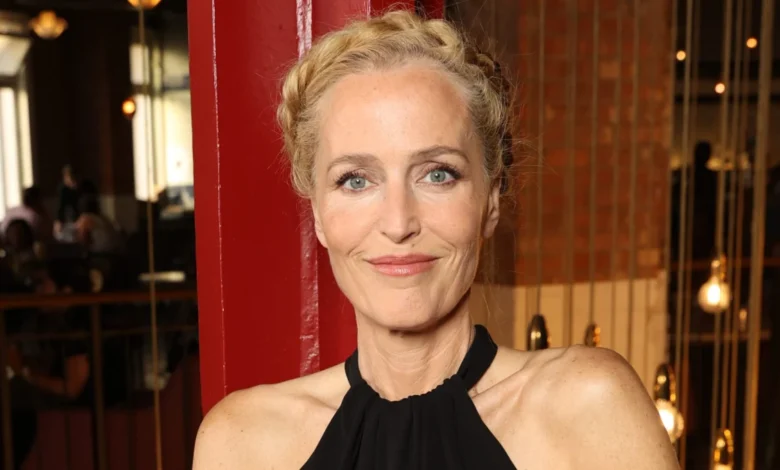
The intersection of celebrity culture, deeply dedicated fandoms, and the intimate architecture of modern live theater has once again sparked a widespread public conversation following an unexpected backstage encounter involving award-winning actress Gillian Anderson. Performing in a high-profile, highly anticipated West End revival of Edward Albee’s classic drama Who’s Afraid of Virginia Woolf? at London’s contemporary Soho Place Theatre, the Sex Education and The X-Files star found herself addressing a group of hyper-dedicated supporters directly from the stage.
The incident, which occurred immediately following a performance and was captured on a mobile device, quickly ignited intense digital scrutiny across multiple social media platforms. The resulting discourse has illuminated broader, increasingly urgent discussions concerning audience decorum, the physical boundaries inherent to intimate theatrical venues, and the psychological pressures placed upon performing artists in the age of omnipresent digital documentation.
The Viral Confrontation at Soho Place Theatre
The controversy began in the early hours of a Sunday morning in the United Kingdom, when a TikTok user uploaded a short video capturing an impromptu exchange between Anderson and several audience members. In the footage, which was recorded just after the curtain fell at Soho Place Theatre, Anderson can be seen leaning toward the front of the stage to speak directly and candidly to a cluster of attendees occupying the front-row seats.
"You guys cannot sit in the front row," Anderson firmly tells the group, according to the video footage. When the audience members attempt to offer verbal justifications, the actress remains resolute. "I don’t care; you cannot sit in the front row. It’s so distracting."
As the exchange continues, Anderson identifies the core of her frustration, pointing out the unique challenges posed by hyper-frequent attendees. "You can’t come 20 times and sit in the front row, it’ll drive me mad," she adds.
The video spread rapidly across the internet, capturing the imagination—and often the judgment—of the digital public. Within days of its initial posting, the primary TikTok upload alone amassed more than 4 million views, supplemented by millions of additional impressions, re-shares, and commentary threads across X (formerly Twitter), Instagram, and Reddit. Rumors circulated within the comments sections suggesting that the attendees in question had booked tickets to see the production upward of eight times, a testament to a level of intense devotion frequently seen within contemporary fan culture, yet rarely confronted so publicly by the principal talent.
Clarification and Damage Control on Social Media
As the digital storm intensified and negative commentary began to target the specific individuals featured in the video, Anderson took to X/Twitter to provide vital context and defuse any rising hostility. In her statement, the 58-year-old actress clarified the true nature of her relationship with the front-row attendees, emphasizing that the interaction was far from a random act of hostility.
"The video doing the rounds is me talking with women I go back over 20 years with — so please don’t say anything negative to or about them," Anderson posted, seeking to shield her long-standing acquaintances from internet harassment.
Beyond defending her friends, Anderson elaborated on the theatrical realities that prompted her candid remarks. She highlighted the physical design of the venue itself, noting that Soho Place Theatre—known for its intimate, in-the-round configuration—creates a unique environment where the boundary between the stage and the audience is remarkably thin.
"We’re thrilled to be doing this show, but for people in the front row, please be aware that in such an intimate venue we can all see you and sometimes, it can be a tad distracting!" Anderson explained. She concluded her statement with a reassuring sign-off aimed at calming her wider fan base: "That’s all. All good. On with the show and love to everyone and thank you to all of those coming."
Despite her clarifications, theater industry observers and social media commentators have continued to debate whether the individuals involved will alter their ticketing habits or heed the informal boundary set by the production’s lead.
A Growing Phenomenon: Stage Actors Speaking Out
Anderson’s candid backstage exchange is not an isolated incident, but rather part of a mounting wave of prominent stage actors publicly addressing audience behavior in real time. Over recent months, the West End and Broadway stages have witnessed a noticeable shift away from silent endurance toward active boundary-setting by performers who feel their concentration—and the collective experience of the audience—is being compromised.
Just a month prior to the Soho Place incident, Oscar-winning actress Cate Blanchett made headlines during the London run of the National Theatre’s Lyttelton Theatre production of Electra/Persona. Following the curtain call, Blanchett addressed the auditorium directly to request that fans cease recording the production on their mobile devices.
"There are few places on this planet where we can simply be together and be present," Blanchett told the audience. "I understand you like filming the curtain call — and it is kind of flattering in a way — but for anyone who is filming the show, please don’t, because it spoils it for the next group of people who come in and are present with us. So thank you very much."
Similarly, high-profile incidents involving other major stars have punctuated the theatrical calendar. In April, Tony Award-winning star Cynthia Erivo made international news when she halted a performance of Dracula at the Noël Coward Theatre after spotting an audience member actively recording the show with a camera. Just weeks later, actress Rosamund Pike publicly criticized an audience member for openly texting during a performance of Inter Alia at the National Theatre.
These recurring events highlight an escalating tension within the performing arts ecosystem. While producers and venues rely on dedicated, repeat attendees to drive ticket sales and generate organic social media buzz, actors performing heavy, emotionally taxing material—such as Edward Albee’s searing marital drama—require immense focus and psychological immersion that can easily be disrupted by familiar faces or technological distractions in the immediate line of sight.
Background and Context of the Production
Who’s Afraid of Virginia Woolf? is widely regarded as one of the most demanding and emotionally grueling masterpieces of twentieth-century American drama. Written by Edward Albee and first premiering on Broadway in 1962, the play explores the turbulent, alcohol-fueled relationship of a middle-aged college professor named George and his wife, Martha, as they host a younger academic couple for drinks late into the night.
The production currently running at Soho Place Theatre pairs Gillian Anderson with fellow critically acclaimed actor Billy Crudup, creating a formidable theatrical partnership that has drawn substantial critical praise and intense ticket demand. The venue itself, Soho Place, is London’s first new purpose-built West End theatre in 50 years, celebrated architecturally for its flexibility and deep intimacy. The theater’s configuration places the audience exceptionally close to the performance space, eliminating the traditional barrier of a proscenium arch and ensuring that actors can see virtually every facial expression, reaction, and movement in the front rows.
Industry Implications and the Future of Audience Etiquette
The viral nature of Gillian Anderson’s front-row intervention underscores a broader cultural reckoning regarding the unwritten social contract of live theater. For generations, this contract relied on mutual respect, silence, and the physical presence of the audience as an invisible backdrop to the dramatic action. However, the rise of smartphone technology, hyper-fandom culture, and the democratization of backstage access via social media have permanently altered the theatrical landscape.
Industry analysts suggest that incidents of this nature may prompt theaters to implement stricter guidelines regarding repeat attendance, front-row policies, and device usage. While welcoming superfans is economically beneficial for commercial theater, maintaining the artistic integrity of complex dramatic works requires an environment where actors feel psychologically secure and free from unnecessary distractions.
As the run of Who’s Afraid of Virginia Woolf? continues at Soho Place Theatre, Anderson’s viral moment serves as a stark reminder of the delicate equilibrium required in contemporary live performance—where the passion of the audience and the vulnerability of the artist meet across an increasingly narrow divide.