Navigating the Final Stretch of the Fantasy Baseball Season Requires Careful Management of Young Starting Pitchers

As the fantasy baseball season enters its critical final weeks, fantasy managers and MLB front offices alike find themselves balancing competing priorities. While fantasy participants focus relentlessly on securing league titles through waiver-wire acquisitions and maximizing daily active rosters, Major League Baseball teams must look at the bigger picture. Preserving the long-term health of elite young starting pitchers has officially taken precedence over late-season playoff pushes for several organizations, creating a challenging landscape for fantasy championships.
The closing weeks of a 162-game Major League Baseball schedule are traditionally defined by September roster expansions, pennant races, and fatigue. However, modern baseball analytics and medical staffs have elevated workload management to an art form. For fantasy managers relying heavily on breakout young arms, failing to anticipate innings limits and sudden organizational shut-downs can instantly derail months of strategic roster construction.
The Mechanics and Philosophy of Innings Limits
At the heart of the late-season pitching dilemma is the delicate science of workload management. Although contemporary analytical departments frequently debate the rigid parameters of the famous "Verducci Effect"—which theorizes that a year-to-year workload increase of 30 or more innings for pitchers under the age of 25 significantly spikes the risk of injury and performance decline—front offices remain remarkably cautious.
Major League organizations invest tens of millions of dollars in young pitching assets. Consequently, medical teams closely monitor cumulative stress, arm angles, velocity dips, and spin-rate degradation as September approaches. When a pitcher blows past his previous career-high in professional innings, warning lights flash within the front office.
For real-life franchises out of playoff contention, or those whose postseason probabilities have dwindled to longshots, the incentive to push a young arm past his breaking point simply does not exist. Unfortunately for the fantasy community, real-life player preservation invariably trumps fantasy championship pursuits.
High-Profile Cases and Team Strategies Across the League

Several notable organizations have already shifted into preservation mode, altering the fantasy landscape overnight.
In Cincinnati, the Reds have taken a proactive approach with budding superstar Chase Burns. During a high-stakes matchup against the Los Angeles Angels, Burns flashed his elite upside by dominating through three hitless innings. Despite cruising through the Los Angeles lineup, the Reds’ coaching staff pulled him from the game. While the quick hook baffled casual observers, it served as a stark reminder that organizational pitch limits and workload caps supersede individual game outcomes.
Meanwhile, the Pittsburgh Pirates find themselves at a critical crossroads. Sitting five games outside of the final National League Wild Card spot as September winds down, their path to October has become exceptionally steep. This reality places right-hander Braxton Ashcraft squarely in the crosshairs of a potential shutdown.
Ashcraft has already logged a heavy workload of 165 ⅓ innings this season. To contextualize his spike, Ashcraft threw 156 total frames back in 2024 before battling through a reduced 118-inning campaign last year. Because this year’s total represents a substantial bounce-back and a significant jump in high-leverage professional frames, the Pirates must navigate his usage with extreme caution, making him a prime candidate to be shut down or heavily restricted over the final fortnight.
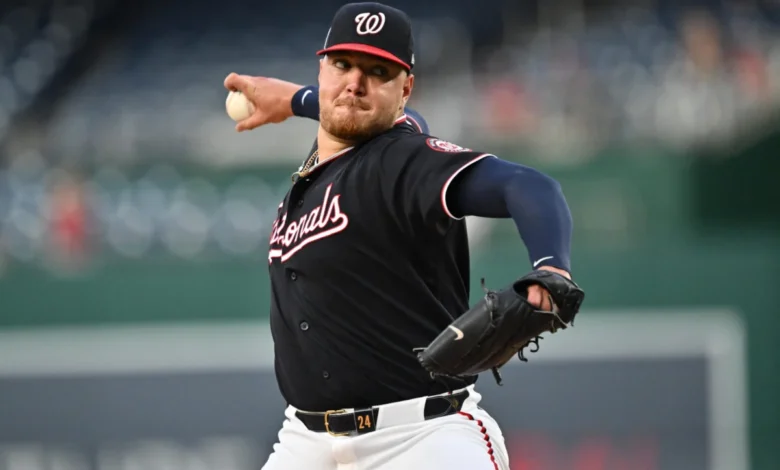
The Washington Nationals face a remarkably similar dilemma with breakout right-hander Cade Cavalli. Cavalli has enjoyed a phenomenal campaign, anchoring fantasy rotations across the country with a stellar 3.12 ERA and an elite 10.49 strikeouts-per-nine-inning rate. Yet, his workload has climbed to 158 ⅔ innings—representing a demanding 36-inning increase over his previous professional baseline. With Washington comfortably out of the postseason picture, league insiders anticipate a premature shutdown to protect his surgically repaired arm’s long-term outlook.
Warning Signs from Miami to Chicago
The physical toll of a grueling Major League schedule is further evidenced by struggling young arms across both leagues.
In Miami, Marlins right-hander Eury Pérez has visibly hit a physical wall. After dazzling evaluators with his breathtaking arsenal in previous seasons, Pérez has labored through recent outings as fatigue compromises his command and velocity. For fantasy managers, holding onto slumping young pitchers experiencing late-season dead arm can prove fatal to championship aspirations.

Similar caution is being exercised by the Chicago White Sox regarding right-hander Davis Martin. In an effort to shield Martin from late-season wear and tear, White Sox manager and coaching staff pulled the right-hander from a recent start after he threw a mere 68 pitches. While Martin was throwing effectively, the predetermined threshold dictated his exit, highlighting how strictly teams adhere to internal pitch and innings caps during the autumn months.
Strategic Playbook for Fantasy Managers in September
Succeeding during the final weeks of a fantasy baseball league requires a shift from standard roster optimization to proactive risk mitigation. Fantasy managers cannot afford to be passive observers while their pitching foundations are dismantled by cautious front offices.
To safeguard a championship lead, managers should implement a rigorous daily checklist:
- Audit the Rotation: Review every young starting pitcher on your active roster and injured list. Calculate their year-to-year innings jumps by comparing their current 2026 totals against their 2025 and 2024 professional workloads.
- Monitor Beat Reporters and Manager Quotes: Front offices rarely announce shutdowns weeks in advance, but local beat writers frequently pick up on subtle hints regarding skipped bullpen sessions, reduced pitch counts, or "piggyback" relief plans.
- Secure Veteran Insurance Policies: Actively scour the waiver wire for steady, veteran innings-eaters on contending teams. While veteran back-end starters may not provide the elite strikeout rates of an Ashcraft or a Cavalli, they offer guaranteed active status and stable ratios down the stretch.
- Prepare Contingency Plans for Category Leagues: In roto leagues, losing a starting pitcher’s volume can sink your ERA and WHIP if replacement options are forced into action under adverse conditions. In head-to-head formats, ensure your weekly acquisition limits are used to stream dependable arms who are guaranteed to take the mound twice.
Broader Implications for the Sport and Future Seasons
The increasing frequency of September shutdowns and strict workload management underscores a broader philosophical evolution within Major League Baseball. As organizations increasingly prioritize pitcher health and long-term asset protection over short-term gratification, the traditional September call-up and workhorse starter models continue to fade into history.
For the fantasy sports industry, this reality necessitates continuous adaptation. Analytical platforms, draft strategies, and expert consensus rankings must increasingly factor in organizational philosophy, organizational depth, and historical injury recovery timelines when evaluating young pitching talent.
As the final outs of the Major League regular season are recorded, the managers who successfully navigate the minefield of innings limits, pitch counts, and September shutdowns will be the ones hoisting their league trophies. Staying informed, remaining flexible, and respecting the real-world limitations of young arms remains the ultimate key to fantasy baseball supremacy.