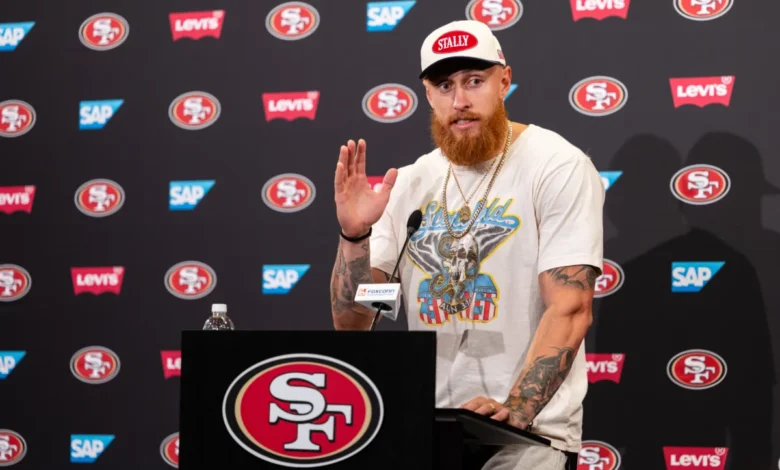
San Francisco 49ers tight end George Kittle has once again voiced his strong opposition to the National Football League’s prevalent use of artificial turf, drawing a direct comparison to the superior playing surfaces showcased during the recent World Cup final. Kittle, a prominent advocate for player safety, highlighted the pristine condition of MetLife Stadium’s grass field during the international soccer spectacle, imploring the NFL to adopt similar standards for its own stadiums.
A Tale of Two Surfaces: World Cup vs. NFL
Kittle, in attendance at the World Cup final held at MetLife Stadium, took to social media platform X (formerly Twitter) to express his admiration for the playing surface. "Grass looks great at MetLife! Can we keep it that way @NFL?? Would appreciate it thanks," he posted, accompanying his message with a photograph of the meticulously maintained pitch. This sentiment directly contrasts with the ongoing debate surrounding the safety and efficacy of artificial turf in professional football.
The World Cup’s mandate to install natural grass in NFL stadiums that typically utilize artificial turf for its tournament matches underscores a global standard for high-level athletic competition. FIFA, the international governing body for football, has long emphasized the importance of natural grass for player performance and injury prevention. The successful implementation of this requirement for the World Cup in the United States serves as a stark reminder for the NFL, which has been increasingly scrutinized for its reliance on synthetic surfaces.
A History of Turf Troubles and Player Concerns
The push for natural grass in the NFL is not a new phenomenon, but it has gained significant momentum in recent years, fueled by a growing number of player injuries attributed to artificial turf. Kittle has been a vocal leader in this movement, consistently articulating concerns that the artificial surfaces are inherently more dangerous and contribute to a higher incidence of non-contact injuries, such as torn ACLs and Achilles tendons.
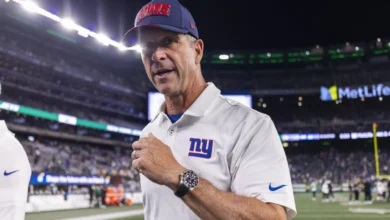
MetLife Stadium, a prominent venue that typically hosts both NFL and other sporting events, has been a focal point of these discussions. Despite being an outdoor stadium, its primary playing surface is artificial turf. This has led to a reputation among players as one of the least favored venues in the league, a sentiment echoed in various player surveys and discussions. The stadium has unfortunately been the site of several high-profile, season-ending injuries that have reignited the debate.

Notable incidents include:
- Aaron Rodgers (New York Jets): Suffered a torn Achilles tendon just four snaps into the 2023 NFL season, an injury many believe was exacerbated by the turf at MetLife.
- Nick Bosa (San Francisco 49ers): Tore his ACL in 2020 during a game at MetLife Stadium, marking a significant setback in his early career.
- Wan’Dale Robinson (New York Giants): Experienced a non-contact torn ACL in 2022 at MetLife, highlighting the potential for severe injuries even without direct impact.
These incidents, occurring on artificial turf, provide a grim statistical backdrop to Kittle’s advocacy. The NFL Players Association (NFLPA) has also been actively involved in advocating for safer playing conditions, with a consistent focus on promoting natural grass surfaces. Their research and lobbying efforts aim to influence league policy and stadium management decisions.
FIFA’s Influence and the 2026 World Cup
The 2026 FIFA World Cup, co-hosted by the United States, Canada, and Mexico, has served as a catalyst for change in stadium infrastructure across North America. A key requirement stipulated by FIFA for host cities was the installation of natural grass fields in stadiums that predominantly use artificial turf during their regular NFL seasons. This directive ensured that the world’s premier soccer tournament would be played on surfaces deemed optimal for the sport.
MetLife Stadium, situated in East Rutherford, New Jersey, underwent the necessary conversion to natural grass to meet FIFA’s stringent standards. The successful transformation and the subsequent positive feedback on the playing surface during the World Cup final have amplified calls for the NFL to maintain these standards year-round. The visual and experiential contrast between the World Cup’s grass pitch and the typical NFL turf fields is not lost on players like Kittle, who are acutely aware of the potential impact on their careers and well-being.
Kittle’s Rehabilitation and Continued Advocacy
While Kittle is currently focused on his own recovery from a torn Achilles tendon, an injury he sustained in January during the NFL playoffs, his commitment to player safety remains unwavering. The fact that he is rehabbing from a similar injury that has plagued players on turf surfaces further fuels his passion for this cause. Kittle, who is preparing for his 10th NFL season, recently shared a video on X showcasing his intense workout regimen, including a remarkable 665-pound deadlift, demonstrating his dedication to a strong return.
His recovery is taking place in the shadow of the upcoming NFL season, a period where the debate over playing surfaces is likely to intensify. The NFL, while acknowledging player concerns, has historically cited various reasons for its continued use of artificial turf, including durability, cost-effectiveness, and the ability to host multiple events without compromising the field. However, the growing body of evidence linking artificial turf to increased injury risk, coupled with the endorsement of natural grass by international sporting bodies, is creating mounting pressure for the league to reconsider its long-term strategy.

The Case for Natural Grass: A Data-Driven Perspective
Numerous studies have attempted to correlate playing surface type with injury rates in the NFL. While definitive conclusions remain a subject of ongoing research and debate, several analyses suggest a higher propensity for certain types of injuries on artificial turf. These studies often point to the firmer, less forgiving nature of artificial surfaces, which can lead to increased stress on joints and a greater likelihood of ankle sprains, knee injuries, and Achilles tendon ruptures.
The biomechanics of playing on different surfaces are complex. Natural grass, when properly maintained, offers a degree of cushioning and allows for a more natural give when a player’s foot plants or pivots. Artificial turf, particularly older generations, can be harder and may not provide the same shock absorption. Furthermore, the uniformity of artificial turf can sometimes lead to unexpected "sticking" of a cleat, increasing the risk of torsional knee injuries.
Broader Implications for the NFL
The persistent advocacy by players like Kittle, supported by the NFLPA and informed by events like the World Cup, has the potential to shape the future of NFL stadiums. As new stadiums are built and older ones are renovated, the demand for natural grass playing surfaces is likely to increase. This shift could have significant implications for stadium design, maintenance costs, and scheduling flexibility.
Furthermore, the league’s stance on playing surfaces is increasingly being viewed through the lens of player welfare and public perception. A commitment to natural grass could be seen as a proactive measure to prioritize the health of its athletes, potentially reducing long-term healthcare costs and improving the overall player experience. The success of the World Cup in utilizing natural grass across multiple NFL venues offers a compelling model for the league to emulate, demonstrating that world-class athletic events can indeed be hosted on high-quality natural turf.
As the NFL season approaches, the conversation initiated by George Kittle and echoed by many of his peers is expected to continue. The visual reminder of a perfectly manicured grass field at MetLife Stadium, juxtaposed with the league’s ongoing reliance on artificial turf, serves as a powerful prompt for the NFL to prioritize player safety and consider a more widespread adoption of natural grass. The future of playing surfaces in professional football may well hinge on the league’s willingness to heed the calls for change, driven by the very athletes who dedicate their careers to the game.
Related posts: