The Siege of the Smithsonian: How America’s Premier Museum Became a Flashpoint in the Nation’s Culture Wars

For over a century, the Smithsonian Institution has stood as the definitive steward of American history, an expansive network of twenty-one museums and research centers that typically resides above the fray of partisan politics. However, as the nation marked the 250th anniversary of the Declaration of Independence this past July, the institution found itself at the epicenter of a profound political crisis. A blistering 162-page report from the White House accused the Smithsonian of falling victim to "ideological capture," sparking a high-stakes standoff between the executive branch and one of Washington’s most storied cultural bastions. The conflict has already claimed the tenure of Smithsonian Secretary Lonnie Bunch and prompted a series of combative congressional hearings that have left the institution’s future in precarious flux.
The friction is rooted in a fundamental disagreement over how the Smithsonian interprets the American experience. While the institution has long balanced its mandate to preserve technological and scientific innovation with its role as a chronicler of complex social histories, critics argue that a recent shift toward diversity-focused narratives has alienated a segment of the American public. This tension reached a boiling point in late 2025, when President Donald Trump signed an executive order targeting what the administration termed "race-centered ideology" within federal cultural agencies.

A Chronology of Institutional Tension
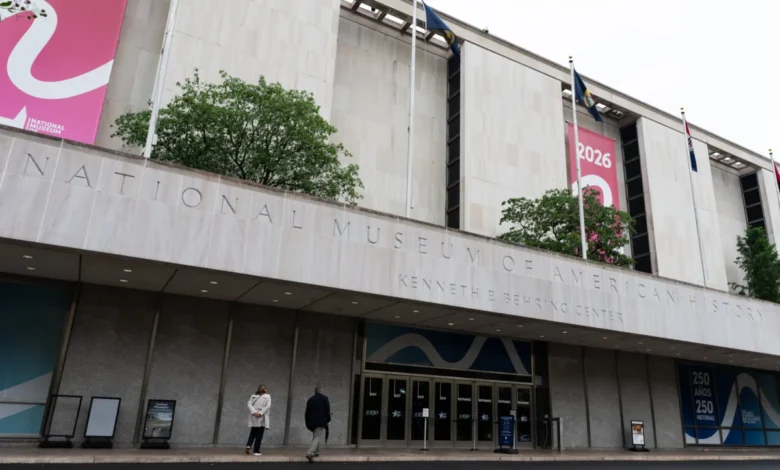
The roots of the current crisis extend well beyond the present administration. For decades, the National Museum of American History—the primary target of recent criticism—has struggled to define a cohesive narrative. Originally established as the National Museum of History and Technology in 1964, the facility’s identity was historically divided between showcasing technological prowess and exploring broader, often contentious, social themes.
In 1999, the institution faced a significant critique from observers who argued that the museum had abandoned its role as a recorder of "defining moments" in favor of a fragmented, multicultural approach. This led to the formation of a 2001 blue-ribbon commission, chaired by former White House aide Richard Darman. The commission’s 2002 report urged a "transformation" to achieve greater organizational coherence and a more balanced narrative that could both celebrate national achievements and candidly address historical failures.
Despite these recommendations, internal shifts within the museum field—moving away from traditional "great man" histories toward more episodic and identity-based storytelling—continued. The situation accelerated during the social upheaval of 2020. In the wake of the COVID-19 pandemic and the death of George Floyd, the Smithsonian, under the leadership of Lonnie Bunch, launched initiatives such as "Smithsonian Cares" and prioritized diversity, equity, access, and inclusion (DEAI) as core strategic pillars. By 2021, the institution had begun explicitly highlighting the role of chattel slavery in the lives of historical figures, including the Founding Fathers.

The White House Offensive
The current administration’s intervention has been swift and systematic. Following the March 2025 executive order, the White House directed federal agencies to review their support for the Smithsonian. The subsequent July 4 report provided the ideological framework for the administration’s grievances. It cited specific exhibits—such as those exploring Benjamin Franklin’s household, the "Girlhood (It’s Complicated)" display, and exhibits detailing LGBTQ+ history—as evidence that the museum had transitioned from historical education to political activism.
The inclusion of items such as a "chrome and rubber crotch harness" in an exhibit on gay history became a focal point of public ire, with Republican lawmakers using the imagery to question the suitability of current leadership. During two consecutive days of hearings in late July, Anthea Hartig, the director of the National Museum of American History, faced aggressive questioning regarding the museum’s internal training materials and the use of the "Museums as a Site for Social Action" toolkit, which the report linked to broader critiques of Western institutions.
Data, Funding, and the Risk of Partisan Entrenchment
The Smithsonian’s reliance on federal funding is a central lever in this conflict. The institution receives approximately 62% of its operating budget from the federal government, totaling over $1 billion annually. This dependency makes the museum uniquely vulnerable to shifts in political control. While the Board of Regents—which includes the Chief Justice of the Supreme Court, the Vice President, and members of Congress—is designed to be bipartisan, the current political climate has fractured that consensus.

Attendance figures have also become a metric of contention. Recent years have seen a decline in visitors to the American History museum, leading critics to argue that the institution’s current curatorial direction fails to resonate with the broader American public. Proponents of the museum’s recent work argue that complexity and inclusivity are necessary for a modern, honest accounting of history, but the political reality is that the institution currently faces the threat of deep, targeted budget cuts.
Reactions and Legislative Vitriol
The congressional hearings held in the summer of 2025 were among the most polarized in the Smithsonian’s history. Republican members, including Rep. Tim Burchett, challenged the museum’s use of land acknowledgments and questioned the age-appropriateness of certain exhibits. Conversely, Democratic lawmakers, such as Rep. Kweisi Mfume, defended the institution with intense passion, framing the administration’s actions as an existential threat to historical integrity.
David Blight, a renowned historian testifying in defense of the museum, drew parallels to historical efforts to control cultural institutions, warning that the "politicization of history" is a dangerous precedent. Yet, for some observers, the damage to the Smithsonian’s reputation as a neutral arbiter of facts is already done. As Garret Graves, a former Republican congressman and former member of the Board of Regents, noted, the perception of the Smithsonian as a partisan actor threatens its long-term sustainability. "Politicizing the Smithsonian is an awful idea," Graves said. "It should not be affiliated with one party or ideological bent."

The Road Ahead
The resignation of Lonnie Bunch in September 2026 marked a watershed moment for the institution. As the first African American to lead the Smithsonian, his departure leaves a leadership vacuum at a time when the Board of Regents is facing a high rate of turnover. With three of the nine citizen slots on the board currently vacant—and three more slated to open shortly—the selection of new regents, overseen by Chief Justice John Roberts, will be the most significant factor in determining the institution’s trajectory.
The potential for a "day of reckoning" at the Smithsonian highlights a broader struggle over the role of public institutions in a polarized democracy. As the nation approaches its 250th year, the debate remains unresolved: should a national museum serve as a reflection of current societal debates, or should it maintain a more traditional, consensus-based narrative that avoids the "culture wars"?
The upcoming opening of the National Museum of the American Latino adds another layer of complexity to this question, as the institution must decide how to integrate yet another focused history into its already disjointed structure. For now, the Smithsonian remains in the crosshairs, its halls housing both the Star-Spangled Banner and the controversies of the present, waiting to see if it can survive the scrutiny of a new political era while maintaining its status as a trusted, national repository of the American story. The institution stands at a crossroads, where the decisions made by its board and its next secretary will define whether the Smithsonian remains a cohesive, respected, and bipartisan treasure or becomes yet another casualty of the nation’s widening political divide.
Related posts: