Ryanair CEO Michael O’Leary issues formal apology following controversial comparison of airline rivals to rapists

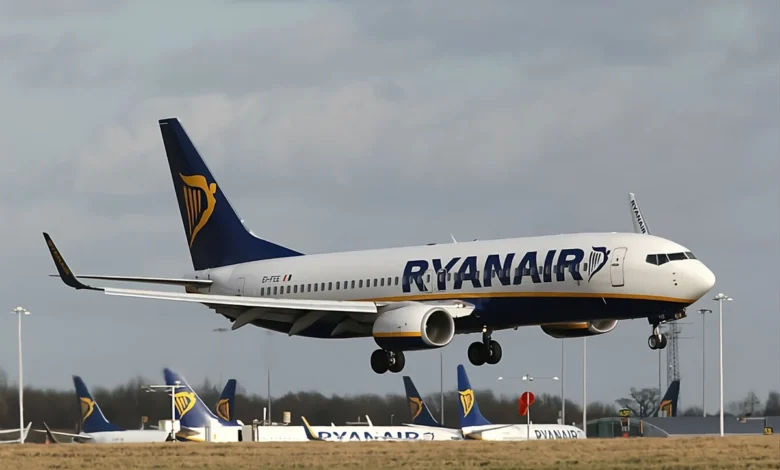
The chief executive of Europe’s largest budget airline, Michael O’Leary, has issued a formal apology following a week of intense public and political backlash stemming from his characterization of rival carriers as "high-fare rapists." The incident, which unfolded during the lead-up to Ryanair’s annual shareholder meeting in September 2026, sparked a national debate in Ireland regarding the boundaries of corporate rhetoric and the impact of trivializing sensitive social issues in the pursuit of media attention.
Chronology of the Controversy
The inflammatory remarks were first made by O’Leary during a press briefing at Ryanair’s Dublin headquarters on September 10, 2026. While addressing the company’s competitive strategy against full-service carriers such as Aer Lingus, Lufthansa, and British Airways, O’Leary argued that travelers were increasingly abandoning legacy airlines due to exorbitant pricing. He stated that passengers "can’t afford to fly with the high-fare rapists around Europe."
When questioned by journalists at the scene regarding the appropriateness of such language, O’Leary initially doubled down, asserting that his choice of words was "absolutely" acceptable. Rather than acknowledging the gravity of the term, he deflected, framing his commentary as a legitimate critique of the financial practices of his competitors.
The situation escalated rapidly over the following days. By September 11, in a written statement, O’Leary maintained his stance, insisting that his comments had not trivialized the crime of rape, despite significant criticism from advocacy groups. The pressure mounted by September 14 when the Taoiseach, Micheál Martin, intervened, urging the executive to "reflect and listen to women" regarding the potential harm caused by his language.
The impasse concluded on September 18, when O’Leary released a video statement acknowledging the distress his words had caused. He expressed a desire to "learn from this mistake," signaling a pivot from his initial defensive posture after consultations with colleagues and family members.
A History of Provocative Publicity
Michael O’Leary has long utilized a "bad boy" persona to secure free media coverage for Ryanair. By adopting a confrontational and often polarizing public image, the airline has historically maintained a high level of brand recognition without significant traditional advertising spend.
This is not the first time O’Leary has employed the term "rapists" to describe those he deemed to be exploiting the aviation market. In July 2004, the executive famously referred to the owners of Stansted Airport as "a bunch of overcharging rapists" during a heated dispute over airport fees. Over the decades, he has floated various extreme proposals to maintain the airline’s "ultra-low-cost" image, including suggestions to charge passengers for the use of aircraft lavatories, the implementation of standing-room-only flights, and the introduction of onboard gambling to replace ticket revenue.
Industry analysts observe that while these tactics historically succeeded in keeping Ryanair in the headlines, the current socio-political environment—marked by heightened sensitivity to issues of sexual violence and corporate responsibility—has made this brand of "outrage marketing" increasingly untenable.
Data and Market Context
Ryanair’s business model is predicated on aggressive cost-cutting and high-volume traffic. In the fiscal year preceding this incident, the airline continued to lead the European market in passenger volume, carrying over 180 million passengers. The airline’s strategy involves putting immense pressure on legacy carriers, which often operate with higher cost structures due to legacy labor agreements, hub-and-spoke models, and more extensive amenity offerings.
The comparison O’Leary drew between ticket prices and criminal acts fails to acknowledge the fundamental economic differences between the two. While airline pricing is a result of supply, demand, and operating costs, sexual assault is a violent, involuntary, and criminal act. Critics have pointed out that the "high-fare" carriers mentioned by O’Leary operate within a free market where consumers are not coerced into purchasing tickets, a stark contrast to the involuntary nature of the crime he invoked.
Responses from Advocacy Groups and Stakeholders
The Dublin Rape Crisis Centre (DRCC) was among the most vocal critics of the rhetoric. Chief Executive Rachel Morrogh noted that the helpline received reports of distress from callers who were triggered by the casual use of the word "rapist" in a public forum. The organization extended an offer to provide O’Leary with training to better understand the impact of language on survivors of sexual violence.
Following the September 18 apology, the DRCC issued a statement welcoming the move. The organization emphasized that the harm caused by such comments is not merely theoretical; it can serve to desensitize the public to the severity of sexual violence and create an environment where survivors feel their experiences are not taken seriously.
From a corporate governance perspective, the incident has raised questions about the role of the CEO in representing the company. While O’Leary’s outspoken nature has historically been tolerated by shareholders who value the airline’s profitability, the reputational risk associated with such comments is now being weighed against the financial benefits of the company’s unconventional marketing strategy.
Broader Implications and Analysis
The fallout from this incident suggests a shift in the tolerance level for corporate leaders who rely on inflammatory language. In previous years, O’Leary’s comments might have been dismissed as mere "O’Leary-isms." However, the intervention of the Irish Prime Minister highlights a growing expectation that corporate leaders must be held to higher standards of social responsibility, regardless of their company’s market success.
The incident also serves as a case study for crisis management in the modern era. O’Leary’s initial refusal to apologize, followed by a week of digging in his heels, likely served to prolong the news cycle and deepen the reputational damage. The eventual apology—which came only after political and social pressure reached a boiling point—is seen by some public relations experts as "reactive" rather than "proactive," potentially limiting its effectiveness in repairing the brand’s image.
Furthermore, the incident underscores the disconnect between the "shock value" tactics of the early 2000s and the current digital landscape. In an age where social media allows for the instantaneous mobilization of public opinion, the "no-filter" approach to corporate leadership carries significantly higher risks. Companies are increasingly finding that the costs of alienating a segment of their customer base can outweigh the benefits of earned media exposure.
As Ryanair moves forward, the airline faces the challenge of maintaining its reputation for affordability without relying on the controversial tactics of the past. Whether this event marks a permanent shift in O’Leary’s public communication style remains to be seen, but the episode stands as a significant moment in the history of European aviation, illustrating the intersection of corporate ambition, public discourse, and the evolving ethics of corporate accountability.
Ultimately, the event serves as a reminder that in the modern corporate world, the words of a CEO are not merely extensions of a marketing strategy; they are reflections of the company’s values. When those words touch upon sensitive societal wounds, the resulting backlash can quickly overshadow decades of commercial progress.