EPA Shuts Down Two-Decade Effort to Monitor Air Pollution from Industrial Factory Farms

In a decisive move finalized late last week, the Environmental Protection Agency (EPA) announced the formal conclusion of a twenty-year project intended to establish reliable methods for monitoring air pollution from large-scale livestock operations. This decision effectively ends the agency’s long-standing, albeit inconsistent, efforts to bring Concentrated Animal Feeding Operations (CAFOs) under the regulatory umbrella of the Clean Air Act. By shuttering this initiative, the federal government has signaled a definitive shift away from federal oversight of the massive volumes of ammonia, particulate matter, and nitrogen oxides produced by industrial-scale animal agriculture.
The announcement arrived just days before the midterm elections, providing a significant policy victory for the livestock industry and a key voting bloc for the Trump administration. While industry groups hailed the move as a long-overdue acknowledgment of the logistical impossibility of uniform air monitoring, environmental advocates and public health experts have framed the closure as a capitulation that leaves the public vulnerable to unchecked industrial emissions.
A Chronology of Regulatory Stasis
The origins of this policy failure date back to the early 2000s, a period marked by rising public concern over the environmental impacts of the rapid industrialization of American agriculture. As CAFOs grew in size and density, complaints regarding air quality from neighboring communities became increasingly frequent.
In 2005, the EPA initiated the Air Consent Agreement, a controversial settlement designed to resolve potential enforcement actions against thousands of CAFOs. The deal was essentially a trade: in exchange for funding an industry-led, two-year study to quantify air emissions, participating facilities were granted broad immunity from legal action under the Clean Air Act, the Comprehensive Environmental Response, Compensation and Liability Act (CERCLA), and the Emergency Planning and Community Right-to-Know Act (EPCRA).
The stated objective was for the industry to provide the scientific data necessary for the EPA to develop "emissions estimating methodologies." These tools were intended to help facility operators determine whether their emissions levels triggered federal permitting requirements. However, the project quickly stalled. By 2017, a scathing report from the EPA’s Office of Inspector General (OIG) concluded that the agency had failed to produce any reliable methodology, blaming the delay on a lack of oversight and the technical limitations of the original study design. Despite the OIG’s warnings, the agency continued to walk back its enforcement ambitions, eventually stripping away various reporting requirements for hazardous substances at factory farms under the Superfund Act.
The Scientific and Public Health Context
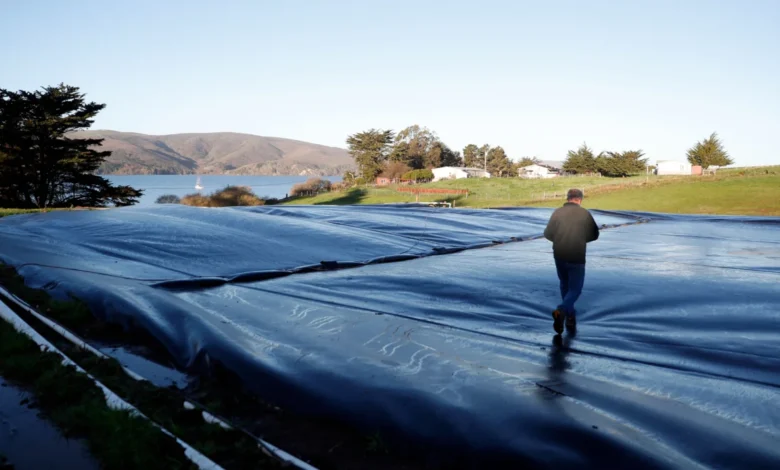
The environmental footprint of a modern CAFO is immense. Unlike traditional, smaller-scale farming, these facilities concentrate thousands of animals in confined spaces. The resulting waste—often stored in massive, open-air liquid lagoons—is a primary source of volatile organic compounds (VOCs), hydrogen sulfide, and fine particulate matter (PM2.5).
Peer-reviewed research published in the Proceedings of the National Academy of Sciences (PNAS) has underscored the severity of these emissions, estimating that air pollution originating from agricultural operations is linked to approximately 12,700 premature deaths annually in the United States. Fine particulate matter, when inhaled, can penetrate deep into the respiratory system, exacerbating chronic conditions such as asthma and heart disease. Ammonia, another significant byproduct of manure management, can react in the atmosphere to form secondary particulates, further contributing to regional haze and public health crises in rural and downwind communities.
Official Rationales and Industry Perspectives
The EPA’s justification for ending the program centers on the age and validity of the data collected during the National Air Emissions Monitoring Study. Abigale Tardif, the acting assistant administrator for the agency’s Office of Air and Radiation, stated that "good science requires good data," arguing that the information gathered two decades ago is no longer representative of modern agricultural practices. The agency concluded that it would be misleading to use outdated datasets to force compliance or to establish national regulatory standards.
Industry stakeholders have strongly supported this perspective. Rob Brenneman, president of the National Pork Producers Council, emphasized the inherent diversity of agricultural operations, suggesting that a "one-size-fits-all" regulatory model is scientifically and practically flawed. According to the industry, the cessation of this monitoring program removes a cloud of legal uncertainty that has hindered operational planning for years, allowing farmers to focus on productivity without the threat of inconsistent federal enforcement.
The Methane Gap and Federal Oversight
Notably, the EPA’s former monitoring initiative never included methane, a potent greenhouse gas that is increasingly a focal point of global climate negotiations. The livestock sector remains the largest source of anthropogenic methane emissions in the United States. However, federal action on this front has been systematically blocked. For years, Congress has included riders in annual federal spending bills that effectively prohibit the EPA from requiring livestock facilities to report their methane emissions. This legislative barrier ensures that while the agricultural sector is a critical component of national climate policy, its specific emissions remain largely invisible to federal regulators.
Legal and Practical Implications
The termination of the Air Consent Agreement creates a significant regulatory vacuum. Tarah Heinzen, legal director for the advocacy group Food & Water Watch, argues that the agency’s decision is not a result of scientific impossibility, but of political choice.
"As EPA has been saying it’s proceeding with this plan, it’s been dismantling all of its own tools to regulate emissions," Heinzen said. "Now it has announced it has no intention, basically, of ever holding factory farms accountable under the Clean Air Act, either."
From a legal standpoint, the situation is complex. While the EPA has effectively waived its own role in oversight, the Clean Air Act remains federal law. The absence of an EPA-issued methodology for estimating emissions does not technically vacate the underlying statutory requirements for large facilities. In theory, states can—and do—develop their own models. California, for instance, has implemented more rigorous air monitoring requirements for its livestock industry, proving that such oversight is technologically and administratively feasible.
However, without national-level standards, the burden of proof is shifted onto local communities and state environmental agencies, which often lack the resources to combat the legal and financial power of the industrial agriculture lobby. The EPA’s withdrawal signals that, for the foreseeable future, factory farms will operate with minimal federal scrutiny regarding the air quality impacts of their facilities.
Broader Societal Impact
The long-term implications of this policy shift suggest a deepening divide between the regulatory protections afforded to urban industrial sectors and those applied to large-scale agriculture. While power plants and manufacturing facilities are subject to strict emissions reporting and technology-based controls, the livestock industry has secured a unique status that exempts it from the same level of transparency.
As the United States faces increasing pressure to meet climate goals and address the public health costs of environmental pollution, the move to end air monitoring at factory farms highlights a critical tension. Critics argue that by choosing not to measure these emissions, the government is intentionally ignoring a substantial portion of the nation’s total pollution output. Proponents, meanwhile, see the decision as a necessary step in reducing regulatory overreach.
Ultimately, the closure of this twenty-year monitoring effort concludes an era of indecision, replacing it with a period of intentional non-regulation. The data that was supposed to guide environmental policy will now never be formalized, leaving the impact of industrial animal agriculture on air quality to be debated in courtrooms and state legislatures rather than through federal administrative oversight. As the landscape of American farming continues to trend toward larger, more centralized operations, the question of whether these facilities should be held to the same clean air standards as other industrial entities remains one of the most contentious issues in domestic policy. With the EPA’s latest announcement, the federal government has effectively decided that, at least for now, the status quo will prevail.
Related posts: