CT Scans Help Unlock a 400-Year-Old Mystery of the Ann Francis Shipwreck and Its Elizabethan Combination Lock

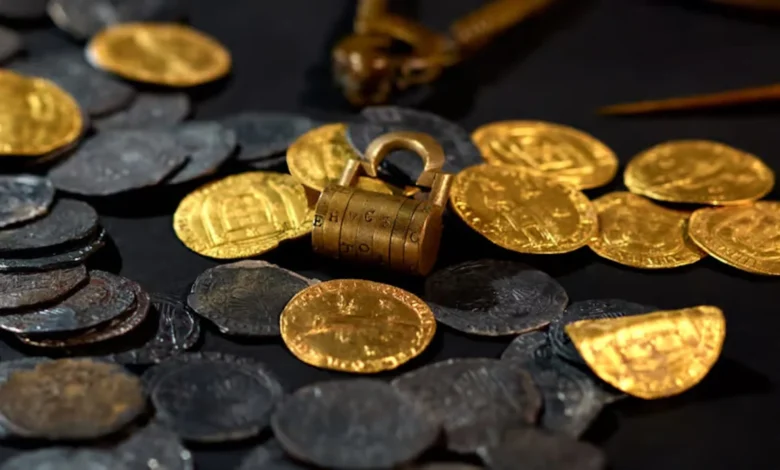
Deep beneath the shifting sands off the coast of southern Wales, a 16th-century maritime tragedy has finally surrendered one of its most tightly guarded secrets. For over four centuries, a brass combination lock recovered from the wreckage of the merchant vessel Ann Francis remained stubbornly sealed, its inner workings a mechanical riddle locked away in the briny deep. Today, however, modern science has achieved what manual force and trial-and-error never could. Through the deployment of advanced micro-computed tomography (micro-CT) scanning, an interdisciplinary team of researchers from Cardiff University and Amgueddfa Cymru, the National Museum of Wales, has successfully peered inside the artifact to reveal the correct four-letter combination without ever turning a dial or risking damage to the fragile relic.
The breakthrough bridges the gap between historical archaeology and cutting-edge biomechanical imaging, offering unprecedented insight into Elizabethan-era security technology while simultaneously breathing new life into a centuries-old maritime narrative.
The Fatal Voyage and the Wrath of Mother Gabley
The story of the Ann Francis is rooted in the turbulent geopolitics and maritime dangers of late 16th-century Europe. On December 28, 1583, the merchant ship was making its arduous return journey from Spain, laden with valuable cargo, when it encountered a ferocious winter storm. Veering drastically off course along the rugged coastline of southern Wales, the vessel was battered by gale-force winds and high seas before ultimately breaking apart and sinking.
While the exact manifest of souls aboard the ship remains slightly obscured by incomplete historical records, historians estimate that a crew of approximately 14 sailors perished in the freezing waters. None survived to tell the tale, leaving the ship’s final moments to be pieced together entirely through subsequent inquiries, physical wreckage, and contemporary archival documents.
The tragedy, however, did not end at the shoreline. In the superstitious climate of Elizabethan England, catastrophic events of this magnitude frequently demanded supernatural explanations. Archival records from the period indicate that local residents quickly assigned blame for the storm to a woman named Mother Gabley, whom villagers branded as a "detestable woman" and an "execrable witch" capable of summoning foul weather.
At the time, England was operating under the recently enacted "Act Against Conjurations, Enchantments and Witchcrafts," a stringent statute passed in 1563 that carried severe penalties, including death by hanging, for those convicted of using malevolent magic. Although historical records do not definitively record Mother Gabley’s ultimate fate—whether she managed to evade authorities or fell victim to the era’s widespread panic—her shadow remains inextricably linked to the loss of the Ann Francis, serving as a dark testament to the societal fears of the Elizabethan era.
Rediscovery and the Recovery of the Sunken Treasure
For more than four centuries, the Ann Francis rested quietly on the ocean floor, its exact location lost to the shifting sands of time and tide. That changed dramatically in 1998, when metal detectorist Peter Hughes stumbled upon metallic anomalies while surveying Margam Beach in southern Wales. Recognizing the potential significance of the find, Hughes alerted professional archaeologists, initiating a meticulous recovery effort that would span more than two decades.
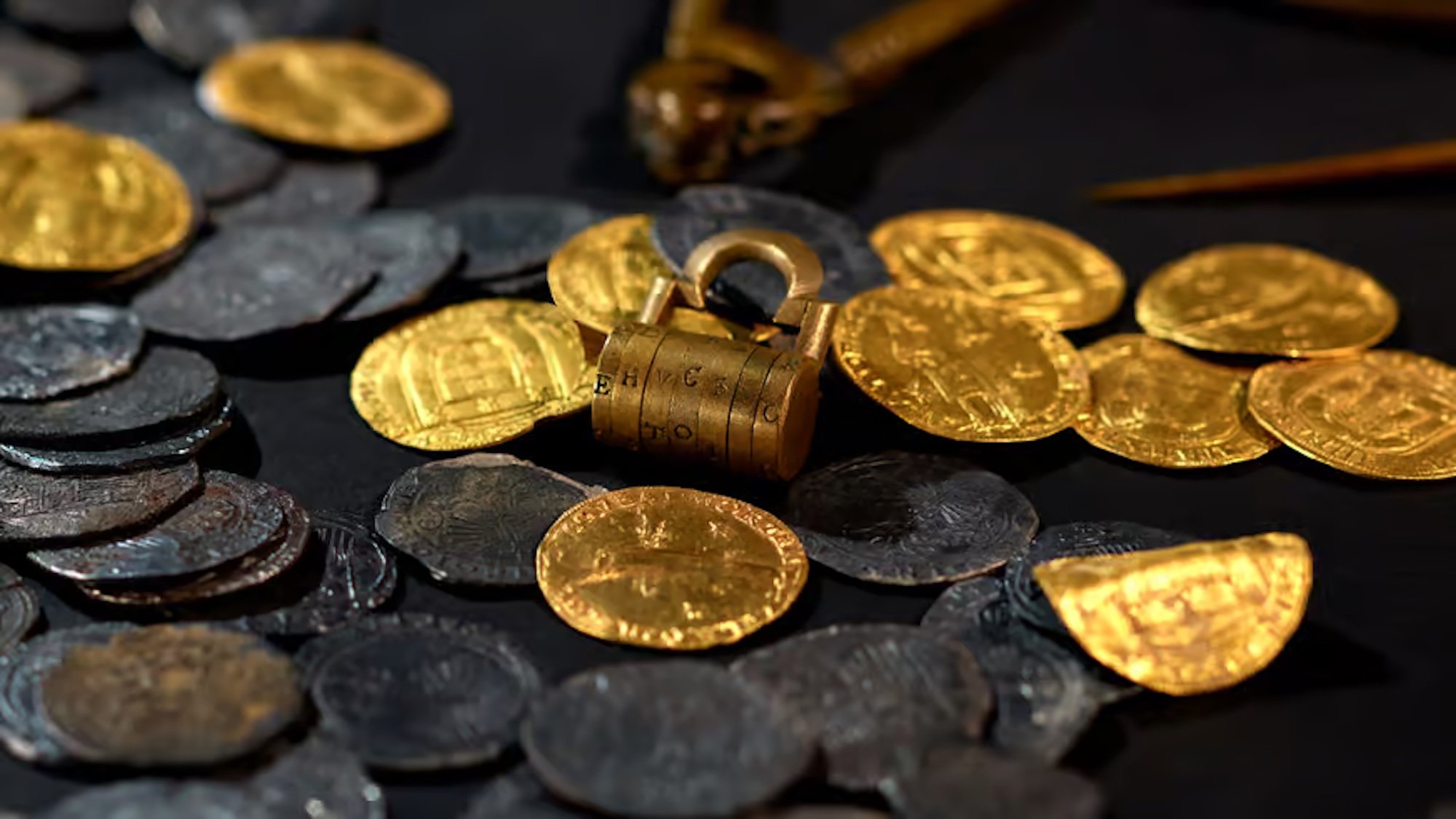
The excavation of the site proved to be a treasure trove of historical artifacts. By 2017, maritime archaeologists and preservationists had cataloged an impressive array of items from the wreckage, most notably a cache of over 800 gold and silver coins originating from various European mints in Germany, Spain, and Portugal. Alongside the numismatic treasure, the team unearthed navigational instruments, ship equipment, and personal cutlery, painting a vivid picture of late 16th-century maritime commerce and daily life aboard a merchant vessel.
Yet, among all the recovered items, none captured the imagination quite like the brass combination lock. Measuring just a few inches across, the mechanical device was remarkably well-preserved despite spending more than 400 years exposed to corrosive seawater and abrasive sand. Experts believe the lock was utilized to secure valuables—potentially including the very coffers that held the recovered gold and silver coins—making it a critical functional component of the ship’s security infrastructure.
Engineering Meets History: Non-Destructive Archaeology
Elizabethan combination locks are exceptionally rare artifacts in British archaeology. While a handful of examples exist in museum collections, finding one directly associated with a precisely dated shipwreck makes the Ann Francis lock a truly unique discovery.
Alastair Willis, senior numismatics curator at Amgueddfa Cymru, noted the immense historical value of the piece. "Elizabethan combination locks are known in Britain, but this one is in exceptionally good condition and is associated with a dated wreck, making it a unique find and the code a tantalizing mystery to solve," Willis remarked.
However, studying the lock presented a formidable conservation dilemma. Centuries of immersion in seawater had left the internal brass components fragile and prone to structural failure. Forcibly manipulating the rotating letter rings or attempting a manual combination sweep risked destroying the delicate internal mechanisms, effectively erasing a piece of irreplaceable history.
To circumvent this physical barrier, the museum partnered with David Williams, a biomechanics engineer at Cardiff University, who proposed utilizing industrial imaging technology. Rather than forcing the lock open, the research team employed high-resolution micro-computed tomography (micro-CT)—a scanning technique traditionally used in medicine and advanced materials science to create ultra-detailed, three-dimensional digital models of internal structures.
The scan successfully penetrated the brass exterior, allowing researchers to examine the internal arrangement of notched wheels, pins, and tumblers in a virtual environment. "By creating a detailed 3D image of the internal mechanism, I could see how the notches lined up with the letters and identify the exact combination," Williams explained, highlighting that the project marked a distinct professional milestone for his engineering team.
When the digital model was fully resolved, the secret combination was laid bare: A-N-C-E.
Broader Implications and Remaining Questions
The successful decryption of the 400-year-old lock represents a significant methodological triumph for modern archaeology. It demonstrates the growing efficacy of non-destructive analytical techniques in preserving delicate artifacts while extracting maximum historical data. By relying on digital reconstruction rather than physical intervention, researchers can safeguard fragile historical objects for future generations while still unlocking their secrets.
At the same time, the resolution of the physical code has given rise to a new tier of historical inquiry. With the letters A-N-C-E now identified, researchers are left to ponder the psychological and personal dimensions of the artifact. Historians and curators are actively investigating whether the four-letter combination held personal significance for the ship’s captain, a wealthy merchant passenger, or the ship itself, potentially serving as an early form of personalized password or mnemonic device.
"It’s not every day you get to solve a 400-year-old mystery," Williams reflected. "Of course, now we’ve solved it, we are left wondering if the code meant something to its owner," Willis added.
As the physical artifact and its digital twin continue to undergo analysis at Amgueddfa Cymru, the story of the Ann Francis endures. What began as a tragic maritime disaster off the coast of Wales in the winter of 1583 has transformed, through the convergence of historical perseverance and modern engineering, into a living window into the technological sophistication, economic networks, and human stories of the Elizabethan world.