Defense Intelligence Agency Releases Clearest Public View Yet of China’s Secretive Shenlong Space Plane

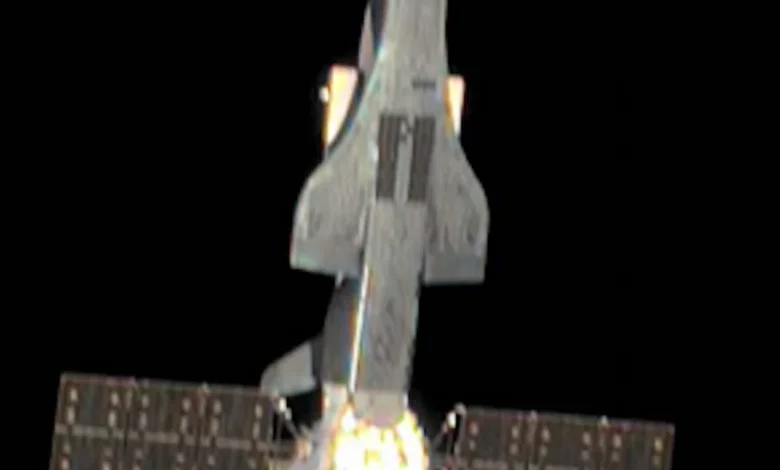
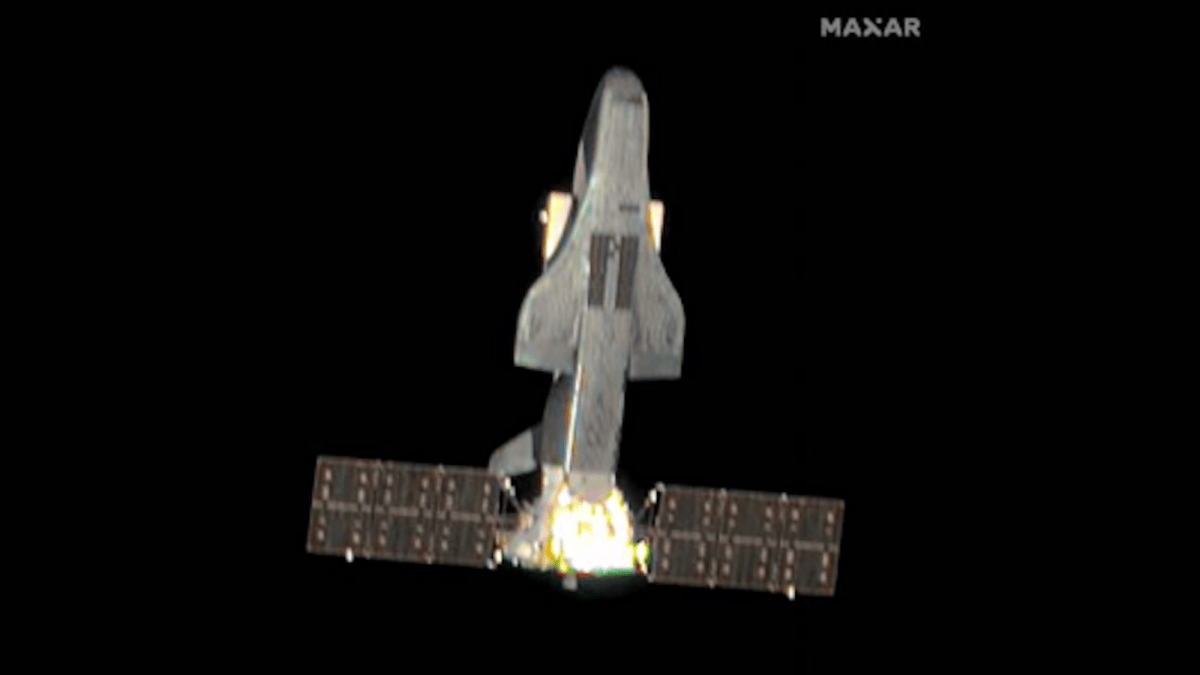
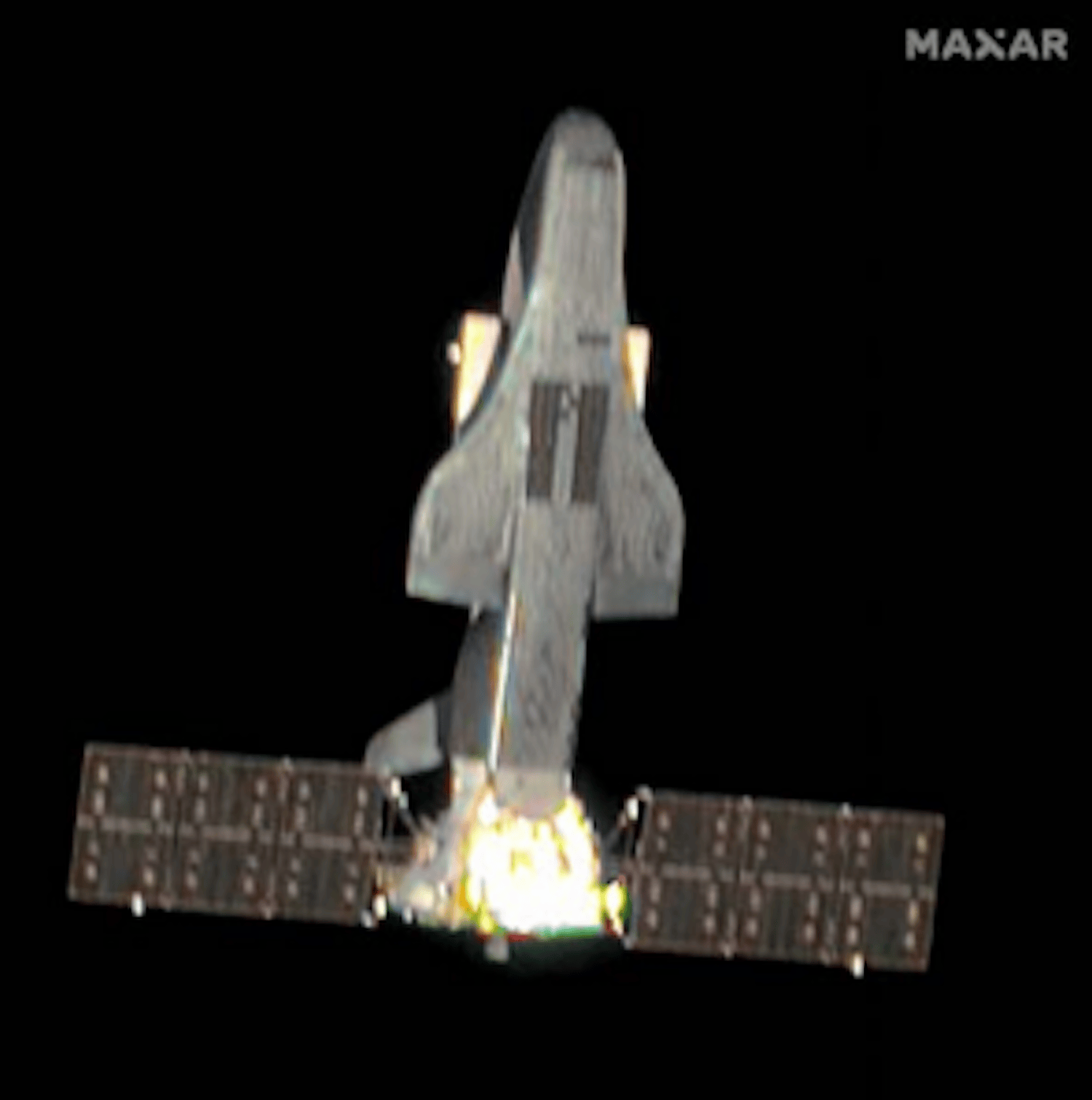
The Defense Intelligence Agency (DIA) has published what is widely considered the public’s most revealing look to date at Shenlong, China’s experimental and highly classified reusable space plane. Featured prominently within the agency’s newly released 130-page threat assessment report, titled Challenges to Security in Space, the unclassified orbital photograph offers an unprecedented underside perspective of the vehicle. Most notably, the imagery provides defense analysts and aerospace observers with a clear view of the craft’s unique, rear-facing solar panel arrays, shedding a small amount of light on a program that has remained shrouded in strict military secrecy for nearly two decades.
The photograph, captured in 2024 by geospace intelligence firm Maxar Technologies, is embedded on page 53 of the DIA’s comprehensive overview of global space-based threats. While the report’s caption labels the craft simply as an unnamed Chinese "spaceplane," defense experts have overwhelmingly identified the vehicle as Shenlong. The release of this imagery underscores growing international interest and concern over the rapid militarization of low Earth orbit and the aggressive development of advanced orbital maneuvering platforms by global powers, including China, Russia, Iran, and North Korea.
A Chronology of Secrecy: The Evolution of the Shenlong Program
Despite being publicly acknowledged by Beijing nearly 20 years ago, concrete technical details regarding the Shenlong project remain scarce. The program has progressed through a series of increasingly ambitious, classified orbital missions that have drawn the close attention of Western intelligence agencies.
The timeline of known Shenlong flights highlights a rapid acceleration in testing and capability:
- 2020: A Shenlong prototype launches on its inaugural orbital test flight. The mission is exceptionally brief, lasting a mere two days before the vehicle successfully returns to Earth.
- 2022: China conducts its second orbital test. This mission marks a dramatic leap in endurance, keeping the reusable vehicle in space for a total of 276 days.
- December 2023 – September 2024: The spacecraft embarks on its third prolonged mission, lasting 268 days. It is during this operational window that Maxar Technologies captures the newly published high-resolution orbital photograph. According to DIA assessments, the vehicle engaged in active on-orbit operations during this flight, specifically noting that the space plane "released and interacted with an object."
- February 2026: Continuing its rapid iteration cycle, Shenlong launches from the Jiuquan Satellite Launch Center on what is reported to be its fourth orbital excursion.
This aggressive testing cadence mirrors the operational tempo of parallel Western programs, most notably the United States Space Force’s X-37B Orbital Test Vehicle.
Technological Design and Operational Parallels
The newly released Maxar photograph offers critical structural insights into the Chinese space plane, most notably its power generation configuration. Unlike conventional spacecraft or the U.S. X-37B—which typically integrate solar arrays into cargo bay doors or deploy them upward—Shenlong appears to deploy its solar panel arrays from the rear of the vehicle. This unique placement configuration suggests distinct engineering choices regarding power management, thermal control, or aerodynamic shielding during atmospheric re-entry.
While Beijing maintains a strict policy of strategic ambiguity regarding the military applications of its space program, aerospace analysts draw direct comparisons between Shenlong and the Boeing-built X-37B operated by the United States Space Force.
The U.S. vehicle—a vertical-takeoff, horizontal-landing robotic space plane measuring over 29 feet long with a nearly 15-foot wingspan—has its own extensive history of long-duration classified missions. Operating at speeds reaching approximately 17,426 miles per hour in low Earth orbit, the X-37B has continuously pushed endurance boundaries. Its eighth classified mission, for example, has surpassed 431 days in orbit, utilizing advanced maneuvers such as aerobraking to alter its orbital path without expending scarce propellant. While U.S. officials have openly disclosed that the X-37B’s current mission evaluates cutting-edge laser communications technology and quantum measurement instruments, Beijing has provided virtually no public transparency regarding the specific scientific or military payloads carried aboard Shenlong.
Strategic Implications and the Global Space Race
The publication of the Shenlong imagery within the DIA report reflects a broader, pressing concern among Western defense planners: the dual-use nature of modern orbital assets. Reusable space planes possess inherent strategic flexibility. Because they can maneuver in orbit, change inclinations, and deploy or retrieve payloads, these vehicles blur the line between peaceful scientific research and potential orbital warfare capabilities.
The ability of a spacecraft to approach, interact with, and manipulate other objects in orbit—as the DIA confirmed Shenlong did during its third mission—has profound implications for space security. In a worst-case scenario, similar rendezvous and proximity operations could be utilized for satellite inspection, interference, or even kinetic neutralization of rival space assets. As global reliance on space-based architecture for communications, reconnaissance, navigation, and financial infrastructure grows exponentially, any capability that threatens orbital assets becomes a top-tier national security priority.
Furthermore, the DIA report emphasizes that space debris and congestion are exacerbating operational risks. With multiple nations fielding secretive, highly maneuverable robotic spacecraft alongside thousands of commercial communications satellites and millions of pieces of defunct hardware, low Earth orbit is increasingly crowded and volatile. The lack of international norms, transparency codes, or communication channels governing the operations of military space planes like Shenlong and the X-37B heightens the risk of miscalculation or accidental escalation between spacefaring superpowers.
Outlook and Future Transparency
As the space race enters its most intensive phase since the Cold War, the release of the Maxar photograph by the Defense Intelligence Agency signals a shift toward greater public disclosure by Western military intelligence. By sharing unclassified evidence of adversary capabilities, governments aim to build public and international consensus regarding the shifting balance of power beyond the atmosphere.
Whether Beijing will respond to these disclosures with increased transparency regarding the Shenlong program remains highly unlikely. For now, the experimental space plane will continue to operate under a veil of secrecy, locked in a silent, high-stakes technological marathon in low Earth orbit alongside its American counterparts.