JB Perrette Unveils Comprehensive Leadership Structure for Combined Skydance TV and Direct-to-Consumer Divisions Following Massive Merger

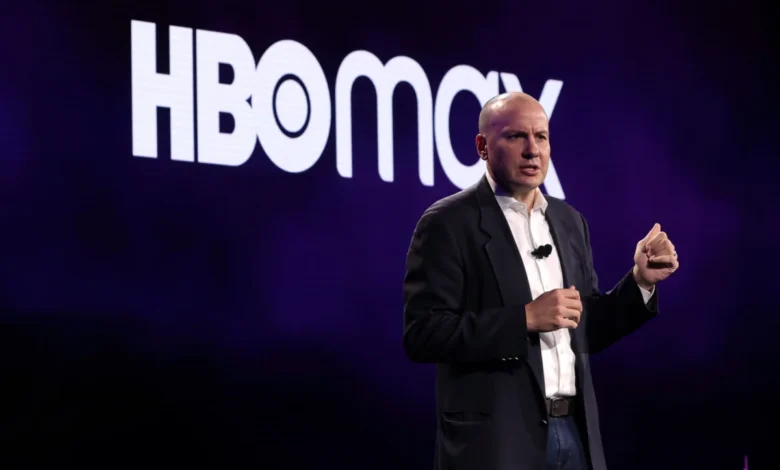
The newly formed media conglomerate Skydance has taken a significant step forward following its official formation this month, born from the colossal $110 billion merger between Warner Bros. Discovery (WBD) and Paramount. JB Perrette, serving as Co-Chair and Chief Business Officer for Skydance TV alongside his role as Co-Chair and Chief Business Officer for Skydance Direct-To-Consumer (DTC), has announced his comprehensive executive leadership team. Perrette, widely recognized for his instrumental role in spearheading the global expansion of HBO Max, stands as one of the few high-ranking legacy Warner Bros. Discovery executives to secure a top-tier leadership role in the newly unified corporate structure.
The internal memo circulated by Perrette outlines a sweeping organizational overhaul designed to bridge traditional television and streaming operations. This strategic alignment comes as the media industry faces rapid shifts in consumer behavior, compelling legacy studios to find greater efficiencies, cross-over synergies, and combined revenue engines. However, this corporate consolidation has also resulted in significant executive departures, altering the leadership landscape of the newly minted enterprise.
Main Facts of the Organizational Overhaul
The newly announced executive structure is engineered to harmonize linear television networks with subscription video-on-demand (SVOD) and ad-supported video-on-demand (AVOD) platforms. Perrette’s mandate bridges two distinct business models that have historically operated in silos. By placing several leaders in dual roles that oversee both linear TV and streaming, Skydance aims to eliminate redundancies while maximizing financial opportunities.
The restructuring, however, comes at a human cost. Several veteran executives are exiting the company as part of the integration process. The departing leaders include Dan Barnes, Michael Bishara, Jamie Cooke, Domenic DiMeglio, Marco Nobili, Pank Patel, and Juan Sola. Furthermore, the leadership position for Pluto TV—the pioneering free ad-supported streaming television (FAST) service—remains vacant. Skydance has announced that it will conduct a comprehensive internal and external search for a dedicated leader to harmonize Pluto with its subscription-based siblings, Paramount+ and HBO Max. Until a permanent head is found, executives Olivier Jollet, Will Gurman, and Kevin Kroll will report on an interim basis to Josh Walker and Perrette.
The newly appointed global leadership team features key appointments across functional domains:
- Jeff Cusson assumes the role of EVP and Head of Communications for Skydance DTC, reporting jointly to Perrette, Casey, and Chief Communications Officer Mel Zukerman.
- Shauna Spenley expands her portfolio to become CMO of Global DTC and International TV, incorporating international television marketing into her oversight and partnering with George Cheeks and Rebecca Mall.
- Trey Turner takes on the expanded role of COO of International, adding strategic operations to his financial responsibilities while overseeing regional strategy teams.
- Josh Walker steps into a dual role as COO of DTC and CFO of DTC, reporting to Perrette and Skydance CFO Dennis Cinelli, managing content strategy, pricing, and business planning.
- Liz Wright is appointed CFO of the Skydance TV Segment, overseeing financial operations for CBS and the global television networks business.
In addition to these functional roles, Skydance established a localized regional framework to drive integrated TV and streaming distribution, ad sales, and programming across key international territories. Andrew Georgiou will temporarily serve as President and MD of Europe & Africa before his planned departure next year, supported by regional leaders including Qaisar Rafique, Reemah Sakaan (Channel 5), and Christina Sulebakk. Other regional appointments include James Gibbons for APAC & MENA, Kasia Kieli for Poland, and Fernando Medin for Latin America and the US Hispanic market.
Chronology of the Mega-Merger
The genesis of this leadership announcement traces back to the monumental consolidation talks that gripped the entertainment industry. The merger uniting Warner Bros. Discovery and Paramount into Skydance was officially finalized earlier this month, culminating in a transaction valued at approximately $110 billion. The deal represents one of the largest corporate marriages in media history, reshaping the Hollywood competitive landscape and creating a titan capable of rivaling tech-driven streaming giants like Netflix, Amazon, and Disney.
In the weeks immediately following the closure of the transaction, Skydance Chief Executive Officer David Ellison and Co-CEO Ynon Kreiz outlined the foundational framework of the new company. They emphasized the necessity of integrating linear broadcast and cable assets with global streaming services. Following this macro-level guidance, department heads were tasked with designing localized and global reporting lines. Perrette’s memo represents the latest execution phase of this integration strategy, occurring within a compressed timeframe designed to mitigate lingering uncertainty across the workforce.
Supporting Data and Industry Context
The merger and subsequent restructuring occur against a backdrop of immense financial pressure within the media sector. Traditional television networks continue to experience linear subscriber erosion and declining cable affiliate fees, while streaming services face mounting demands to achieve sustainable profitability rather than pursuing unbridled subscriber growth at all costs.
By combining the scale of HBO Max, Paramount+, CBS, and various international broadcast holdings such as the UK’s Channel 5, Skydance aims to optimize content amortization, reduce customer acquisition costs, and leverage combined advertising inventories. The inclusion of ad sales leaders like Jay Askanasi and distribution veterans like Ray Hopkins within the cross-functional matrix underscores the company’s focus on maximizing revenue from both traditional commercial spots and advanced digital programmatic advertising.
Official Responses and Internal Messaging
Perrette’s internal memorandum struck a candid tone, acknowledging both the strategic imperative of the reorganization and the emotional toll of workforce reductions.
“As you learned from David and Ynon earlier this month, my role in the company is one that purposefully bridges DTC and TV,” Perrette wrote. He stressed that the interconnections between the two mediums demand an aggressive approach to driving business forward while remaining transparent about inevitable trade-offs. “Our north star is what’s in the best interest of the overall Skydance company (not individual units, countries or other agendas).”
Addressing the departure of his colleagues, Perrette expressed deep gratitude for their past contributions. “The painful part in these transitions is that we have so say goodbye to many talented leaders who have delivered significant value to the prior companies… I want to thank Dan Barnes, Michael Bishara, Jamie Cooke, Domenic DiMeglio, Marco Nobili, Pank Patel and Juan Salo for all they’ve done getting the company to where it is today.”
Industry analysts note that while the corporate integration promises significant cost synergies—often cited by merging entities to justify multi-billion-dollar combinations—it also introduces significant cultural integration challenges. Merging legacy broadcast mentalities with agile, tech-forward streaming cultures requires delicate change management, a reality acknowledged by Perrette when he urged his teams to make the new structure "a powerful network vs. a dreaded matrix."
Broader Impact and Market Implications
The restructuring of Skydance under Perrette’s purview signals a broader industry trend toward consolidation and operational convergence. As traditional media companies grapple with the maturation of the streaming market, the artificial divide between linear television production and digital streaming distribution is rapidly dissolving.
By unifying regional management—allowing executives like Reemah Sakaan and Andrew Georgiou to oversee both linear broadcasters and streaming operations within their geographic footprints—Skydance is pioneering a regionally centralized model. This approach empowers local leadership to negotiate unified carriage deals, coordinate marketing expenditures across platforms, and streamline content windows for maximum monetization.
However, the success of this strategy will ultimately depend on execution. Competitors in the streaming space will be closely watching how Skydance navigates the integration of its AVOD asset, Pluto TV, and whether the company can successfully cross-promote content between CBS, premium cable brands, and its flagship streaming apps without alienating consumers accustomed to distinct viewing experiences. As the newly appointed executives step into their roles and begin establishing their sub-teams, Skydance enters a critical multi-month window to prove that the combined enterprise can deliver on the financial promise envisioned by its leadership.