Senator Susan Collins and the Navatek Scandal: A Deep Dive into Disputed Claims and Federal Investigations

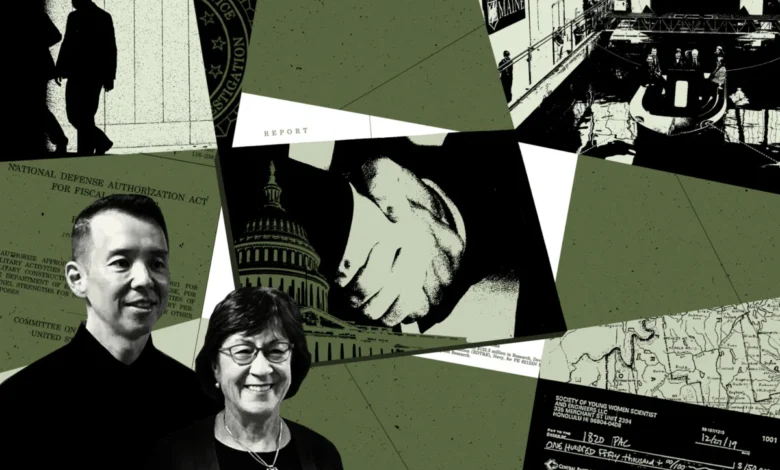
The central issue in Senator Susan Collins’ current reelection campaign has shifted toward her historical ties with Navatek, a Hawaii-based defense contractor, following a major investigative report that highlights significant discrepancies between the senator’s public defense and documented federal records. At the heart of the controversy is Martin Kao, the former CEO of Navatek, who has admitted to orchestrating a campaign finance scheme involving illegal contributions in exchange for government contracts. As the senator navigates a contentious political environment, her campaign’s attempts to frame the issue as a settled matter of the past have been challenged by internal FBI records and evidentiary materials that suggest a much more recent and active interest by federal investigators.
The Genesis of the Navatek Relationship
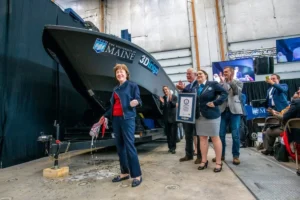
The relationship between Senator Collins and Martin Kao began in the context of Maine’s defense manufacturing sector. Navatek, which specializes in advanced naval architecture and ship design, sought to expand its footprint in the state, often leaning on federal appropriations to bolster its research and development programs. Throughout the late 2010s, Kao became a significant donor to political causes, including those supporting Collins. However, the nature of these donations eventually attracted the attention of federal regulators and the Department of Justice.
In 2021, the FBI launched an initial inquiry into Kao’s activities. At that time, investigators examined whether donations made to Collins’ campaign and associated PACs violated federal election laws. The investigation concluded without charges against the senator or her immediate staff. It is this 2021 investigation that Senator Collins frequently cites when asserting that she and her office were "totally cleared" of any wrongdoing.
Chronology of the Federal Inquiry
While the senator maintains that the case was closed years ago, the timeline of the investigation is far more complex than her public statements suggest:
- 2021: Initial FBI investigation into Martin Kao and Navatek begins. No charges are brought against Senator Collins or her staff.
- 2022–2024: Martin Kao provides extensive cooperation to federal authorities following his guilty plea for campaign finance and loan fraud. During this period, he offers testimony and documentation regarding his interactions with elected officials.
- September 2024: Kao sits for a two-day formal interview with FBI agents at the U.S. Attorney’s Office in Honolulu. He submits a 50-page document detailing his alleged interactions with political figures, including Senator Collins.
- December 2024: Internal FBI documents reveal that agents were actively corroborating Kao’s claims, noting that hundreds of thousands of documents provided via Grand Jury subpoenas matched the narrative provided by the former CEO.
- Early 2025: Federal agents continue to examine the relationship between the senator’s office, her campaign staff, and a pro-Collins super PAC.
- Mid-2025: The investigation into the senator and her orbit is effectively terminated following a series of personnel changes within the Department of Justice and the federal law enforcement apparatus under the Trump administration.
Dissecting the Senator’s Defense
In recent media appearances, Senator Collins has aggressively countered the ProPublica findings, characterizing the reporting as a "disgraceful smear job." Her primary defense rests on the assertion that the Biden-led Justice Department exonerated her office five years ago. However, this framing ignores the active investigation that spanned from 2022 through early 2025.
The distinction is critical: while the 2021 inquiry did not result in charges, the subsequent investigation—fueled by Kao’s detailed testimony and thousands of pages of subpoenaed records—was a distinct, later-stage effort. By conflating the 2021 investigation with the 2022–2025 probe, the senator’s campaign creates a narrative of total exoneration that is not supported by the internal FBI documents.
Furthermore, the defense offered by the senator’s deputy chief of staff, Annie Clark, has faced scrutiny. Clark argued that the FBI and the courts "did not believe Kao," citing his status as a convicted felon. However, while the presiding judge in Kao’s sentencing case did not grant him leniency for his cooperation, internal FBI documentation paints a different picture of his reliability. Agents noted in December 2024 that "several emails and other documents corroborate Kao’s statements," suggesting that regardless of the CEO’s character, the physical evidence he provided held significant investigative weight.
Evidence and Independent Corroboration
The investigation into Senator Collins’ involvement goes beyond the word of a single witness. The inquiry focused on whether anonymous donations were funneled into a super PAC supporting the senator via shell companies. Specifically, investigators scrutinized a $150,000 donation.
Documents obtained by journalists show a clear chain of communication between Scott Reed, the head of the pro-Collins super PAC, and Martin Kao. In these exchanges, Kao provided the name of the shell company he intended to use to mask his donation. Subsequent emails from Reed’s office to Navatek representatives requested Kao’s phone number so that Senator Collins could personally express gratitude for the contribution. When confronted with these records, the senator’s campaign manager, Steve Abbott, did not dispute the potential for such a call, stating, "We routinely thank people for contributions." While the campaign maintains they have no official record of the specific call taking place, the existence of the communication trail provides the basis for the federal interest in whether the senator was aware of the source of the funds.
The Role of Political Interference
The abrupt conclusion of the corruption review in early 2025 remains a point of significant interest. The dismissal of key federal agents and prosecutors—many of whom were deeply embedded in the investigation of high-profile corruption matters, including the Kao case—effectively halted the probe before it could reach a definitive conclusion. This administrative action removed the oversight mechanism that had been scrutinizing the senator’s office for years.
Critics argue that this purge of personnel was a politically motivated maneuver intended to shield allies from further legal exposure. Proponents of the administration argue that these changes were part of a broader mandate to restructure the Department of Justice. Regardless of the intent, the result was the immediate cessation of a live investigation that had been actively collecting evidence against high-ranking political figures.
Broader Implications for Campaign Finance
The Navatek scandal serves as a case study in the vulnerabilities of current campaign finance laws. The use of shell companies to facilitate "dark money" contributions creates a layer of abstraction that allows donors to conceal their identities, even from the candidates they support. However, the FBI’s interest in the Collins case suggests that even if a candidate claims ignorance of a donor’s identity, the act of soliciting or thanking a donor—when the campaign is aware of the intermediary—can raise serious legal and ethical questions.
For the voters of Maine, the implications are profound. The scandal forces a debate over transparency, the integrity of federal oversight, and the influence of defense contractors on regional politics. As the campaign progresses, the disconnect between the senator’s public narrative and the documented history of the FBI’s investigation will likely continue to be a central point of contention.
Conclusion: A Lingering Question of Accountability
As the election approaches, the political fallout from the Navatek scandal remains unpredictable. The senator’s reliance on the 2021 investigation as a shield against recent findings creates a strategic vulnerability. If further documents are surfaced or if former investigators speak out regarding the premature end of their work, the "exoneration" narrative may become increasingly difficult to sustain.
Ultimately, the case highlights the tension between political branding and investigative reality. While Senator Collins continues to frame the allegations as "seven-year-old" issues, the documentary evidence suggests a pattern of behavior that was under active federal review until the very recent past. For a senator who has built a long career on a reputation for moderation and institutional integrity, the persistence of the Navatek investigation represents a significant challenge to her political legacy. Whether this issue will decisively sway the electorate remains to be seen, but the gap between the senator’s claims and the internal records of the FBI ensures that the Navatek scandal will remain a defining feature of this election cycle.
Related posts: