‘Knife: The Attempted Murder of Salman Rushdie’ Review: Alex Gibney Profiles the Controversial Author During His Harrowing Hospitalization

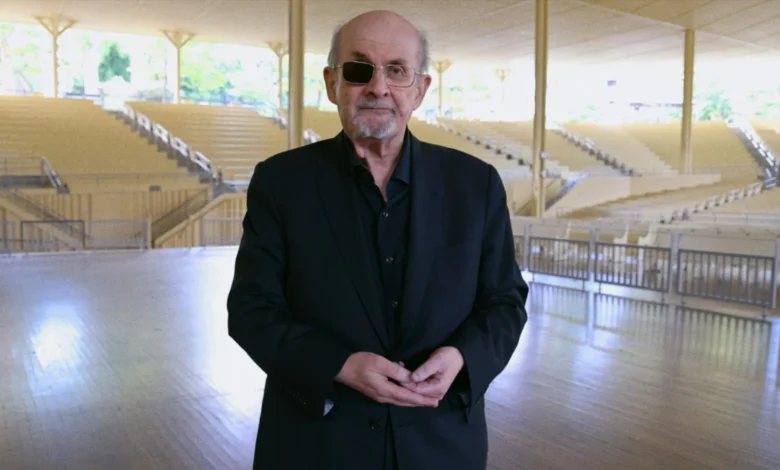
The film is anchored by the intimate, often grueling footage captured by Rushdie’s wife, poet and photographer Rachel Eliza Griffiths. These images—depicting the author’s mangled hand, the surgical scars across his abdomen, and the permanent damage to his right eye—provide a visceral counterpoint to the more traditional, investigative style Gibney is known for. While the documentary serves as a comprehensive profile of Rushdie’s life, it is this raw, personal documentation that elevates the work from a standard biographical sketch to a profound meditation on the fragility of artistic freedom.
The August 12 Assault: A Chronology of Violence
On the morning of August 12, 2022, Salman Rushdie arrived at the Chautauqua Institution in upstate New York, a venue known for its focus on intellectual exchange and the arts. He was scheduled to participate in a panel discussion regarding the United States as a sanctuary for writers in exile. Minutes after taking the stage, the event turned into a crime scene.
A 24-year-old New Jersey resident, Hadi Matar, rushed the stage and repeatedly stabbed the author before being restrained by audience members and security personnel. The attack was swift and brutal. Rushdie suffered multiple stab wounds to his neck, abdomen, and eye. He was airlifted to a local trauma center, where he spent weeks undergoing extensive surgeries. The physical toll was profound; in addition to the permanent loss of sight in one eye, Rushdie suffered nerve damage to his hand, an injury that significantly impacted his ability to write, a struggle he candidly addresses throughout the documentary.
The assailant, Hadi Matar, was subsequently arrested and charged with second-degree attempted murder and second-degree assault. He has pleaded not guilty to the charges, and the legal proceedings remain an ongoing focal point for international observers who view the attack as a direct assault on the principles of free expression.
The Satanic Verses: A History of the Fatwa
To understand the 2022 attack, one must look back to 1988, the year Rushdie published his fourth novel, The Satanic Verses. The book, a work of magical realism that explores themes of migration, identity, and faith, triggered a firestorm of controversy. Many in the Muslim world perceived segments of the narrative as blasphemous.
In February 1989, Ayatollah Ruhollah Khomeini, then the Supreme Leader of Iran, issued a fatwa calling for the death of Rushdie and his publishers. The edict initiated a period of extreme instability for the author, who was forced into hiding for nearly a decade under the protection of the British government. The ripple effects were catastrophic: bookstores in the United Kingdom and beyond were bombed, the novel’s Japanese translator, Hitoshi Igarashi, was murdered in 1991, and the Italian translator, Ettore Capriolo, was severely wounded.
The documentary utilizes archival footage to remind contemporary audiences that the threats against Rushdie were not isolated incidents but part of a systematic campaign of intimidation. Through a combination of historical news clips and animated excerpts from The Satanic Verses, Gibney illustrates the absurdity and danger of reacting to literature with violence. By juxtaposing the creative intent of the novel with the lethal reality of the backlash, the film underscores the broader societal dangers posed by religious extremism when it is weaponized against intellectual discourse.
The Mechanics of Recovery and Resilience
The documentary distinguishes itself through its focus on the aftermath of the attack. Rather than dwelling solely on the attacker, Gibney centers Rushdie’s own voice. The author provides a running narration that details his internal state in the days following the trauma. He discusses his reaction to the violence—a mix of confusion and fatalism—and his subsequent reckoning with his own mortality.
The involvement of Rachel Eliza Griffiths is pivotal. Her footage provides a domestic and vulnerable perspective that is rarely afforded to public figures of Rushdie’s stature. The film documents quiet moments of recovery, including a poignant telephone conversation with filmmaker and longtime friend Wes Anderson. These scenes highlight the importance of community and support systems in the face of targeted political and religious violence.
Implications for Free Speech and Civil Society
The assault on Rushdie in 2022 serves as a stark reminder that the tensions sparked in 1989 have not subsided; rather, they have evolved. In the current era of polarized discourse and digital radicalization, the vulnerability of authors, journalists, and public intellectuals has become a defining concern for human rights organizations.
The documentary argues that artistic expression is inherently fragile. While Western democracies often take the right to free speech for granted, the case of Salman Rushdie serves as a continuous, painful counter-narrative. The fact that an author could be targeted three decades after the initial publication of a book demonstrates the long-term impact of censorship and the persistent threat of ideological violence.
Analytical Perspective: The Power of the Documentary
Alex Gibney’s approach in Knife is both journalistic and deeply empathetic. By avoiding the temptation to turn the assailant into a central character—he is mentioned only once by name—Gibney ensures that the narrative remains focused on the victim’s resilience and the survival of his ideas. The film avoids the "uncanny" technological tropes seen in some of Gibney’s other projects, opting instead for a grounded, human-centric storytelling method.
Furthermore, the documentary serves as a historical record. For younger generations who may not be familiar with the specifics of the 1989 fatwa, the film provides essential context, connecting the past to the present. It posits that the act of writing—and the act of reading—are inherently dangerous in a world that increasingly demands ideological conformity.
Global Reactions and Official Stances
Following the 2022 attack, leaders and intellectual organizations worldwide issued statements condemning the violence. PEN America, an organization dedicated to the protection of free expression, described the attack as a "premeditated assault on the very idea of literature and the freedom to write." Similarly, numerous government officials highlighted the need to protect authors who face threats for their work, reinforcing the idea that the safety of intellectuals is a litmus test for the health of a democracy.
While some commentators have argued that the incident should trigger a re-evaluation of the role of religious institutions in public life, others have focused on the need for enhanced security measures for public figures who express controversial viewpoints. Regardless of the specific political takeaway, the consensus among global human rights advocates is that the attack on Rushdie was an attack on the collective capacity for human inquiry.
Conclusion: A Legacy of Persistence
The documentary concludes not with a sense of closure, but with an acknowledgement of endurance. Salman Rushdie’s return to his craft despite the permanent physical damage he sustained is framed as a defiant act in its own right. The title of the film, Knife, is evocative of the very tool used to silence him, yet the film itself is a testament to the fact that his voice remains active.
As the credits roll, the audience is left to grapple with the realization that the "frightening vulnerability" of artistic expression mentioned in the film is not a theoretical problem, but an ongoing reality. Through the meticulous lens of Alex Gibney and the brave, intimate contributions of Rachel Eliza Griffiths, the film provides a necessary, somber, and ultimately resilient account of one of the most significant figures in modern literature, ensuring that the attempt to erase his voice has only served to amplify his legacy.
Related posts: