Conservative Groups Raise Alarms Over Democratic Lawmaker Calls for Aggressive Trump Administration Projections

The escalating political friction in Washington has entered a volatile new phase, as conservative organizations and legal experts voice deep concerns over prospective congressional oversight and investigative tactics targeting President Donald Trump and his incoming administration. At the center of the debate are recent remarks by Democratic lawmakers advocating for robust accountability measures, which critics argue could transform routine legislative oversight into a punitive mechanism designed to deter young professionals from entering public service.
These anxieties have been amplified by memories of recent federal investigations, most notably the expansive probe led by former Biden-appointed special counsel Jack Smith following the 2020 election. Conservative leaders, legal scholars, and former prosecutors are now debating the constitutional boundaries of congressional subpoenas, the weaponization of government agencies, and the long-term implications for governance and civil service employment.
The Genesis of the Controversy: Slotkins Deterrence Message
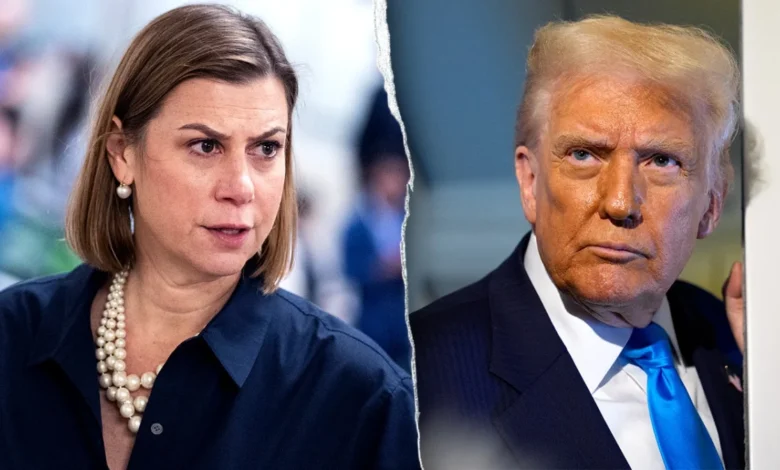
The current debate was catalyzed earlier this month during an appearance by Senator Elissa Slotkin, D-Mich., at the University of Chicago’s Institute of Politics. During the event, Slotkin outlined her vision for how a Democratic-controlled Congress should approach a second Trump administration, emphasizing the need to send a clear deterrence message not only to the president himself, but to the individuals who would staff his agencies and carry out his policies.
Slotkin’s comments quickly circulated across national media platforms, sparking intense backlash from conservative figures who interpreted the remarks as a threat of political prosecution and administrative harassment. Critics argued that targeting mid-level staffers, civil servants, and political appointees with aggressive investigations goes far beyond traditional oversight and crosses into the realm of intimidation.
Although Slotkin’s office did not respond to immediate requests for comment following the initial reports, defenders of congressional authority have pushed back against the uproar, characterizing the criticism as manufactured outrage. Legal scholars note that Congress possesses broad constitutional authority to investigate executive branch agencies, oversee the administration of federal laws, and compel testimony through subpoenas.
However, the intersection of partisan politics and investigative power has left many legal analysts questioning where legitimate legislative inquiry ends and political retribution begins.
The Shadow of Jack Smith: A Precedent for Regulatory Strain

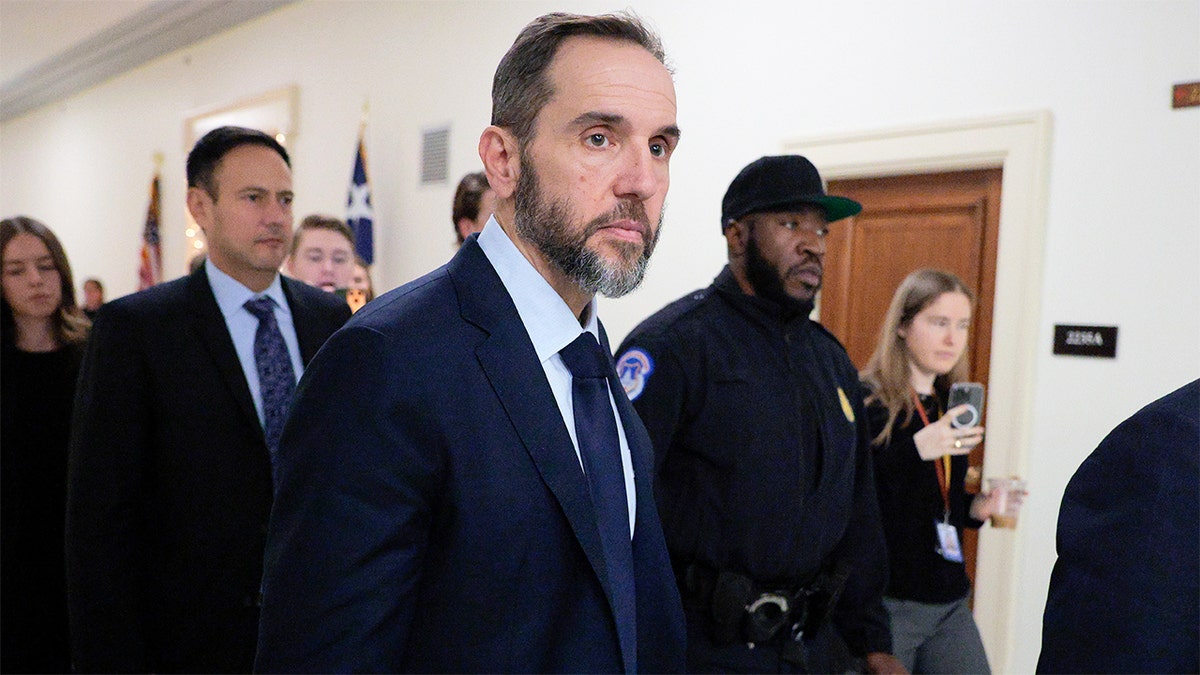
To understand the depth of the current conservative anxiety, legal analysts point to the fallout from former special counsel Jack Smith’s investigation into the events surrounding January 6 and the 2020 election. While Smith’s probe was conducted under the auspices of the Department of Justice rather than Congress, conservative advocacy groups argue that the investigation established a concerning template for how federal power can be marshaled against political opponents.
Rachel Bovard, vice president of programs at the Conservative Partnership Institute (CPI), shared firsthand insights into the financial and operational toll of these investigations. CPI was among the conservative organizations subpoenaed during Smith’s inquiry. According to Bovard, the organization was forced to expend millions of dollars in legal fees simply to ensure technical compliance with sweeping document requests.
Bovard described the process as an effort to map the conservative movement, noting that the vast repository of information gathered during the investigation remains archived within federal databases at the Federal Bureau of Investigation and the Department of Justice. Because this data persists across administrations, conservative leaders fear it could be readily accessed and weaponized by future political appointees in a subsequent Democratic administration.
Furthermore, Bovard highlighted the intrusive nature of the requests, noting that subpoenas extended to internal operational details, such as employee health coverage and organizational benefits—information she argues bore no logical relation to the stated scope of the special counsel’s probe.
Legal Analysis: The Constitutional Boundaries of Congressional Subpoenas
The deployment of congressional subpoenas as a political instrument raises complex constitutional and statutory questions. Under established jurisprudence, Congress’s investigative powers are broad, rooted in its inherent legislative function. The Supreme Court has consistently affirmed that Congress has the authority to investigate matters necessary for drafting legislation, evaluating executive branch efficiency, and exposing corruption.
However, legal experts emphasize that this power is not limitless. Abhishek Kambli, a former federal prosecutor and partner at Holtzman Vogel, explained that congressional subpoenas must maintain a clear nexus to legitimate legislative duties. Congress lacks the constitutional authority to issue subpoenas for pure law enforcement or punitive purposes.
Kambli noted that public statements made by lawmakers regarding an accountability agenda or a desire to punish political enablers could serve as critical evidence for targets seeking to challenge subpoenas in federal court. If litigants can demonstrate that an investigation is primarily intended to harass, intimidate, or exact political revenge rather than gather information for legislative remedies, the subpoenas could be vulnerable to legal challenge.
At the same time, academic experts point out that overcoming congressional privilege in court remains a formidable hurdle. Michael Morley, a law professor at the Florida State University College of Law, acknowledged that while open calls for deterrence and political targeting create poor institutional optics and damage democratic norms, they do not automatically invalidate the broad statutory authority vested in congressional committees to investigate executive agencies.

The History of Contempt and Executive Privilege
The debate over congressional oversight also revives historical debates surrounding contempt proceedings and executive branch cooperation. Past administrations have frequently clashed with Capitol Hill over document requests and witness testimonies.
A prominent precedent occurred during the Obama administration, when the House of Representatives voted to hold then-Attorney General Eric Holder in criminal contempt of Congress for refusing to comply with subpoenas related to the Operation Fast and Furious investigation. Despite the historic vote, the Department of Justice ultimately declined to prosecute Holder, establishing a practical precedent that the executive branch holds discretionary authority over whether to enforce contempt citations against its own officials.
Legal observers like Hans von Spakovsky, a senior legal fellow at Advancing American Freedom, suggest that similar dynamics could emerge if future congressional committees attempt to penalize uncooperative witnesses. While Congress holds the theoretical power of inherent contempt or criminal referral, the practical realization of those penalties often depends on the cooperation of the executive branch—specifically the Department of Justice—which may decline to pursue charges against political allies or former officials.
Nevertheless, legal analysts warn that formal prosecution is not the only metric of harm. For young professionals, mid-level government employees, and private citizens working with conservative organizations, the investigative process itself can serve as a severe deterrent.
The Financial and Reputational Toll on Civil Servants
The most immediate concern raised by conservative organizations is the chilling effect that aggressive oversight campaigns may have on prospective government employees. Entering public service has historically been viewed as a patriotic duty and a stepping stone for young legal, policy, and administrative professionals. However, the threat of protracted congressional investigations, leaked personal documents, and crippling legal defense costs threatens to alter that calculus fundamentally.
Kambli emphasized that for many individuals, the process is the punishment. Young professionals or mid-level staffers lacking the financial resources of major political organizations or deep-pocketed donors may find themselves unable to afford the specialized legal representation required to navigate a federal subpoena or congressional deposition.
The prospect of reputational damage, combined with the financial ruin associated with mounting legal bills, creates a powerful deterrent against joining a conservative administration. Critics argue this outcome directly undermines the functioning of the executive branch by discouraging qualified individuals from accepting presidential appointments.
Preemptive Pardons and the Escalation of Lawfare
In anticipation of aggressive post-term investigations and legislative inquiries, discussions surrounding executive protections have taken on renewed urgency. Weeks prior to the escalation of the current debate, President Trump indicated in a media interview that he would consider issuing preemptive pardons to members of his administration before the conclusion of his term. He pointed to historical precedents, such as President Joe Biden’s preemptive pardon of Dr. Anthony Fauci, as evidence of a shifting paradigm in executive protection.
While conservative leaders like Bovard acknowledge that the normalization of mass preemptive pardons is a regrettable symptom of deeply polarized national politics, they argue it has become a necessary defensive mechanism against what they describe as systematic lawfare.
The concern extends beyond the immediate legislative horizon. Analysts note that the ultimate point of vulnerability for former administration officials may materialize if a Democratic president wins the White House in 2028 while simultaneously maintaining majorities in both chambers of Congress. Under such a unified government scenario, the investigative apparatus of both the legislative and executive branches could operate in tandem, maximizing pressure on the architects and executors of conservative policy.
Broader Implications for American Governance
As the political landscape prepares for upcoming midterm elections and future shifts in congressional power, the debate over oversight, deterrence, and the weaponization of government institutions highlights a widening institutional fracture.
The tension between robust legislative oversight and partisan intimidation poses profound questions for the future of American governance. As legal challenges take shape and political figures continue to stake out hardline positions on accountability, the norms governing the transition of power, civil service employment, and congressional investigations face an unprecedented stress test.
For now, organizations on both sides of the aisle are preparing for a protracted struggle over the limits of federal power, with the careers, finances, and reputations of a new generation of public servants hanging in the balance.