The High-Stakes Clash Over AI Megafacilities: How Data Centers Became the Most Toxic Flash Point in American Politics

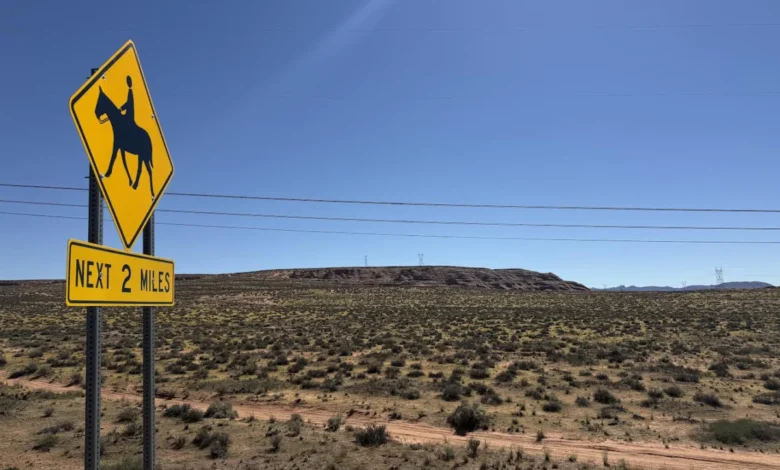
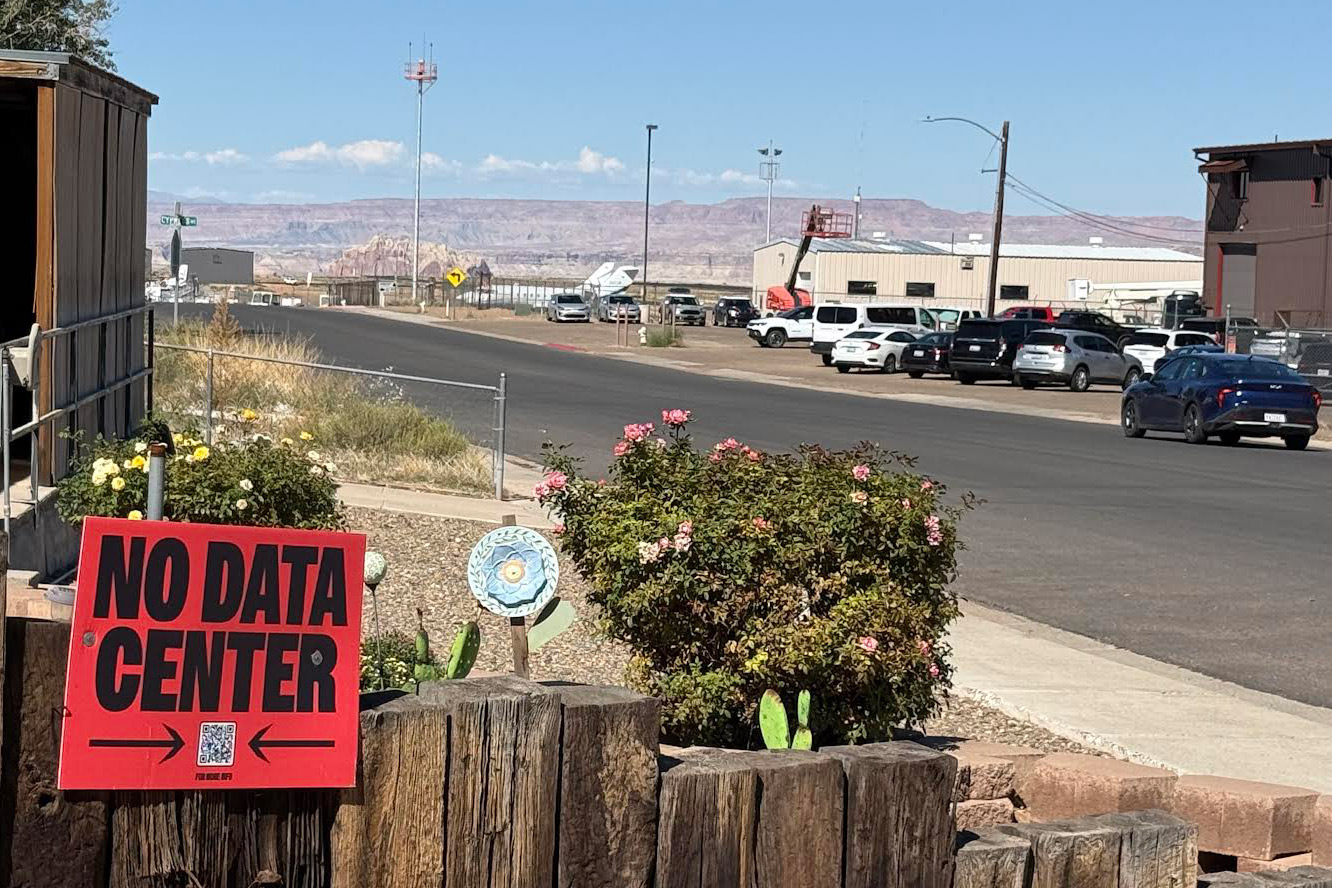
The quiet, sun-baked desert landscape surrounding Page, Arizona, long known as a picturesque gateway to the striking red-rock formations and sweeping canyons of the American Southwest, has unexpectedly found itself on the front lines of a national technological and political battleground. Doug Herrera, a 64-year-old resident living in the very house his father built, looks out from his front porch toward the horizon with a deep sense of unease. Having already lost his father to cancer—an illness he suspects may have been linked to historic regional pollutants from legacy uranium mining—Herrera now harbors a new and distinct fear: that a proposed $10 billion mega data center will soon be constructed as his neighbor, threatening both the serene environment and his personal health.
"I’m a patriot, but I’m highly against the data center," Herrera said, gesturing toward a yard sign staked firmly in the ground that reads simply, "No Data Centers." He points to a litany of anticipated disruptions that accompany the massive infrastructure projects required to fuel the artificial intelligence boom. "There is light pollution, sound pollution. The temperature is going to rise," he warned.
Herrera’s anxieties are far from isolated. Across the United States, an unprecedented construction boom of hyperscale data centers—sprawling complexes packed with thousands of servers designed to power the voracious computational demands of generative artificial intelligence—has transformed quiet rural towns and suburban neighborhoods into centers of intense civic mobilization. What began a few years ago as swift, often under-the-radar approvals by local municipal councils eager for economic expansion has rapidly evolved into a grassroots political rebellion. This localized pushback is now upending midterm election cycles, dividing established political coalitions, and making data center development one of the most volatile and toxic issues in modern American politics.
The Anatomy of the Boom and the Rise of Grassroots Resistance
The rapid expansion of artificial intelligence technology has necessitated an extraordinary physical footprint. Unlike traditional corporate offices or manufacturing plants, modern hyperscale data centers require tens or even hundreds of thousands of square feet of floor space, massive electrical grids to power high-density servers, and vast amounts of water or chemical coolants to keep systems from overheating.
In Page, a municipality of approximately 7,000 residents situated near the iconic Horseshoe Bend curve of the Colorado River, the City Council previously approved the sale of 500 acres of open desert land for a proposed massive data center project. Although the exact footprint within that acreage remains undetermined, the mere prospect of the project has galvanized the community. Residents have mobilized swiftly, circulating petitions, attending packed town hall meetings, and organizing coordinated political opposition. The backlash reached a dramatic climax in July, when voters ousted the city’s mayor at the ballot box over the council’s handling of the land sale.
Political scientists and market analysts note that the speed and intensity of this localized resistance caught state and local officials entirely off guard. Lee Hannah, a political science professor at Wright State University in Dayton, Ohio, observed that the landscape has shifted dramatically in a very short window.
"Two years ago, a lot of these data centers went up and there was not an organized, watchful opposition," Hannah said. "That opposition has come up in a grassroots way so quickly that decisions made a year ago by local officials or state governments to get behind a data center are suddenly career-ending."
Market intelligence data illustrates the staggering scale of the phenomenon. According to industry tracking firm Cleanview, there are currently about 1,400 operational data centers across the United States, with an additional 2,000-plus facilities in the planning or construction pipeline. Crucially, approximately 60 percent of the data center capacity currently under construction is concentrated in states that President Donald Trump won by five percentage points or more in the 2024 election. Excluding the established data center hub of Virginia, a staggering 92 percent of new capacity is slated for states won by the president.
This geographic reality has placed conservative and rural coalitions in a unique bind. Traditionally, rural communities—often reliably red—have warmly welcomed economic development initiatives that promise jobs, tax revenue, and capital investment. However, because data centers require vast expanses of cheap land and access to high-capacity power lines, they are disproportionately built in these exact rural and semi-rural areas, bringing heavy industrial footprints directly into the backyards of voters who historically formed the bedrock of Republican support.
Environmental and Public Health Concerns Take Center Stage
While economic arguments regarding jobs and local tax windfalls initially dominated discussions surrounding data center approvals, the political narrative has decisively shifted toward public health, environmental degradation, and resource depletion. Emerging scientific research highlights a litany of acute risks associated with the round-the-clock operations of these hyperscale facilities.
Data centers are notorious energy hogs. To maintain uninterrupted uptime during periods of peak electrical grid demand, the facilities routinely rely on massive backup power systems, which frequently include diesel generators and gas turbines. According to numerous environmental and atmospheric studies, the continuous or intermittent combustion from these backup units releases significant quantities of air pollutants, including nitrogen oxides and fine particulate matter. These emissions have been directly linked by public health experts to elevated rates of cardiovascular disease, respiratory illness, asthma attacks, and increased long-term cancer risks.
A prominent modeling study led by researchers at the University of California-Riverside projected that air pollution emissions stemming from nationwide data center expansion could cause nearly 1,300 deaths annually by 2030, carrying an estimated annual public health burden exceeding $20 billion as early as 2028.
"When they are fired up and powered by diesel, they emit a lot of air pollution like nitrogen oxide, and this pollutant can travel around the community and to those downwind," explained Shaolei Ren, an electrical and computer engineering professor at the University of California-Riverside.
Beyond air emissions, environmental advocates point to several other profound impacts:
- Water and Chemical Contamination: Cooling systems frequently utilize synthetic chemical compounds, including polyfluoroalkyl substances (PFAS), known colloquially as "forever chemicals," which can accumulate in human tissue and pose long-term ecological risks if discharged into local watersheds.
- Severe Acoustic Pollution: The relentless hum and mechanical whir of giant industrial chillers, air conditioning units, and backup generators can easily exceed 90 decibels at close range, raising serious concerns about permanent hearing damage and chronic stress for nearby residents like Jan Boehme, who lives near the proposed Page site and worries about the continuous ambient noise.
- Intense Light Pollution: Facilities require extensive round-the-clock illumination for operations and security protocols, contributing to night-sky brightness that scientific studies link to disrupted circadian rhythms and increased risks of chronic health conditions.
- Data Heat Islands: The immense concentration of electrical energy consumed by racks of servers generates localized microclimates known as "data heat islands," which can noticeably elevate ambient temperatures in surrounding neighborhoods.
Alison Steele, executive director of the Environmental Health Project, emphasized the urgency of the moment. "We’re just starting to see the very early edge of the wave of the research into health impacts of data centers," Steele said. "By the time we have a substantial volume of research it’s going to be too late, because the decisions are being made now."
Industry representatives, however, push back against these sweeping assertions. Dan Diorio, executive vice president of state policy and government affairs at the Data Center Coalition, argued that comprehensive regulatory frameworks already govern the sector. Pointing to a review of Virginia—the nation’s largest data center market—Diorio noted that actual reliance on diesel backup generators for routine operations is minimal, and existing state and federal environmental regulations strictly limit allowable emissions. "Data centers are committed to being responsible partners where they operate," Diorio stated.
A Bipartisan Political Flash Point in the Midterms
The mounting public backlash has cut directly across traditional party lines, creating acute vulnerabilities for incumbents and reshaping competitive legislative and congressional races ahead of the November midterm elections. Public polling underscores the depth of the public’s resistance. A comprehensive Washington Post-ABC News-Ipsos poll revealed that roughly two-thirds (66 percent) of Americans disapprove of the construction of new data centers in the United States. Furthermore, a Gallup poll indicated that citizens express significantly more opposition to having a data center located in their local area than they do toward nuclear power plants.
In Arizona, an August opt-in online poll conducted by Noble Predictive Insights found that 57 percent of registered voters actively oppose the construction of additional large data centers. This dynamic has injected fierce controversy into the competitive race for Arizona’s 1st Congressional District. Republican House candidate Jay Feely, who secured his primary victory with an endorsement from President Trump—who publicly supports data center infrastructure as vital for national competitiveness against global rivals like China—has defended the facilities as essential. Conversely, his Democratic opponent, Amish Shah, has campaigned heavily on implementing an immediate moratorium on new data center construction within the district.
Similar political friction is occurring across the country, nowhere more visibly than in Ohio, which has emerged as the national epicenter of political fallout over the issue. Over the past decade, major technology titans including Meta, Amazon, and Google have constructed dozens of data centers across Ohio, fueled by approximately $2.5 billion in state and local tax incentives. While state leaders initially championed these projects as economic triumphs, the reality of industrial noise, strained local electrical grids, and environmental concerns has triggered a massive voter backlash. Ohio now hosts more local ballot referendums and citizen initiatives aimed at restricting data center construction than any other state in the nation.
The issue has taken center stage in Ohio’s high-profile U.S. Senate race. Former Democratic Senator Sherrod Brown has launched a blistering campaign targeting Republican opponent Jon Husted, branding him as "the face of data centers" due to his historical advocacy for tax incentives and technological expansion.
"They’re devouring our farmland, sucking up our water, and using our energy," Brown declares in campaign advertisements that have saturated local airwaves.
The political peril for Republicans has not gone unnoticed by national strategists. An internal memo circulated in August by the National Republican Senatorial Committee and obtained by political media outlets warned that the data center issue had become "the anchor hanging around Husted’s neck," threatening to alienate suburban and rural voters alike.
In response to the criticism, Husted and his campaign have sought to pivot, emphasizing that the siting of data centers should remain strictly a local decision while asserting that technology companies must be held financially accountable for upgrading local energy and water infrastructure to handle the load. Nevertheless, independent polling conducted by Ohio Northern University and SurveyUSA found that 55 percent of Ohio adults oppose further data center expansion, with two-thirds expressing deep pessimism regarding the facilities’ environmental impact on their communities.
Implications for the Future of American Infrastructure
As the debate intensifies, the intersection of artificial intelligence ambitions, energy grid stability, and public health has created a complex governance challenge for policymakers at every level of government. State attorneys general, local zoning boards, and federal lawmakers are increasingly forced to balance the immense national security and economic imperatives of winning the global artificial intelligence race against the immediate, localized reality of community disruption and environmental degradation.
For residents in Page and communities scattered across Ohio, Texas, Virginia, and beyond, the political awakening happening around them is a matter of safeguarding their quality of life. Back on his front porch in northern Arizona, Doug Herrera watches the changing landscape of his hometown with steadfast resolve. For him and millions of other Americans now engaged in grassroots activism, the outcome of this political flash point will determine not only the outcome of impending elections, but the health and livability of their communities for generations to come.