Door-to-Door Politics: Inside the Grassroots Effort to Defeat Missouri’s Transgender Healthcare Restrictions

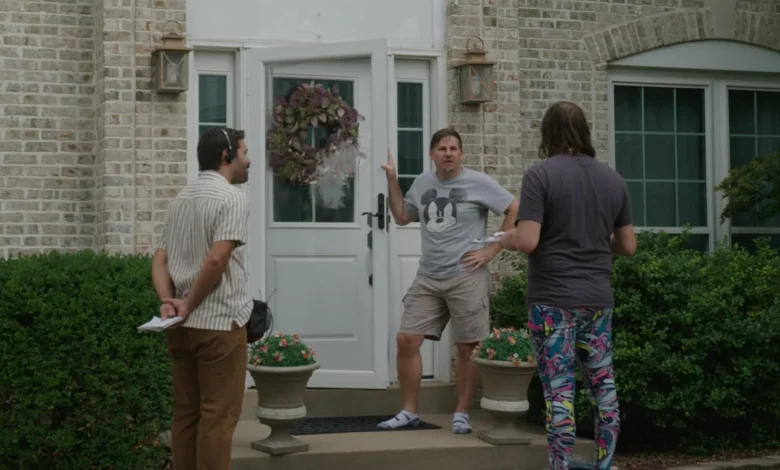
CREVE COEUR, Mo. — Renée Luckfield has mastered the art of the non-threatening knock. Eschewing the sharp, authoritative cadence historically associated with law enforcement or uninvited sales representatives, the 29-year-old transgender woman executes a syncopated, rhythmic triple-tap. It is a deliberate tactic designed to put nervous homeowners at ease before she even introduces herself on their front porches.
Yet, as she navigates the manicured lawns of Creve Coeur, an affluent suburb roughly 20 miles west of St. Louis, Luckfield is acutely aware of the underlying tension. Beneath a carefully maintained exterior of warm smiles and relaxed body language, she masks her own apprehension.
"Honestly, it’s not something that I’m entirely comfortable with," Luckfield said between stops, reflecting on the heavy emotional toll of carrying her identity directly to the doorsteps of strangers. "And it’s not fair that we have to do this work."
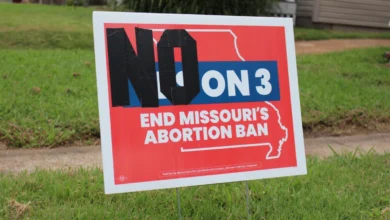
Luckfield’s labor is part of a monumental, high-stakes campaign led by PROMO Missouri, the state’s premier LGBTQ+ advocacy organization. With the midterm elections looming, the group has launched an ambitious initiative to knock on 100,000 doors across five of Missouri’s largest metropolitan areas. Their primary objective is to defeat a contentious proposed constitutional amendment that seeks to codify a near-total ban on abortion while simultaneously outlawing gender-transition surgery, cross-sex hormone therapy, and puberty blockers for minors.
The initiative in Missouri mirrors a broader, nationwide political flashpoint. As culture-war issues increasingly dominate state and federal ballots, transgender healthcare has transformed from a localized medical debate into a centerpiece of electoral strategy.
The National Landscape and the Rise of Ballot Measures
The weaponization of transgender issues in American politics is not entirely new, but its footprint has expanded dramatically in recent election cycles. Over the past five years, 27 states have enacted various legislative restrictions or outright bans on gender-affirming care for minors, signaling a coordinated push by conservative lawmakers nationwide.
However, the battlefield has increasingly shifted from legislative halls to direct voter referendums. During the current midterm cycle, voters in multiple states are confronting ballot measures directly targeting LGBTQ+ rights. Alongside Missouri’s proposed restrictions, Colorado voters are weighing a similar ban on transgender healthcare for minors. Meanwhile, proposed restrictions on transgender athletes participating in youth sports have made it onto the ballot in Arizona, Colorado, Nebraska, and Washington.
Political analysts note that these measures are strategically designed to mobilize conservative turnout while creating wedge issues for moderate voters. This dynamic was heavily amplified during the 2024 presidential campaign, where political action committees and conservative campaigns—most notably those aligned with Donald Trump—spent tens of millions of dollars on anti-transgender advertising. Prominent campaign spots targeted Democrats, including then-vice presidential or presidential nominees, with messaging designed to frame progressive gender policies as out of touch with mainstream American values.
In Missouri, this legislative and cultural pressure cooker reached a boiling point in 2023, when the state’s Republican-dominated legislature permanently blocked minors from accessing gender-affirming surgeries while placing a four-year temporary ban on new prescriptions for puberty blockers and cross-sex hormones. Now, proponents of the restrictions are seeking to make those temporary bans permanent and constitutional via the upcoming ballot initiative.
The Strategy of "Deep Canvassing"
Faced with steep political headwinds and high-profile opposition spending, PROMO Missouri organizers realized that traditional, superficial political canvassing—handing out flyers, reciting scripted talking points, and rushing to the next house—would be entirely ineffective. Instead, they turned to a technique known as "deep canvassing."
Pioneered over a decade ago, deep canvassing relies on empathy, active listening, and extended, unstructured conversations rather than combative political debate. The methodology has a proven, albeit unconventional, track record in American politics. In 2012, deep canvassing was credited with helping overturn a ban on same-sex marriage in Maine. In 2021, a similar grassroots approach was utilized during a high-stakes police reform campaign in Minneapolis, which, though ultimately defeated at the ballot box, fundamentally shifted the terms of the municipal debate.
In Missouri, the deep canvassing initiative kicked off in earnest in 2024. The logistical goals are staggering: canvassers aim to have roughly 10,000 deep, substantive conversations before Election Day, requiring roughly one out of every 10 knocks to blossom into an extended dialogue.
Rather than arguing with voters or preaching to the choir, canvassers are trained to bypass polarized rhetoric. They focus their efforts on a specific demographic: voters who lean against banning abortion but remain ambivalent or undecided regarding transgender healthcare. Supporters of the initiative generally avoid spending excessive time on individuals who are rigidly entrenched in either camp.
Inside the Conversation: Methodology and Metrics
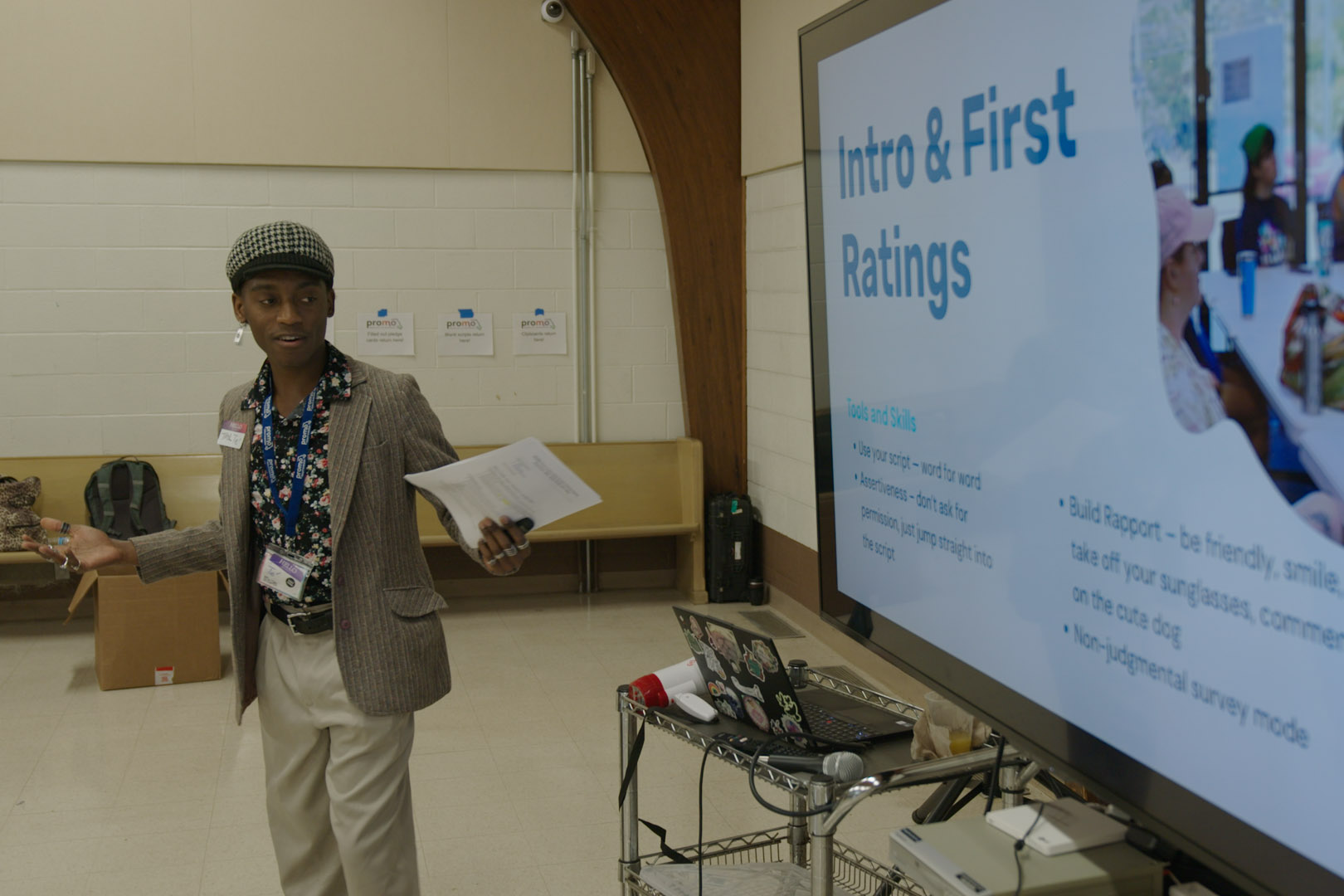
To gauge a voter’s baseline perspective, canvassers use a structured rating system. Homeowners are asked to place themselves on a numerical scale from 0 to 10. A rating of 0 represents total opposition to banning abortion, while a 10 signifies total support. Following that, the homeowner is asked to use the exact same scale to rate their feelings regarding banning "gender-transition procedures for trans minors"—deliberately utilizing the precise legal phrasing that will appear on the ballot. Crucially, the canvasser then asks a follow-up question: "Why is that number right for you?"
On a crisp, overcast Saturday morning in late September, Luckfield put this training into practice in a neighborhood roughly 20 miles west of the Gateway Arch. The ambient noise of suburban life—lawnmowers humming and leaf blowers roaring—provided a backdrop to deeply personal political discussions.
The first door yielded a definitive "10/10" response. The homeowner, citing her Christian faith, expressed staunch support for both the abortion ban and the proposed restrictions on transgender healthcare for minors, arguing that children lack the developmental maturity to make life-altering decisions.
Rather than engaging in a theological or political dispute, Luckfield validated the homeowner’s position respectfully. "I hear you," Luckfield replied. "That’s everything I need from you today. Thank you very much for your time."
Later that morning, however, Luckfield encountered a vastly different perspective when she spoke with Carol Parsons, a resident who rated herself a "0/0"—opposed to both bans. When Luckfield asked if Parsons had any lingering questions about the medical protocols involved in pediatric gender-affirming care, Parsons voiced a nuanced concern.
"I do feel that they need to be old enough to realize that that is life-changing," Parsons said, noting that while she supported bodily autonomy, she remained uncertain about surgical interventions for adolescents.
"It is tricky, and it is scary to think of that happening for young kids," Luckfield acknowledged, gently guiding the dialogue toward factual context. "The phrase ‘transgender procedures’—that’s, I think, very deliberately chosen language to stoke that fear of surgeries in particular."
Medical Reality Versus Political Rhetoric
Public health data suggests that the fears frequently amplified in political advertising bear little resemblance to medical reality. Gender-affirming surgeries for minors are exceptionally rare in the United States.
According to a comprehensive study of insurance claims covering nearly 23 million children in 2019, published in JAMA Network Open, surgical procedures were performed at a rate of just 2.1 per 100,000 for adolescents aged 15 to 17. The rate dropped to 0.1 per 100,000 for those aged 13 to 14, and stood at zero for children aged 12 and younger.
Similarly, pharmaceutical interventions remain uncommon. Separate research published by public health organizations indicates that fewer than 1 in 1,000 U.S. adolescents with commercial insurance receive prescription puberty blockers or cross-sex hormones.
During her conversation with Parsons, Luckfield clarified that the state’s proposed constitutional amendment would sweep far beyond rare surgical procedures to outlaw puberty blockers entirely. Luckfield explained that puberty blockers are medically reversible, designed to give adolescents experiencing gender dysphoria time to mature alongside comprehensive psychological counseling and social transition before making permanent decisions.
"Well, I definitely agree with that," Parsons responded after hearing the medical clarification. "I think that would be a good solution."
Polling Dynamics and the Broader Implications
The electoral fate of the Missouri amendment remains exceptionally tight. Recent polling conducted by Saint Louis University (SLU) in September placed the proposed ban in a statistical dead heat. Approximately 43% of likely voters expressed support for the restrictive measures, while 44% opposed them, and 13% remained undecided. The poll carried a margin of error of 4.09%.
While the most recent SLU surveys combined the abortion and transgender care restrictions into a single polling question, earlier data from February indicated that voter support for abortion access historically outpaces support for restrictions on transgender healthcare. This polling divide highlights the strategic importance of deep canvassers, who must decouple the two issues in voters’ minds and reach those who support reproductive freedom but feel conflicted about pediatric gender care.
The campaign’s ultimate impact often transcends immediate legislative outcomes, touching on fundamental questions of governance and personal morality. This evolution was highlighted during Luckfield’s final stop of the morning, when she spoke with Louis Meyer. Meyer had previously interacted with a different deep canvasser and had expressed initial ambivalence regarding transgender healthcare.
When Luckfield revisited him, Meyer stated he was now entirely opposed to both bans—a definitive 0/0. When asked what had shifted his perspective, Meyer pointed to a distinction between personal ethics and state control.
"The original question was about where my morals sit and what I would do, which is a different statement than what I want the government to dictate," Meyer explained.
The Illusion of Public Hostility
Over the course of an hour and a half, Luckfield knocked on 12 doors, successfully conducting extended, substantive conversations with five residents—four of whom ultimately expressed opposition to both bans. While acknowledging that St. Louis County leans significantly more progressive than Missouri’s deeply conservative rural districts, Luckfield believes these interactions point to a broader psychological phenomenon documented by advocacy groups like the Transgender Law Center.
Research from the center indicates that when individuals are surveyed anonymously about their personal opinions on transgender individuals and rights, they frequently respond with notable levels of empathy and acceptance. However, when asked how they believe their neighbors or local communities feel, their responses trend significantly more pessimistic.
"People are more accepting than they think the people around them are," Luckfield concluded, neatly summarizing the philosophy that drives her down suburban sidewalks, one carefully measured, syncopated knock at a time.