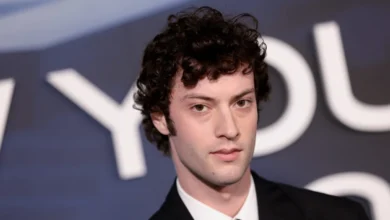
Whalefall Early Reactions Highlight Austin Abrams and Brian Duffield as a Formidable Creative Duo in Upcoming Survival Thriller

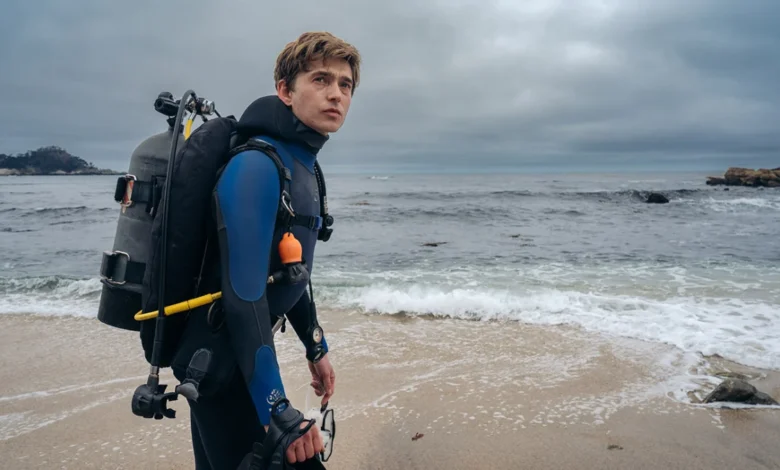
The initial buzz surrounding the upcoming survival thriller Whalefall has begun to surface on social media following a series of high-profile screenings, including a recent gala event in London. Directed by Brian Duffield and produced by 20th Century Studios, the film is poised to be one of the most talked-about releases of the autumn season. With an official theatrical release date set for October 16, 2026, the project has already generated significant discourse regarding its technical ambition, the physicality of its lead performance, and its thematic exploration of familial grief.
At the center of the film is Austin Abrams, who portrays Jay Gardiner, a young man who finds himself in an unimaginable predicament: swallowed alive by a sperm whale while diving off the central coast of California. The film’s premise, based on the 2023 novel of the same name by Daniel Kraus, serves as a high-stakes survival vessel for a deeper, more intimate exploration of a fractured father-son relationship. While the film is marketed as a visceral, claustrophobic thriller, early audience feedback suggests it aims to balance its intense physical sequences with a heavy emotional narrative.
A Chronology of Development and Anticipation
The journey of Whalefall from the page to the screen has been relatively rapid, reflecting the industry’s continued appetite for high-concept, contained thrillers that prioritize tension over sprawling spectacle. The novel by Daniel Kraus provided a robust framework for director Brian Duffield, who has carved out a distinct niche for himself in the genre space. Duffield, known for his work on the 2023 sci-fi horror hit No One Will Save You and the 2020 dark comedy Spontaneous, was brought on to helm the adaptation, signaling 20th Century Studios’ confidence in his ability to manage intense, solo-performer-driven narratives.
Throughout the summer of 2026, anticipation for the film grew as trailers highlighted the technical challenges of filming a protagonist trapped within the anatomy of a marine mammal. Following the film’s completion, the studio initiated a strategic rollout of screenings in late September and early October. These events, particularly the London gala, allowed for a controlled release of critical and audience sentiment ahead of the formal review embargo, which is set to lift on October 14.
The Physicality of the Lead Performance
A common thread among the early reactions is the sheer physical demand placed upon lead actor Austin Abrams. Critics and audience members alike have noted that the film requires Abrams to carry the narrative almost entirely on his own, often while confined in tight spaces and obscured by diving equipment. This performance comes on the heels of his role in the 2026 Resident Evil reboot, where he similarly garnered praise for his ability to ground high-octane action in authentic human vulnerability.
Social media responses have frequently cited Abrams’ ability to convey profound distress and fear through his eyes and body language alone. As one viewer noted, the actor’s capacity to anchor the audience’s attention despite being "inhibited by goggles and a breathing apparatus" is a testament to his burgeoning skill as a dramatic lead. This "banner year" for the actor has led many industry observers to categorize him as one of the most exciting rising stars in Hollywood, capable of sustaining interest in projects that might otherwise struggle under the weight of their own experimental premises.
Technical Ambition and Cinematographic Challenges
Beyond the performances, the film’s sound design and visual effects have emerged as central talking points. The premise—trapping a human inside a whale—presents a massive challenge for production design and CGI, necessitating a balance between realism and the cinematic requirements of a thriller. Early reports suggest that the "guts and slime" aesthetic is effectively rendered, contributing to a sense of genuine claustrophobia that viewers have described as "bone-crunching."
The technical success of the film appears to be tied closely to Brian Duffield’s directorial style. By focusing on the minutiae of the survival process, Duffield reportedly elevates the film beyond a simple "man-in-a-whale" gimmick. However, the film is not without its polarizing elements. Some viewers have pointed to a disconnect between the intense survival sequences and the emotional flashbacks involving Jay’s father, played by Josh Brolin. While some found this thematic juxtaposition moving, others felt the "saccharine" nature of the father-son reconciliation interrupted the pacing of the survival thriller elements.
Broader Implications for the Genre
The reception of Whalefall highlights a shift in the modern survival thriller landscape. As audiences continue to gravitate toward high-concept, contained stories, studios are increasingly willing to invest in projects that rely on strong, singular performances rather than expansive ensemble casts. The success of this film will likely depend on how well it manages its tonal shifts—transitioning between the visceral, "disgusting" reality of the whale’s stomach and the "poignant" emotional stakes of the past.
Furthermore, the involvement of major studios like 20th Century in a project with such a specific, niche premise suggests a strategy aimed at reinvigorating the mid-budget thriller category. By backing directors like Duffield, who have demonstrated an ability to work within constraints, the studio is effectively mitigating the risk inherent in such unusual narratives. The film’s performance at the box office on October 16 will serve as a bellwether for whether these high-concept adaptations can achieve mainstream success or if they are destined to remain cult favorites among genre enthusiasts.
The Balance of Sentimentality and Survival
The most recurring point of debate in early reviews concerns the film’s conclusion. While the survival aspects of the film have been praised as "nerve-shredding" and "insanely stressful," the narrative arc involving Jay’s father has drawn mixed reactions. The film attempts to weave together the physical struggle for survival with a deep, character-driven exploration of trauma and legacy. For some, this works seamlessly, adding depth to an otherwise singular premise. For others, the resolution of this arc feels disconnected from the urgency of the survival scenario.
Regardless of these critiques, the consensus remains that Whalefall is a significant cinematic experience that demands to be seen in a large-format environment. The emphasis on immersive sound design and detailed visual effects suggests that the theater remains the optimal venue for this particular story. As the industry looks toward the end of the year, the film stands as a bold, if occasionally uneven, attempt to push the boundaries of what a survival thriller can accomplish.
Industry Context and Future Outlook
The trajectory of Whalefall serves as a case study in the power of social media to build anticipation for upcoming theatrical releases. By generating buzz through carefully curated screenings and early influencer engagement, the studio has successfully positioned the film as a "must-see" event. This strategy is particularly effective for films that rely on "watercooler" moments or intense, visceral experiences that prompt immediate discussion.
As the embargo date approaches, the critical consensus will likely focus on whether the film’s emotional core holds up against its high-concept premise. With the industry currently navigating a complex period of shifting viewer habits, the success of Whalefall could signal a renewed interest in projects that prioritize inventive storytelling and strong directorial vision. Austin Abrams and Brian Duffield have established a clear creative synergy with this project, and regardless of the final critical tally, the film has firmly cemented both as forces to be reckoned with in the current landscape of American cinema.
In summary, Whalefall is being framed as an intense, technically impressive, and emotionally ambitious thriller that tests the limits of its protagonist. While it may face scrutiny regarding its tonal balance, the film is already being hailed as a unique entry in the genre, one that succeeds in creating a claustrophobic, unforgettable experience for the audience. As October 16 approaches, all eyes will be on the box office to see if the visceral, "guts and slime" nature of the film can translate into widespread commercial viability.