The 2026 Popular Science Audio Awards Honor the Year’s Best Sound Engineering Across Global Markets


The consumer audio landscape underwent a dramatic evolution between October 2025 and October 2026, driven by a renewed focus on physical media, spatial audio formats, and advanced digital-to-analog signal processing. During this twelve-month evaluation period, industry analysts, product reviewers, and acoustic engineers traveled across international manufacturing facilities, private acoustic suites, and mobile listening environments to test equipment ranging from economical $100 desktop solutions to ultra-high-end $100,000 reference systems. The culmination of this exhaustive evaluation process is the second annual Popular Science Audio Awards, highlighting the most significant technological breakthroughs and acoustic achievements in headphones, earbuds, passive and active loudspeakers, and digital sources.

The return of this awards program reflects a broader cultural shift in how consumers engage with recorded sound. While compressed streaming platforms continue to dominate mainstream listening habits, hardware manufacturers have reported substantial surges in the demand for uncompressed digital formats, vinyl pressings, and high-resolution physical media such as 4K Ultra HD Blu-ray and Super Audio Compact Discs (SACD). Engineers have responded by integrating studio-grade processing capabilities into consumer-facing products, bridging the gap between professional recording studios and everyday listening spaces.
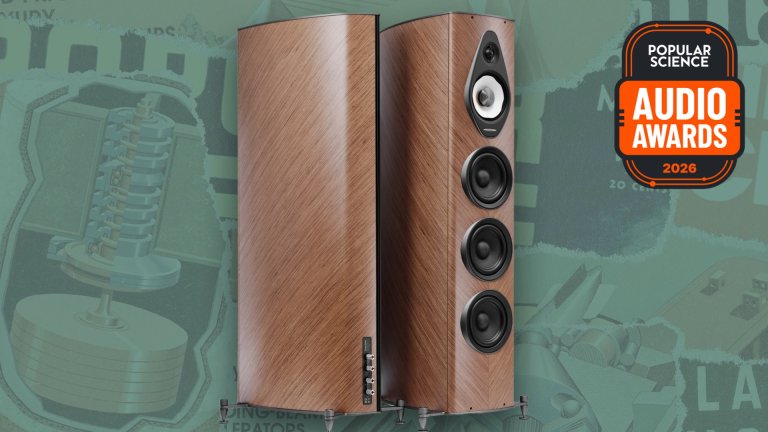
The Evolution of Passive Speaker Engineering
The passive loudspeaker category demonstrated remarkable resilience in 2026, with legacy manufacturers celebrating milestone anniversaries by pushing the boundaries of acoustic physics and cabinet construction.
Marking its sixtieth anniversary, British manufacturer Bowers & Wilkins introduced the 800 Series Diamond 801 D5 floorstanding speakers. Priced at $65,000 per pair, these three-way flagship towers utilize hand-finished laminated layers and advanced internal bracing developed at the company’s facilities in Worthing, United Kingdom. By minimizing cabinet vibration and structural resonance, the 801 D5 achieves unprecedented spatial separation, allowing complex vocal arrangements and orchestral recordings to be rendered with exceptional clarity.

Similarly, Italian manufacturer Sonus faber expanded upon its rich luthier heritage with the introduction of the Olympica V G3 floorstanding speakers. Retailing at $30,000 a pair, these ported three-way towers incorporate trickle-down technology from the ultra-exclusive Suprema line. The inclusion of the flower petal-inspired Camelia midrange driver and organic cork-lined internal chambers successfully shifts the traditional Sonus faber romantic tuning toward a more neutral, high-resolution profile that prioritizes full-range realism.
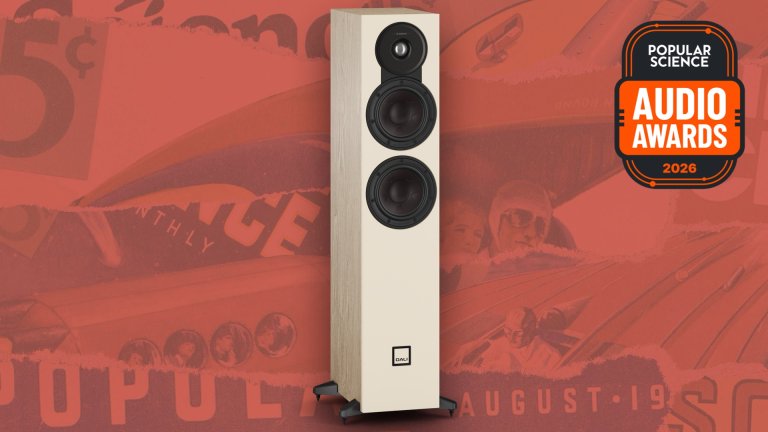
In the mid-tier and budget-friendly segments, manufacturers focused on maximizing acoustic performance within restrictive physical footprints. DALI (Danish Audiophile Loudspeaker Industries) debuted the SONIK 5 slim floorstanding towers at $1,800 a pair. Utilizing magnet systems and paper-wood fiber diaphragms derived from the brand’s higher-end product lines, the SONIK 5 delivers uncolored coherence and composed midrange performance suitable for smaller rooms and tighter budgets.
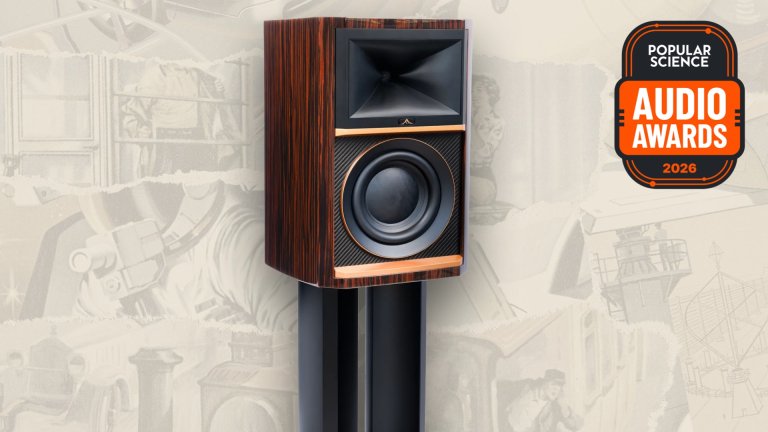
Concurrently, KLH addressed the perennial challenge of difficult room placement with the Model Four. Featuring a shallow acoustic-suspension design, this $1,999 floorstander utilizes a sealed enclosure that prevents bass muddying when placed close to boundaries. The inclusion of a three-position Acoustic Balance Control allows users to adjust midrange and high-frequency output to compensate for hard-surfaced versus carpeted environments.
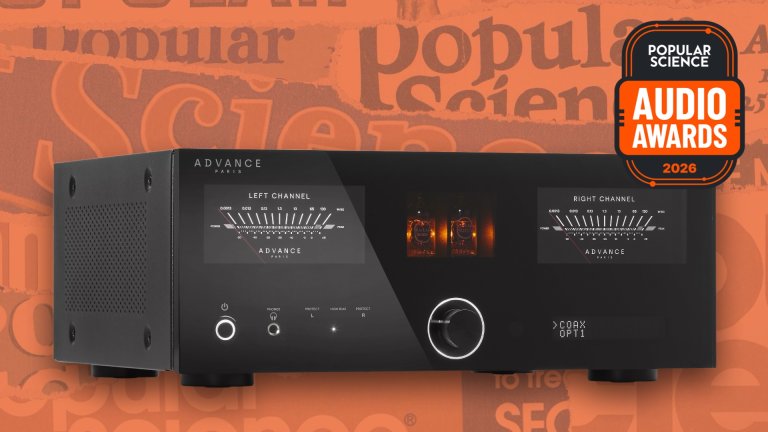
Active Loudspeakers and the Rise of Integrated Streaming
The boundary between traditional passive loudspeakers and digital amplification continued to dissolve throughout 2026. Active wireless speaker systems captured significant market share by integrating high-powered amplification, digital signal processing (DSP), and network streaming directly into the cabinet architecture.

JL Audio redefined the ultra-luxury active audio tier with the development of the Primacy S3 standmount and T6 tower speakers. Requiring an eight-year development cycle that necessitated factory floor reinforcements to accommodate five-axis milling machinery, these systems feature custom sand-cast aluminum-alloy cabinets. Equipped with triple-core per-driver DSP, lossless crossovers, and Primacy Automatic Room Optimization (P.A.R.O.) software, the T6 system represents a pinnacle of adaptable streaming architecture, commanding a retail price of $90,000.

In the wireless lifestyle category, KEF refined its critically acclaimed streaming platform with the introduction of the LS LUXE standmount speakers. Priced at $3,999, the Ross Lovegrove-designed enclosures incorporate Velocity Control Technology (VECO) to eliminate misalignments between the audio signal and driver excursion, yielding a wider soundstage and enhanced low-frequency extension from an expanded 6.5-inch Uni-Q driver array.

Cambridge Audio entered the high-end wireless market with the L/R X, an active streaming system priced at $2,399 per pair. Delivering 800 watts of power and utilizing dual 5-inch woofers augmented by dual 6-inch passive radiators, the L/R X extends frequency response down to 35Hz while maintaining precise digital control via a 64-bit DSP pipeline equipped with DynamEQ processing.
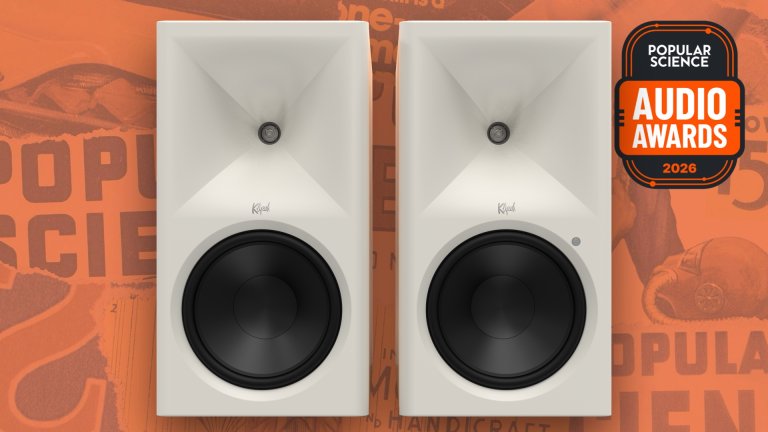
Digital Sources and the Physical Media Revival
The resurgence of physical media proved to be one of the most prominent industry trends of 2026. As consumers experience streaming fatigue, hardware manufacturers have reintroduced high-end universal players designed to handle uncompressed optical formats.
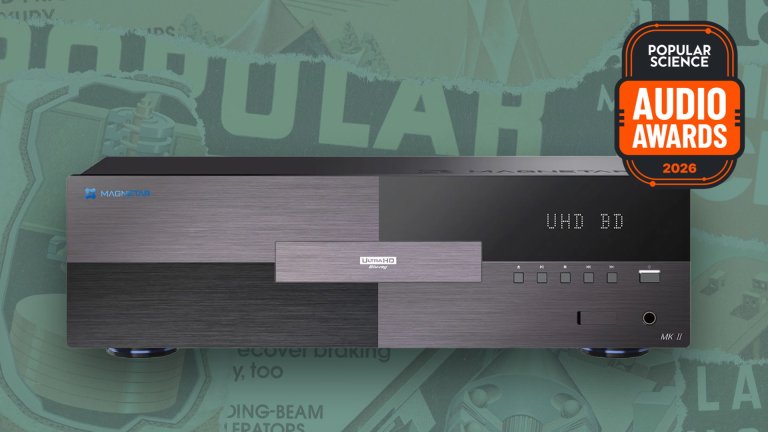
Magnetar addressed this market demand with the UDP900 MKII universal disc player, priced at $3,399. Built around a 34-pound brushed aluminum chassis, the player utilizes dedicated, shielded power supplies—including a custom high-power switching supply and a 60-watt low-noise toroidal transformer—to completely isolate digital and analog circuitry. Equipped with dual ESS 9038PRO digital-to-analog converters, the UDP900 MKII provides reference-quality playback for 4K Ultra HD Blu-ray, SACD, and advanced-resolution digital audio files, ensuring dynamic fidelity without digital glare.
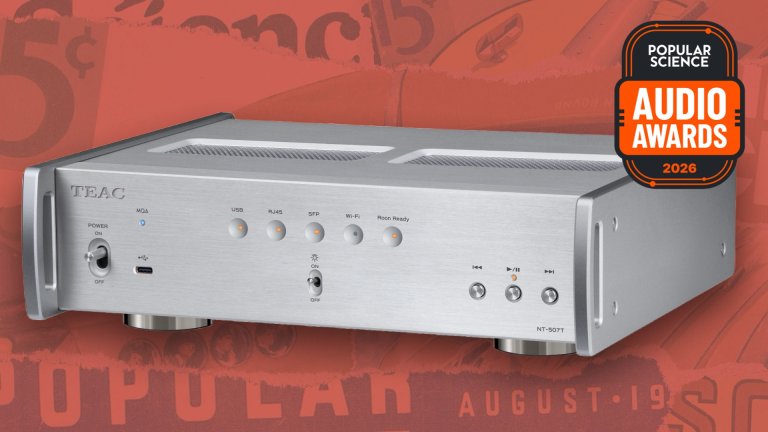
For dedicated network streaming enthusiasts, TEAC expanded its compact Reference Series with the NT-507T Network Transport. Priced at $2,499, this A4-chassis transport focuses exclusively on high-resolution data delivery, offering direct support for Qobuz Connect, TIDAL Connect, Spotify Connect, and Roon Ready protocols. By omitting an internal DAC and onboard screen, the unit eliminates potential sources of electrical noise, utilizing a large linear power supply to feed downstream components with pristine digital data.

Wireless and Wired Headphone Innovation
Personal audio engineering saw major advancements in both wireless convenience and wired fidelity. The integration of desktop-grade signal chains into portable form factors emerged as a defining engineering trend.

HiFiMAN introduced the HE1000 WiFi, a $2,699 wireless over-ear headphone that bypasses traditional Bluetooth compression limitations by embedding an onboard Roon Ready streamer, a Himalaya R2R ladder DAC, and dedicated amplification directly into the earcup. This allows listeners to experience lossless network audio transmitted directly to the manufacturer’s nanometer-thick planar magnetic diaphragms.

In the consumer ANC (Active Noise Cancellation) sector, Technics released the EAH-A1000, which scales down the brand’s proprietary magnetic fluid driver technology previously reserved for high-end earphones. By filling the gap around the voice coil with magnetic fluid and utilizing a carbon-fiber diaphragm within Symmetrical Surround Technology, the EAH-A1000 delivers articulate low-frequency response and expansive transient detail over LDAC and USB-C connections.

Audeze updated its planar magnetic lineup with the introduction of the LCD-5s. Retailing at $4,499, this open-back flagship addresses historical criticisms of earlier models by incorporating SLAM (Symmetric Linear Acoustic Modulator) technology. This acoustic venting system optimizes internal air resistance during driver excursion, reducing distortion while significantly enhancing low-end impact and transient speed.

Mobile and Automotive Integration
The desire for high-fidelity audio extended beyond the home environment into mobile and automotive applications. Pioneer introduced the SPHERA system—marketed in the United States as the DMH-WT8000NEX—marking the first aftermarket head unit capable of decoding Dolby Atmos and spatial audio formats within standard vehicles. Featuring a 10.1-inch floating touchscreen, the system utilizes advanced time alignment, frequency response adjustments, and virtualized height channels to transform standard multi-channel speaker layouts into immersive listening environments.

As the audio industry closes out 2026, the convergence of traditional acoustic craftsmanship and advanced digital processing has established a new benchmark for sound reproduction. Manufacturers across all price tiers have demonstrated that technological innovation does not require sacrificing musicality, ensuring a vibrant and expanding market for audio enthusiasts worldwide.
Related posts: