Jamie Lee Curtis Channels Elizabeth Holmes in The Tonight Show Cold Open Spoofing Nathan Fielder

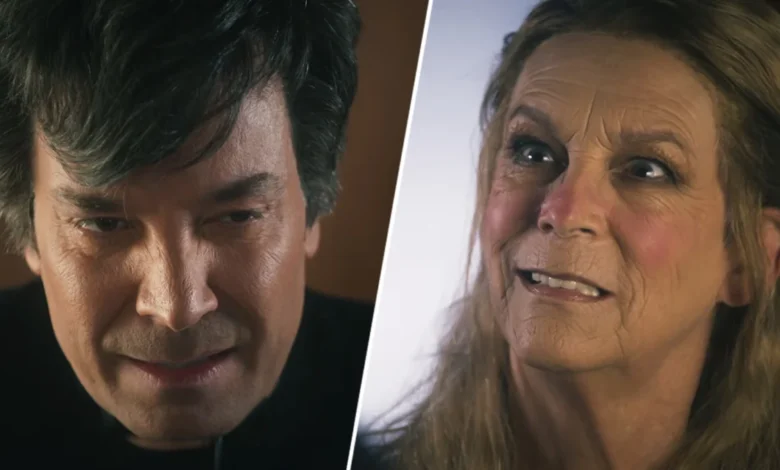
The intersection of late-night television comedy, internet meme culture, and high-profile true crime reached a unique crescendo this week when Jimmy Fallon and Academy Award-winning actress Jamie Lee Curtis teamed up for a memorable cold open on The Tonight Show Starring Jimmy Fallon. As Halloween approaches, the six-time Emmy-winning host and his prominent guest treated viewers to a meticulously crafted parody of You Can See Everything, the acclaimed A24 documentary directed by Lance Oppenheim.
The sketch, which aired during Wednesday’s broadcast of the popular NBC late-night program, saw Fallon adopting the distinct mannerisms, probing interviewing style, and deadpan awkwardness of comedian Nathan Fielder. Across from him sat Curtis, who shed her usual vibrant personality to deliver an eerie, pitch-perfect imitation of disgraced Theranos founder Elizabeth Holmes. The segment immediately captured the attention of social media users, television critics, and pop culture enthusiasts alike, bridging the gap between surrealist comedy and corporate scandal.
Anatomy of the Parody: Channeling Fielder and Holmes
The cold open served as a direct nod to a viral teaser from Lance Oppenheim’s documentary You Can See Everything, a project that has steadily built momentum through A24’s calculated, slow-burn theatrical rollout. In the original promotional clip—which has spawned countless memes and widespread digital commentary across platforms like X (formerly Twitter) and TikTok—Fielder employs his signature uncomfortable interrogation tactics.
During Wednesday’s broadcast, Fallon mirrored this persona with impressive precision. Leaning into the awkward tension that defines Fielder’s television style, the late-night host confronted Curtis directly.
"Be honest, do you really want to be on the show tonight?" Fallon asked, mimicking Fielder’s unmistakable cadence and relentless pursuit of psychological discomfort.
Stepping seamlessly into character, Curtis adopted the low, raspy baritone and unblinking, wide-eyed stare famously cultivated by Holmes during her years leading the now-defunct blood-testing startup Theranos.
"Of course I do. I love talking to you," Curtis responded, maintaining a rigid, albeit deeply unsettling, facade.
The psychological chess game continued as Fallon pressed further, poking fun at the transactional nature of late-night talk show guest appearances. "So, you’re not just here to promote your new show Newlyweds?" he inquired.

The sketch culminated in a swift comedic release. Once Fallon indicated satisfaction with her responses and offered her some privacy, Curtis instantly dropped the Holmes persona. In a moment that broke the tension—and the character—she exhaled sharply, exclaiming, "Thank God! F***, what an asshole," a punchline that played on both the absurdity of the simulated interrogation and the relief of shedding the intensely bizarre personality of the incarcerated tech executive.
Context and Background: The Rise of You Can See Everything
The late-night spoof arrives at a strategic juncture for A24 and documentary filmmaker Lance Oppenheim. You Can See Everything has quietly emerged as a commercial and critical success, recently surpassing the $45 million mark in worldwide box office receipts. For a documentary feature, reaching this financial milestone through a slow-burn, expanding theatrical release is a notable achievement, highlighting a growing public appetite for sophisticated, cinematic non-fiction storytelling.
Oppenheim, known for his distinct visual style and compelling character-driven narratives (such as his HBO docuseries Some Kind of Heaven), crafts an unflinching portrait of Elizabeth Holmes in the documentary. The project explores the psychological underpinnings of the Silicon Valley wunderkind-turned-convicted-felon, examining the media frenzy, corporate culture, and personal delusions that fueled the multi-billion-dollar Theranos fraud.
By integrating elements of Nathan Fielder’s signature brand of cringe comedy into the documentary’s promotional campaign and subsequent late-night parodies, the cultural footprint of the project has expanded well beyond traditional film circles. Fielder, whose own subversive docuseries like The Rehearsal and Nathan for You frequently blur the lines between reality and performance art, provided a thematic blueprint that aligned seamlessly with the surreal narrative of Holmes’ rise and fall.
The Evolution of Late-Night Cold Opens
The inclusion of high-concept, narrative-driven cold opens has become a hallmark of modern late-night television. Gone are the days when late-night programs relied exclusively on a traditional monologue to kick off the broadcast. Today’s producers increasingly leverage trending internet culture, cinematic parodies, and high-profile guest cameos to capture fragmented audiences across linear television and digital platforms.
For The Tonight Show, utilizing an A-list talent like Jamie Lee Curtis—who is no stranger to transformative acting roles, having secured an Oscar for her performance in Everything Everywhere All at Once—elevated the sketch from a simple topical gag into a masterclass in comedic timing. Curtis’s ability to pivot from the chillingly calculated demeanor of Holmes to a comedic, exasperated outburst in a matter of seconds demonstrated the versatility that has sustained her decades-long career in Hollywood.
Broader Implications and Industry Reception
The convergence of true crime, documentary cinema, and late-night satire reflects broader viewing trends in contemporary media. Audiences have developed an insatiable appetite for content that deconstructs high-profile corporate scandals, while simultaneously embracing satirical commentaries that poke fun at the very media machinery designed to cover them.
Industry analysts note that promotional strategies like the one deployed for You Can See Everything—which rely on viral moments, unexpected cross-promotions, and internet memeability—are increasingly vital for specialized films aiming to cut through the noise of a crowded entertainment landscape. By allowing Fallon and Curtis to dissect the documentary’s tone through the lens of Nathan Fielder’s unique comedic universe, A24 and NBC successfully generated significant earned media value across multiple demographics.
As Halloween approaches and the cultural fascination with theatrical, larger-than-life personalities continues to grow, the pairing of Jimmy Fallon and Jamie Lee Curtis in the guise of Silicon Valley’s most infamous corporate figure stands out as one of the television season’s most memorable comedy segments. Whether examining the psychological depths of real-life deception or simply offering a cathartic release from the awkwardness of late-night small talk, the sketch proved that the boundaries between prestige documentary filmmaking and late-night variety humor remain wonderfully permeable.