Taylor Walls Clashes With Ken Rosenthal After Game 4 As Milwaukee Brewers Secure Historic World Series Title Over Tampa Bay Rays

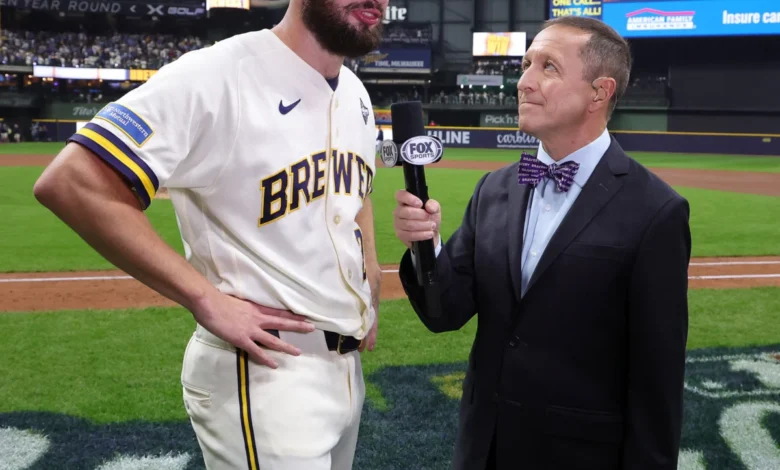
The 2026 Major League Baseball postseason concluded with a historic triumph for the Milwaukee Brewers, who captured their first World Series title in franchise history by defeating the Tampa Bay Rays in five games, ultimately breaking a 57-year championship drought. However, the emotional intensity of the Fall Classic extended far beyond the diamond, highlighted by a sharp verbal exchange between Tampa Bay infielder Taylor Walls and veteran reporter Ken Rosenthal following the Rays’ dramatic extra-inning victory in Game 4.
The tense interaction underscored the fierce competitive pride of a Tampa Bay squad that felt constantly underestimated on the national stage. While the Brewers ultimately hoisted the Commissioner’s Trophy after sealing the series in Game 5, the underlying narratives of player-media relations, strategic roster management, and postseason offensive struggles defined a compelling chapter in recent baseball history.
The Flashpoint: Game 4 Postgame Tension
The controversy erupted late Tuesday evening following the Rays’ hard-fought 4-3 victory in a grueling 12-inning battle that prevented a series sweep. During the postgame media availability, Ken Rosenthal, reporting for The Athletic and Fox Sports, approached Tampa Bay infielder Taylor Walls for an on-field interview.

Rosenthal posed a question that immediately drew the ire of the infielder: "Was it important to win one just to show you’re on this level?"
Walls visibly bristled at the phrasing, rejecting the premise that the American League champions needed to validate their belonging on the game’s ultimate stage.
"No," Walls responded sharply. "I think that’s pretty disrespectful, honestly. We’re a team that’s capable of winning four."
Sensing the friction and the unintended implication of his words, Rosenthal offered an immediate apology in the locker room area, acknowledging the misstep by stating, "Sorry for the wording."

Elaborating on his stance shortly after, Walls maintained that the team’s internal belief never wavered, regardless of the daunting 3-0 deficit they faced. "No team wants to get swept, but at the end of the day, we think we can win the whole thing," Walls said. "So whether it starts with us down 0-3 and winning four in a row, or whether it started winning the first one or the second one, we have full confidence that we can do it."
Chronology of the 2026 World Series
The matchup between the Milwaukee Brewers and the Tampa Bay Rays developed through a distinct narrative arc characterized by pitching dominance, tactical decisions, and timely hitting:
- Game 1 and Game 2: The series opened with significant managerial debate. Tampa Bay manager Kevin Cash opted to rest his regular ace, Drew Rasmussen, holding him back for Game 2 rather than deploying him in the series opener. The decision drew immediate scrutiny from analysts as the Brewers established early control of the tempo.
- Game 3: Moving to Florida, the Brewers maintained their momentum, capitalizing on quiet offensive production from the Rays to extend their series lead to 3-0, pushing Tampa Bay to the brink of elimination.
- Game 4: In a desperate bid to stave off a sweep, the Rays engaged the Brewers in a marathon 12-inning contest. Tampa Bay secured a 4-3 victory, setting the stage for Walls’ contentious postgame remarks and temporarily extending the series.
- Game 5: Needing a stellar performance to force a Game 6, the Rays turned to Drew Rasmussen on short rest. The decision backfired as Rasmussen lasted just four innings. The Brewers capitalized on the fatigued pitching staff and bullpen usage to close out the game, securing the victory and their first-ever World Series championship, thereby ending a 57-year organizational drought.
Offensive Struggles and Managerial Decisions
While the postgame confrontation between Walls and Rosenthal generated significant media attention, the underlying baseball metrics painted a clear picture of why the Rays ultimately fell short. Tampa Bay’s offense went ice-cold throughout the five-game series, plating a meager total of 11 runs. The lineup frequently looked overmatched, settling for weak contact and failing to generate sustained rallies against Milwaukee’s pitching staff.
Individual performances mirrored the team’s offensive woes. Taylor Walls, primarily recognized for his elite defensive versatility rather than offensive prowess, struggled immensely at the plate during the autumn run. Walls batted just .103 across the postseason, accumulating only four hits in 39 at-bats, which further heightened the scrutiny on the team’s depth scoring capabilities.

Strategic choices from the dugout also became a focal point of post-series analysis. Manager Kevin Cash’s decision to withhold Drew Rasmussen from Game 1 sparked considerable debate among baseball historians and strategists. By holding his primary starter for Game 2, Rasmussen was subsequently forced into a high-leverage, short-rest appearance in the elimination Game 5. Pitching on compromised rest, Rasmussen was limited to four frames, exposing the Tampa Bay bullpen to heavy workloads earlier than anticipated and tilting the tactical advantage squarely toward Milwaukee.
Broader Implications and Legacy of the 2026 Season
Despite the bitter disappointment of the World Series defeat, the Rays’ 2026 campaign stands as a remarkable achievement within the context of the American League East. Projected by many preseason forecasters to finish near the bottom of a fiercely competitive division, Tampa Bay defied expectations through elite run prevention, organizational depth, and gritty execution.
The clash between Walls and Rosenthal highlights the perpetual tension between professional athletes striving for perfection and the media tasked with framing their performances for a national audience. For the Milwaukee Brewers, the victory marks the culmination of decades of organizational patience, erasing the ghosts of past near-misses and etching their roster into baseball lore. As both franchises look ahead to the 2027 season, the lessons of October—ranging from tactical roster deployment to the psychological resilience required to compete at the highest level—will undoubtedly shape their respective paths forward.
Related posts: