Voter Priorities Shift Post-Midterms as National Focus Turns to 2028 White House Race, Economic Realities, and AI Infrastructure

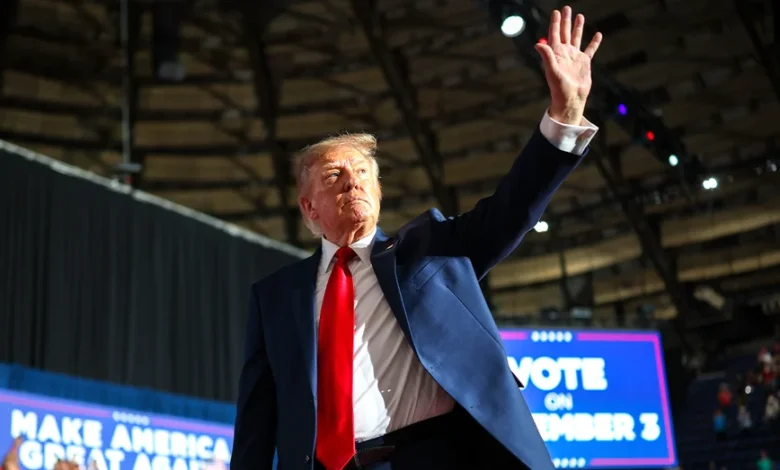
In the wake of the consequential midterm elections that redrew the map of Capitol Hill, political discourse across the United States has swiftly pivoted toward the horizon of the 2028 presidential race. A comprehensive national survey conducted by NORC at the University of Chicago in collaboration with Fox News offers a profound look into the electorate’s mindset. Capturing responses from over 113,000 registered voters between October 26 and November 3, the data reveals a fractured American electorate grappling with persistent economic anxiety, starkly divergent views on the legacy of former President Donald Trump, and mounting anxieties surrounding the rapid proliferation of artificial intelligence and its physical infrastructure.
The Post-Midterm Political Landscape and 2028 Speculation
The political tremors of the midterms left Congress under Democratic control, while President Donald Trump’s national approval rating hovered at 39 percent. Yet, despite these headwinds, a fiercely loyalist voting bloc remains galvanized, setting the stage for an intense ideological battle over the future of the Republican Party and the broader direction of the federal government.
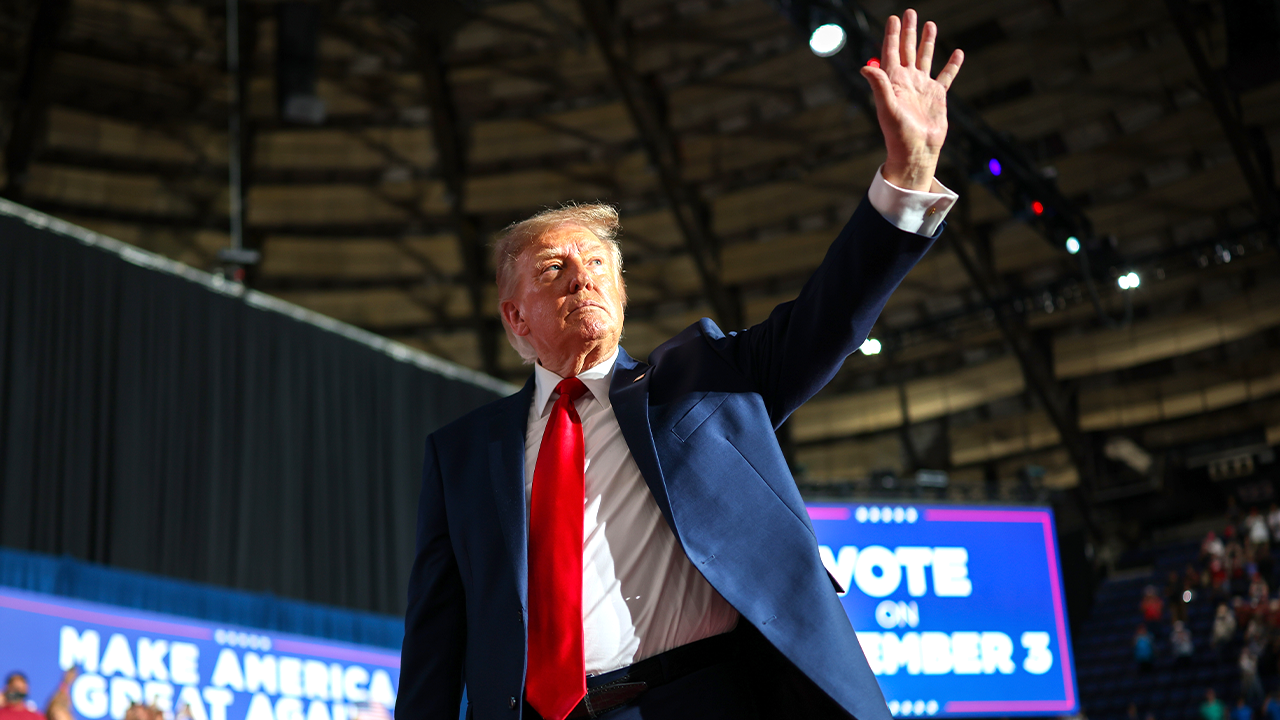
Within the GOP, the debate over Donald Trump’s enduring blueprint is paramount. Nearly 40 percent of MAGA Republicans express a desire for the next presidential nominee to emulate both Trump’s aggressive political style and his policy agenda. Roughly half of this faction prefer a successor who adopts his policies alone, divorcing the legislative platform from the polarizing rhetoric. Non-MAGA Republicans, conversely, display tempered enthusiasm: while 45 percent support the continuation of his policy achievements, a mere 15 percent wish to see his distinct style replicated.
Across the aisle and among political independents, the appetite for Trumpism is virtually non-existent. Six in ten independent voters—a crucial demographic for any national victory—assert that the next occupant of the Oval House should definitively break with both Trump’s policies and his personal style. Democrats share this sentiment overwhelmingly, favoring a complete departure from the preceding administration’s framework.
When examining the broader desire for governmental overhaul, party identification plays a decisive role. Nationally, about half of all voters desire substantial changes in how the country is run. However, the intensity and target of this reform vary wildly. Democrats are roughly three times as likely as Republicans to advocate for a complete and total upheaval of the American political system. Within the Democratic base, support for systemic disruption is heavily concentrated among democratic socialists, half of whom favor total structural transformation. Conversely, only about 10 percent of MAGA Republicans—now operating under a unified conservative executive and legislative reality—express a desire for total systemic upheaval, a notable decline from their peak anti-establishment fervor during the 2024 presidential cycle.

Economic Anxieties and Household Realities
Beneath the macro-political maneuvering lies a bedrock of domestic financial concern. Across all partisan affiliations, voters universally identify improving economic conditions as the single most critical issue facing the nation over the next five years.
The survey data paints a nuanced picture of the American household wallet. Six in ten voters report that their personal financial situation is holding steady, while approximately three in ten feel they are actively falling behind. A meager 10 percent believe they are successfully getting ahead. Unsurprisingly, feelings of financial distress directly correlate with policy priorities. Those who describe their economic status as less than satisfactory are significantly more likely to laser-focus on immediate cost-of-living pressures when evaluating newly elected officials.
When asked what priorities the newly sworn-in Congress should tackle first, grocery expenses emerged as the preeminent domestic concern, cited by 30 percent of respondents. Approximately 20 percent pointed to volatile gas prices, while an equivalent proportion emphasized the burden of healthcare and prescription drug costs. Housing affordability and climbing utility expenses rounded out the top tier of household grievances.

These pocketbook pressures heavily influence psychological outlooks on the nation’s trajectory. Optimism and pessimism are sharply divided along economic lines: roughly two-thirds of voters who report getting ahead financially express an optimistic outlook for the future. Conversely, two-thirds of those who feel they are falling behind harbor the bleak conviction that America’s best days are firmly in the past.
Divergent Policy Priorities Across the Aisle
Beyond immediate economic survival, ideological divergence defines the remainder of the electorate’s agenda. Priorities shift significantly when voters look past generalized cost-of-living metrics toward specific governance issues.
Among Democrats, access to affordable healthcare remains a cornerstone concern, cited by roughly one in five voters. Republicans, meanwhile, prioritize reigning in what they perceive as federal overreach, with nearly 20 percent naming the protection of individual liberties from government intrusion as their primary motivation. Independents split the difference, with roughly equal shares identifying healthcare affordability and government overreach as top-tier concerns.

Institutional reforms also expose deep partisan fault lines. Four in ten voters believe Congress is in dire need of substantial structural reform, a sentiment shared by three-quarters of MAGA Republicans and half of non-MAGA Republicans. Democrats, while less convinced that the legislative branch requires a structural overhaul, are twice as likely to target the executive branch for reform. Furthermore, Democrats display significantly higher skepticism toward the judiciary, expressing a much stronger desire for structural changes to the Supreme Court compared to their Republican and independent counterparts.
On matters of electoral mechanics, points of bipartisan consensus occasionally emerge, though deep divisions remain. Voters across party lines voice support for congressional term limits and term caps for Supreme Court justices. However, profound disagreements persist regarding voting access. While Democrats broadly advocate for expanding ballot access—including the potential abolition of the Electoral College—Republicans largely favor tightening restrictions, particularly regarding mail-in voting. A strong majority of Republicans support limiting mail ballots strictly to individuals who are physically incapable of voting in person, with MAGA Republicans driving this sentiment at 63 percent compared to 40 percent of non-MAGA Republicans. Democrats remain uniformly opposed to mail-in voting restrictions regardless of internal factional alignment.
The Technology Boom: AI Infrastructure and Public Backlash
As the United States navigates a multi-billion-dollar technological revolution centered around artificial intelligence, the survey uncovers a significant undercurrent of public apprehension regarding the physical and societal costs of the AI boom.

Public opinion is sharply divided over AI’s ultimate net effect on the U.S. economy over the coming decade. Roughly 40 percent of voters anticipate that the technology will be harmful, while 30 percent foresee net benefits. An additional 10 percent expect no discernable difference, and 20 percent remain undecided. Concerns are particularly acute regarding AI’s secondary impacts, with four in ten respondents predicting negative consequences for the environment, natural resources, and the arts and entertainment industries.
Partisan divides color perceptions of technological progress. Republicans—particularly MAGA conservatives—demonstrate higher levels of enthusiasm for AI, viewing it as a vital tool for maintaining international competitiveness and driving economic growth. Among Democrats, while general technological utility is acknowledged, democratic socialists voice heightened anxiety that the proliferation of AI will inflict more economic and social harm than good.
The most visceral public pushback, however, centers on the physical footprint of the AI boom: the rapid construction of massive data centers. Six in ten voters express extreme or very high concern over how these power-hungry facilities will impact local utility prices in their communities. Additionally, approximately half of all respondents harbor serious concerns regarding environmental pollution, excessive land development, and potential public health risks associated with data center proliferation, regardless of whether they currently reside near such a facility. Democrats register notably higher anxiety regarding data center impacts than Republicans, irrespective of geographic proximity.

Despite these localized anxieties, a broad consensus unites voters on regulatory guardrails. Majorities across party lines support forcing technology corporations to pay entirely for the electrical grid upgrades necessitated by their data centers. Furthermore, voters overwhelmingly back increased government regulation of artificial intelligence and the implementation of strict limits on AI usage within educational institutions. When asked hypothetically about industrial expansion, majorities of Democrats and independents—alongside a significant share of local residents—oppose the construction of AI data centers within their own communities.
Ideological Rigidity and Candidate Support
The overarching polarization of the American electorate is perhaps best illustrated by voters’ willingness to cross party or ideological lines based on specific policy stances. While economic issues consistently dominate national discourse, the data reveals that voters possess varying thresholds of ideological flexibility depending on the domain.
Notably, four in ten voters indicate they could theoretically support a candidate whose economic views diverge from their own, suggesting a degree of pragmatism regarding fiscal solutions. However, this flexibility evaporates rapidly when social, security, and rights-based issues are introduced.

Nearly six in ten voters refuse to support any political candidate who disagrees with them on healthcare policy. Similarly, roughly half draw a hard line on foreign policy, stating they could not back a candidate whose stance on the Israeli-Palestinian conflict contradicts their own. Most decisively, approximately six in ten voters maintain strict ideological red lines on highly emotionally charged topics such as abortion, gun control, and immigration, declaring that disagreement on these foundational issues represents an insurmountable barrier to electoral support.
Methodology and Context
The NORC Civic Health & Elections Project survey provides a comprehensive snapshot of a nation in political and economic transition. Conducted via 113,020 interviews in both English and Spanish between October 26 and November 3, the study carries a margin of sampling error of plus or minus 0.5 percentage points for the national voter sample, and plus or minus 1.2 percentage points for nonvoters. As the 110th Congress settles into its new partisan dynamic and prospective 2028 contenders begin to map their national strategies, the data underscores an electorate that is deeply engaged, economically stressed, and profoundly protective of its core ideological boundaries.