Alaska Black Bear Earns Forest Service’s 2026 Honey Badger Award After Defying Size Odds at Anan Creek

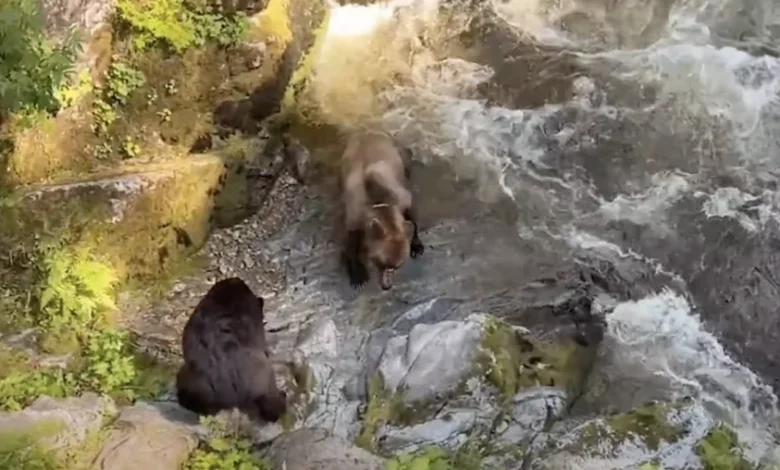
In the vast and ecologically rich expanse of Southeast Alaska’s Tongass National Forest, wildlife officials have conferred a tongue-in-cheek yet deeply respectful accolade upon one of the region’s most resilient residents. Arrow, a scarred and distinctive black bear (Ursus americanus), has been officially named the recipient of the 2026 Honey Badger Award by the U.S. Forest Service (USFS). The honor, announced as part of the agency’s annual tally of the bears frequenting the Anan Wildlife Observatory, recognizes Arrow for an uncompromising fearlessness that mirrors the internet-famous African mammal known for punching far above its weight class.
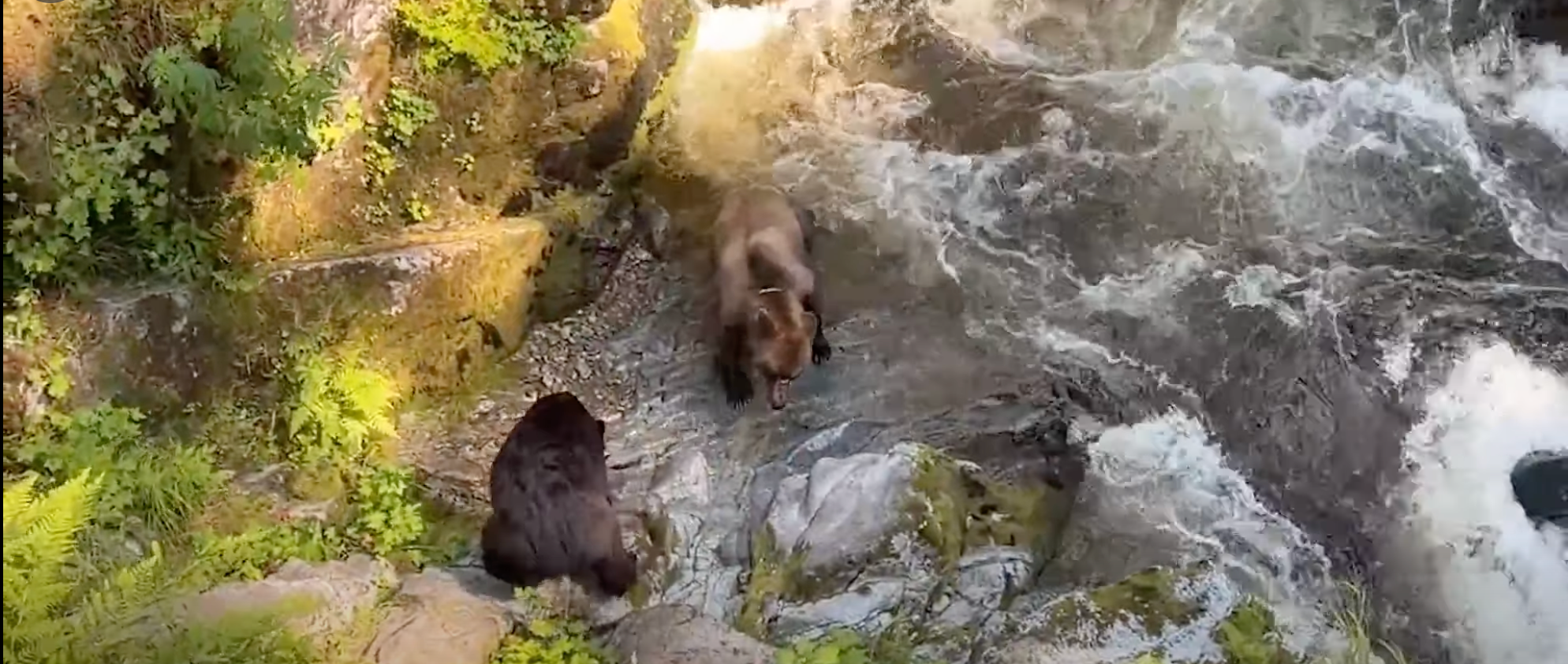
Despite carrying a permanent limp from a territorial clash nearly a decade ago and facing a substantial biological disadvantage against neighboring apex predators, Arrow made headlines among local rangers this summer by successfully challenging and backing down two separate brown bears (Ursus arctos). The event underscores the complex social dynamics, behavioral adaptations, and high-stakes resource management playing out daily in one of North America’s premier wildlife viewing destinations.
The Anatomy of a Mismatched Rivalry at Anan Creek
To understand the magnitude of Arrow’s feat, one must examine the baseline hierarchy of the North American wilderness. Brown bears—often referred to regionally as grizzlies—are significantly larger, heavier, and more aggressive than their black bear cousins. A mature adult male brown bear can easily weigh upwards of 700 to 900 pounds, whereas adult male black bears in the region typically range from 200 to 400 pounds. Because of this massive size disparity, brown bears almost universally dominate black bears when competing for prime territory, high-value food sources, and access to mates.
Yet, exceptions to this ecological rule occur under specific environmental pressures. Anan Creek, located within the southern portion of the Tongass National Forest, plays host to one of the largest and most concentrated runs of pink salmon (Oncorhynchus gorbuscha) in all of Southeast Alaska. Every summer, millions of Pacific salmon surge up the narrow creek to spawn, transforming the waterway into an all-you-can-eat buffet for local carnivores.
According to conservation groups and forestry data, a total of 39 individual bears—comprising 31 black bears and eight brown bears—converged on the Anan Wildlife Observatory during the recent peak season. The sheer abundance of fish often forces a behavioral modification among the larger brown bears. Rather than engaging in costly, high-risk physical altercations over every single meal, dominant brown bears frequently choose avoidance over violence, tolerating smaller competitors along the banks.
However, Arrow took this dynamic a step further. Rather than merely coexisting or yielding space, the underdog black bear actively confronted and repelled two distinct brown bears during the run, securing his portion of the salmon harvest through sheer tenacity.
A Legacy of Resilience: Arrow’s Backstory
Arrow’s reputation for fearlessness is not a recent development, nor is it the result of youthful recklessness. Forest rangers and wildlife monitors who catalog the individual bears of Anan Creek have tracked Arrow for years, identifying him by distinct physical markers: a prominent scar on his ear and a thin streak of white fur near his nose that gives the distinct impression of a mustache.
His willingness to stand his ground is all the more remarkable given his physical limitations. In 2019, Arrow sustained a severe injury to his back left leg during an intense territorial altercation with another resident black bear named Tatonka. The injury left Arrow with a permanent limp that alters his gait to this day.
Wildlife biologists note that permanent orthopedic damage typically causes wild animals to become more cautious, as reduced mobility hinders their ability to hunt, flee from danger, or defend themselves effectively. In Arrow’s case, however, the adversity appears to have forged an unyielding disposition. Despite his compromised leg, he continues to navigate the competitive hierarchy of Anan Creek, holding his own against adversaries more than twice his size.
The Anan Wildlife Observatory and the Science of Bear Monitoring
The documentation of Arrow’s exploits is part of a broader, rigorous scientific and public engagement effort managed by the U.S. Forest Service in partnership with organizations like Friends of Anan and explore.org.
The Tongass National Forest itself is the largest national forest in the United States, encompassing roughly 16.7 million acres of Southeast Alaska. It is a temperate rainforest defined by sweeping glaciers, including the Mendenhall Glacier near Juneau, steep fjords, dense old-growth canopies of Sitka spruce and western hemlock, and pristine watersheds that serve as critical spawning grounds for all five species of Pacific salmon.
Within this massive federal holding, the Anan Creek Wildlife Observatory stands out as a unique management area. Established to provide safe, close-range public viewing of bears in their natural habitat, the site features a suspended viewing deck and photo blind built directly over the lower waterfalls.
To ensure both human safety and ecological preservation, USFS rangers maintain a continuous on-site presence during the peak summer viewing season. Rangers meticulously track, name, and document every bear that visits the watershed. By cataloging individual bears through unique physical traits—such as Arrow’s facial markings and limp—researchers can monitor population health, track demographic shifts, and observe complex inter- and intra-species social behaviors over multiple generations.

Furthermore, remote webcams operated in partnership with explore.org stream live footage of the Anan Creek falls to a global audience. This transparency allows millions of nature enthusiasts worldwide to observe the daily dramas, fishing techniques, and maternal care exhibited by the local bear population. Similar to the famous "Fat Bear Week" phenomenon at Katmai National Park further north, the individualized tracking of the Anan bears has transformed wild animals into familiar local celebrities, bridging the gap between scientific field research and public wildlife conservation education.
Broader Implications for Wildlife Management and Animal Behavior
The recognition of Arrow with the Honey Badger Award highlights shifting perspectives within modern wildlife biology regarding animal personality and behavioral ecology. For decades, traditional wildlife management focused primarily on generalized species-level characteristics, viewing animal actions through the lens of pure instinct and evolutionary optimization.
However, contemporary ethology increasingly recognizes that individual animals possess distinct behavioral syndromes—consistent individual differences in behavior across time and situations, often colloquially referred to as "personality." Some bears are naturally risk-averse and avoid conflict entirely; others are bold, exploratory, or, in rare cases like Arrow, remarkably defiant in the face of superior physical force.
While bold behavior can carry high survival risks—such as fatal injuries from larger predators or conflicts with humans—it can also yield substantial evolutionary rewards, such as securing prime feeding territories that guarantee high caloric intake for winter hibernation. In ecosystems like Anan Creek, where resource abundance temporarily alters standard dominance hierarchies, individual behavioral quirks can dictate which animals thrive and which are marginalized.
As the Tongass National Forest concludes its seasonal monitoring and the bears of Anan Creek retreat into the surrounding mountains to den for the winter, Arrow’s legacy for the 2026 season remains secure. His exploits serve as a striking reminder that in the wild, survival depends as much on grit, attitude, and individual resilience as it does on sheer physical size.