Historic World War II Submarine USS Silversides Returns to Michigan Museum After Rare Dry Dock Overhaul

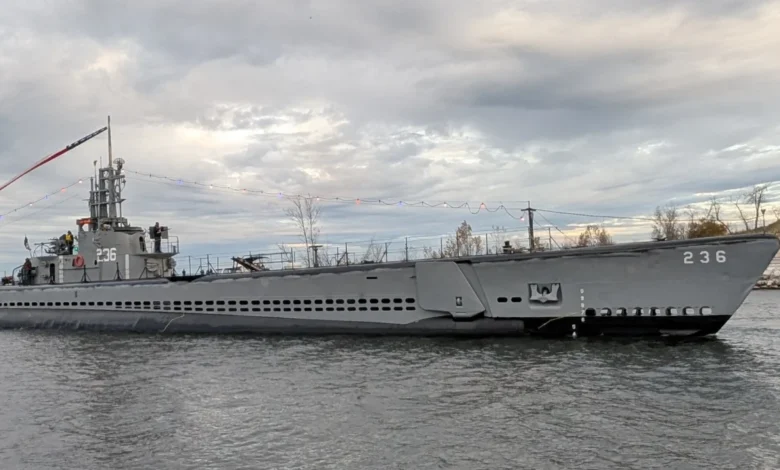
The waters of Muskegon, Michigan, welcomed back a legendary piece of American naval history on October 31, as the USS Silversides (SS-236) returned to its permanent home following a massive, multi-million-dollar preservation effort. The nearly 312-foot-long Gato-class submarine completed a grueling 15-hour transit across Lake Michigan, arriving back at the USS Silversides Submarine Museum looking remarkably pristine. The journey marked the conclusion of the historic vessel’s first dry dock inspection and repair in more than half a century, an undertaking designed to secure the structural integrity of the decorated warship for generations to come.
For three months, the submarine was completely removed from the water at a specialized facility in Wisconsin. The exhaustive project addressed decades of environmental wear and tear on the vessel’s lower hull, incorporating structural reinforcements and comprehensive top-to-bottom refurbishments. While naval architects and preservationists braced themselves for extensive corrosion, inspections ultimately revealed that the wartime submarine was remarkably well-preserved. Nevertheless, the scale of the restoration required a financial investment of $3.5 million, drawing on a combination of museum funds, grants, and public donations.
A Decorated Legacy in the Pacific Theater
Built rapidly amid the escalating tensions of global conflict, the USS Silversides was launched on August 21, 1941, just months before the United States officially entered World War II following the attack on Pearl Harbor. Commissioned into the U.S. Navy, the submarine quickly emerged as one of the most successful and aggressive patrol vessels in the Pacific theater.
Armed with 10 torpedo tubes, a .50-caliber deck gun, and both 40mm and 20mm anti-aircraft cannons, the Silversides completed a series of high-stakes patrols deep into enemy-controlled waters. By the conclusion of the conflict, the submarine was officially credited with sinking 23 enemy ships, accumulating over 90,000 long tons of shipping destroyed. This stellar combat record earned the vessel twelve battle stars and the prestigious Presidential Unit Citation, cementing its status among the elite ranks of the U.S. Submarine Force.
Following the cessation of hostilities, the U.S. Navy decommissioned the Silversides in 1946. For years afterward, the vessel served as a vital training ship for Naval Reservists in Chicago, Illinois. In 1987, the submarine transitioned to civilian stewardship, finding a permanent home in Muskegon, Michigan, where it eventually became the centerpiece of the Great Lakes Naval Memorial and Museum.
An Unexpected Discovery From a Lost Sister Ship
Beyond the routine hull welding and mechanical restoration, the dry dock period yielded an entirely unexpected historical discovery. During routine maintenance inspections, a museum attendant closely examined a heavy flood valve, noticing a manufacturing stamp bearing the name "Trigger" alongside a specific serial number.
Subsequent historical research confirmed a remarkable revelation: the component is the sole surviving artifact from the USS Trigger (SS-237), a sister ship that shared a nearly identical design under the Gato-class specifications. The Silversides and the Trigger were constructed side-by-side at California’s Mare Island Navy Yard in the early 1940s. Because of their concurrent manufacturing, many interior parts and valves were interchangeable between the two hulls.
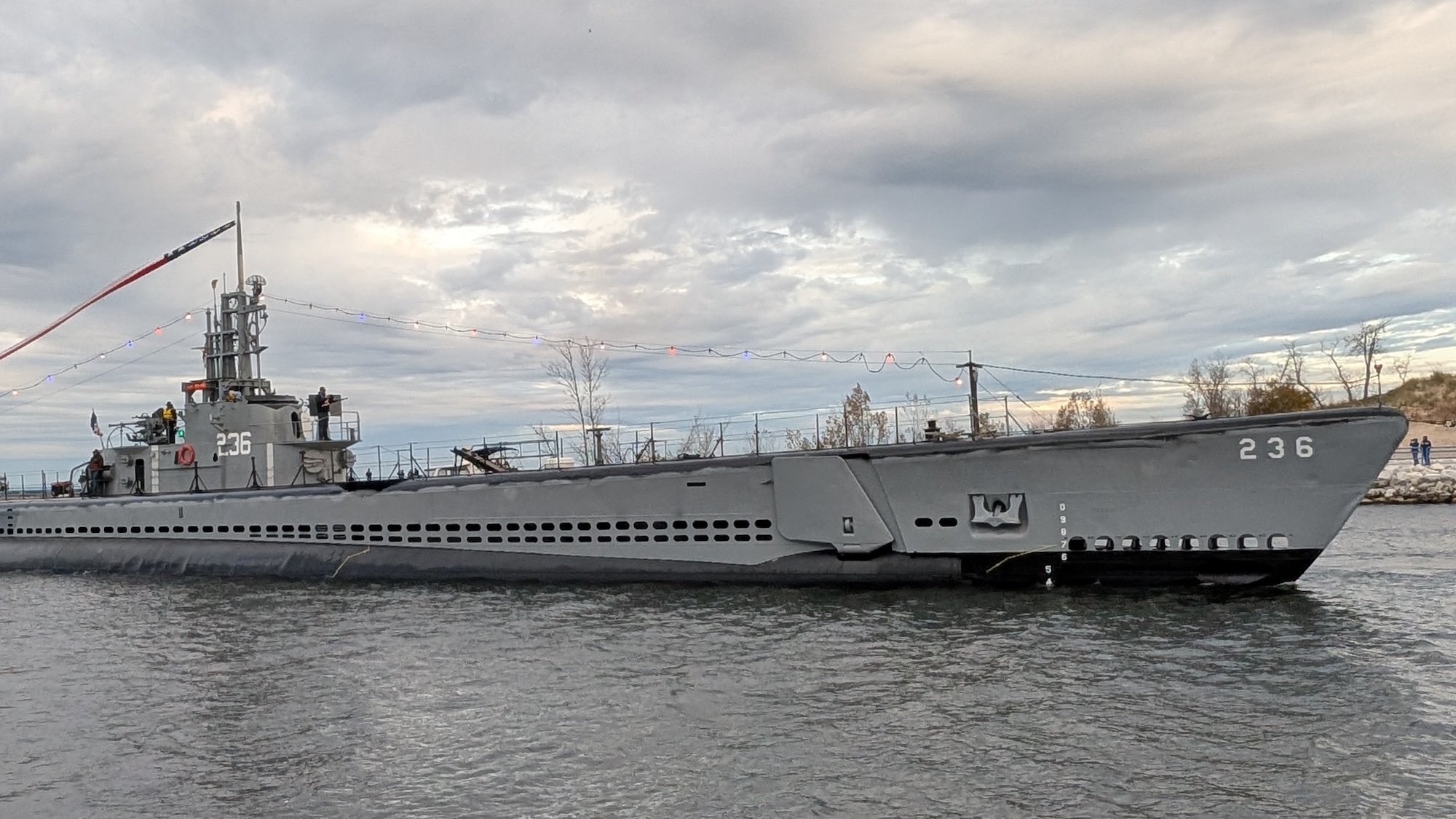
While the USS Silversides survived the war to become a floating museum, the USS Trigger met a tragic end. The submarine was lost in action in March 1945 during its twelfth war patrol, likely succumbing to Japanese depth charge attacks near the Ryukyu Islands with the loss of all 89 crew members. Finding a surviving piece of the Trigger aboard the Silversides serves as a poignant physical link between the two vessels and the men who manned them.
Preserving the Material Culture of the Greatest Generation
As the population of World War II veterans steadily declines, preservationists increasingly view surviving military hardware as irreplaceable repositories of historical memory. Scott Hardin, curator of the USS Silversides Submarine Museum, emphasized the profound cultural weight carried by these historic machines in modern times.
"World War II vets in general are few and far between," Hardin noted following the submarine’s homecoming. "And so what we have left from that generation are some of the machines that these guys used. It served the entire length of World War II. A man died on board, and it’s a piece of American history."
The preservation of combat-tested submarines presents unique engineering and financial challenges. Unlike land-based structures, submerged or museum-berthed steel hulls are constantly subjected to galvanic corrosion, temperature fluctuations, and structural fatigue. The recent dry docking allowed engineers to weld high-grade reinforcement steel to the ship’s underside, halting decades of potential oxidation and ensuring that the vessel meets modern safety standards for public access.
Economic and Educational Implications for the Region
The return of the USS Silversides is a major cultural and economic event for Muskegon and the broader West Michigan tourism ecosystem. The submarine museum functions not only as a tourist attraction but as an educational institution, hosting thousands of students, youth groups, and military history enthusiasts annually.
Museum leadership coordinated a swift interior cleaning regimen immediately following the vessel’s arrival, preparing the submarine to resume public tours. The grand reopening to visitors was scheduled for Saturday, November 7, allowing the public to witness firsthand the results of the multi-million-dollar preservation effort.
Despite the successful voyage across Lake Michigan and the reopening of the exhibit, the institution faces the ongoing challenge of settling the $3.5 million price tag attached to the dry dock operations. Museum executives and community stakeholders have launched dedicated fundraising initiatives, urging history buffs and preservation advocates to contribute directly to the ongoing maintenance fund via the official museum website.
As naval museums across the United States grapple with the escalating costs of aging maritime infrastructure, the successful homecoming of the USS Silversides serves as both a triumph of modern historical preservation and a testament to the enduring legacy of the American submarine service.
Related posts: