Unearthing a 160-Million-Year-Old Jurassic Squid Relative with an Unusually Large Body Reveals New Insights into Ancient Marine Ecosystems


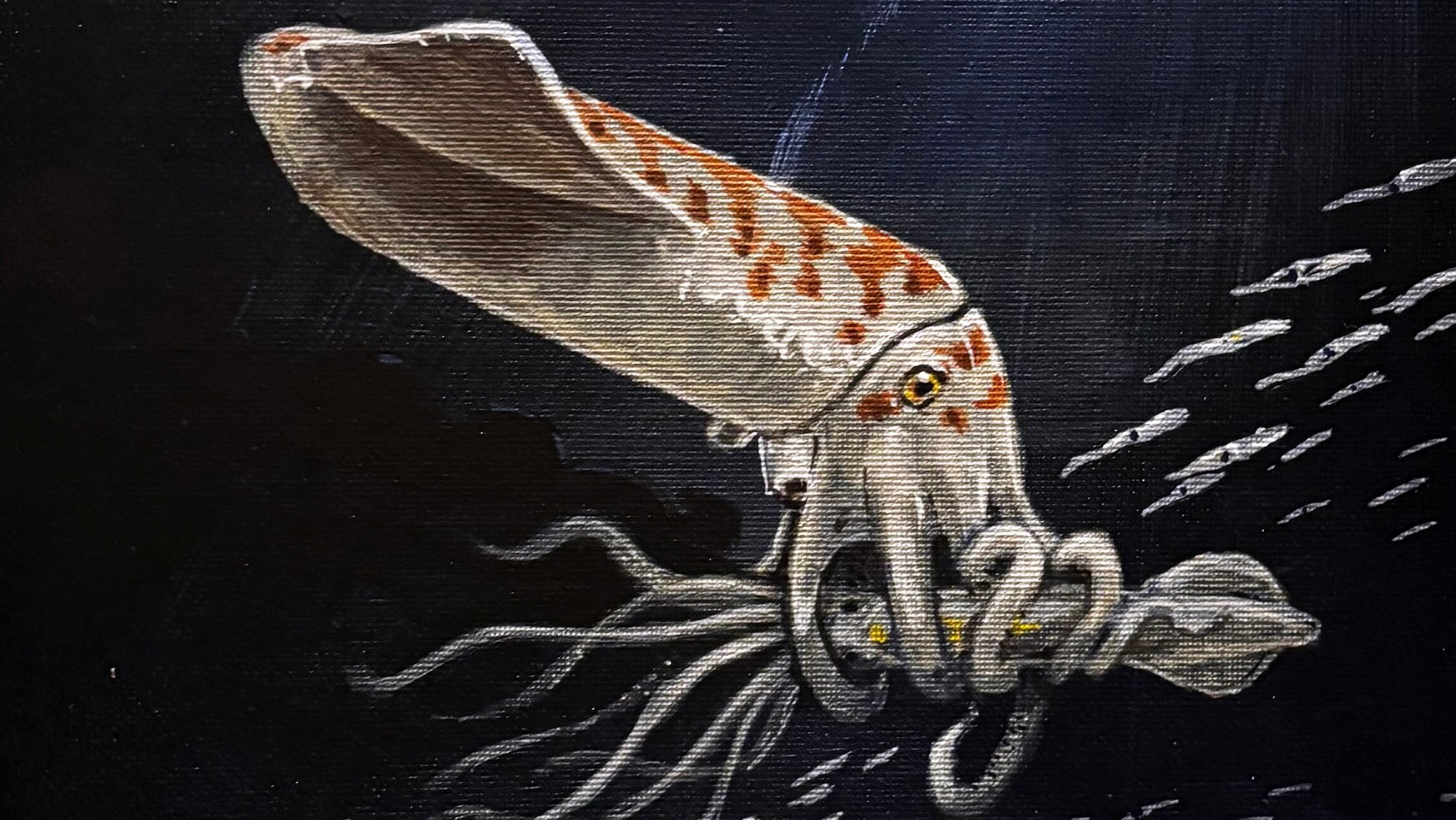
Paleontologists have formally described a newly discovered species of prehistoric cephalopod, Wyoteuthis linsterorum, offering a rare glimpse into the complex predatory dynamics of Jurassic inland seas. Unearthed in the American West and detailed in a study published in Papers in Palaeontology, this 160-million-year-old cousin of the modern octopus and squid is characterized by a remarkably stout, heavy rostrum—colloquially referred to by researchers as the "chunkiest squid butt" ever identified in the fossil record. The discovery not only introduces a previously unknown branch of Mesozoic marine life but also challenges long-held assumptions regarding the evolutionary timeline of specific belemnite families.
Anatomy and Specimen Discovery
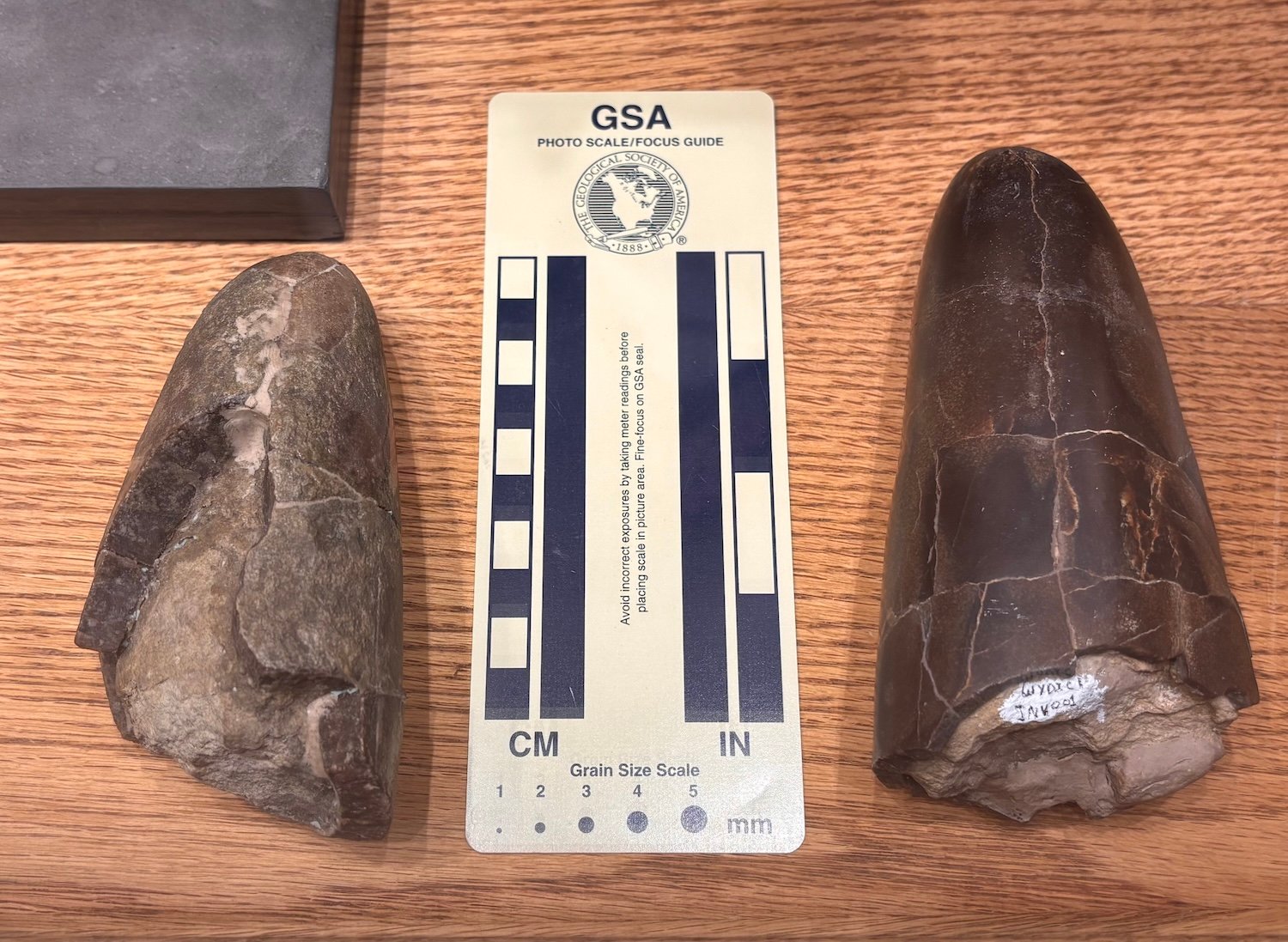
The newly named Wyoteuthis linsterorum belongs to the belemnites, an extinct group of cephalopods that dominated ancient oceans and left behind some of the most prolific invertebrate fossils in the geological record. For over two centuries, paleontologists have recovered bullet-shaped internal carbonate structures known rostra from marine deposits worldwide.
The first specimen of W. linsterorum was collected more than 30 years ago by Burkhard Pohl, founder of the Wyoming Dinosaur Center. While surveying the historically rich strata of the Sundance Formation in Wyoming—a region once submerged beneath a vast, shallow inland sea during the Jurassic period—Pohl encountered a fossilized rostrum that immediately defied standard measurements. While typical belemnites recovered from the same formation generally measured a modest two to four inches in length and less than an inch in width, the anomalous specimen possessed a width of approximately 2.4 inches while maintaining a standard length. Based on standard allometric scaling of belemnite anatomy, researchers calculated that the living animal likely spanned nearly two feet in total length, making it a heavy-bodied giant among its contemporaries.
Chronology of the Find
The timeline of the research spans several decades, moving from initial field discovery to advanced technological analysis:
- Over 30 Years Ago: Fossil collector Burkhard Pohl discovers the initial W. linsterorum rostrum in the Sundance Formation of Wyoming. Due to a lack of comparative specimens, the fossil is placed in museum storage for nearly three decades.
- 2019: Amateur fossil collector Cliff Linster uncovers a second, highly similar robust cephalopod specimen near the town of Ten Sleep, Wyoming, and subsequently donates it to the Wyoming Dinosaur Center.
- Recent Years: An international research team initiates a comprehensive study of the paired fossils, employing modern non-destructive imaging techniques.
- June 2026: Cliff Linster passes away shortly before the formal description of the species, which is named in his honor.
- Recent Publication: The findings are officially published in Papers in Palaeontology, formally establishing Wyoteuthis linsterorum and rewriting aspects of belemnite evolutionary history.
Technological Advancements in Paleontology
Because the initial and secondary fossils were too precious and structurally singular to risk invasive physical sectioning, the international research team utilized high-resolution computed tomography (CT) scanning. This non-invasive diagnostic method allowed scientists to examine the internal micro-architecture of the rostra in meticulous detail.
The digital scans confirmed that the specimens were not deformed variants of known species, but rather represented a distinct, previously unknown genus and species. Furthermore, the internal morphology indicated that W. linsterorum belonged to a specific family of belemnites that mainstream paleontology previously presumed had gone extinct millions of years prior to the Jurassic period. This taxonomic survival demonstrates a ghost lineage—a lineage that persisted undetected in the fossil record for a significant duration.
Dietary Adaptations and Evolutionary Pressures
The evolutionary driver behind the massive proportions of W. linsterorum has puzzled and fascinated researchers. In evaluating the ecological pressures of the Jurassic Sundance Sea, scientists have drawn behavioral parallels to modern cephalopods.
In modern marine environments, squid and octopuses are opportunistic apex and mid-tier predators characterized by a lack of dietary selectivity. They routinely consume a wide variety of prey, including other species of cephalopods and, in many cases, members of their own species.
Paleontologist Alexey Ippolitov, a study co-author affiliated with New Zealand’s Victoria University, noted that the extraordinary girth and bulk of W. linsterorum likely provided a distinct biological advantage. By evolving a larger and heavier body plan, the species was ideally equipped to hunt smaller, co-occurring belemnites of the genus Pachyteuthis, which populated the same ancient waters in abundance. This predatory specialization highlights an aggressive trophic hierarchy within Jurassic seas, where cephalopods actively competed against and preyed upon one another.
Scientific and Community Contributions
The species name, Wyoteuthis linsterorum, honors Cliff Linster, whose 2019 discovery of the second specimen proved critical in validating the uniqueness of the initial find. Although Linster passed away in June 2026 before the formal publication of the study, he was actively aware that researchers were describing the animal.
Co-author Jessica Lippincott, a paleontologist with the Wyoming Dinosaur Center, emphasized the vital role that amateur fossil collectors and independent rockhounds play in advancing formal scientific research. While institutional paleontologists conduct systematic excavations, serendipitous discoveries by dedicated citizens frequently bridge critical gaps in the fossil record, leading to the identification of novel taxa.
Broader Implications for Mesozoic Marine Research
The identification of Wyoteuthis linsterorum carries several important implications for marine paleontology and evolutionary biology:
- Revising Biodiversity Timelines: The unexpected survival of a presumed extinct belemnite family into the mid-Jurassic underscores significant gaps in the global fossil record and demonstrates that marine biodiversity during the Mesozoic was more resilient and complex than previously documented.
- Paleoecological Modeling: Understanding the predatory habits and body mass distribution of macro-predators like W. linsterorum refines trophic models of inland sea ecosystems, illustrating how energy flowed through marine food webs 160 million years ago.
- Methodological Precedent: The successful application of CT scanning to dense invertebrate fossils without destructive sampling sets a technical standard for future analyses of rare or delicate specimens housed in museum collections worldwide.
As researchers continue to re-examine archived material and survey historic formations like the Sundance, discoveries such as W. linsterorum serve as a reminder that the prehistoric oceans still hold profound secrets regarding the history of life on Earth.