The Great Energy Transition Paradox: How Wall Street Private Equity is Funding Both Renewables and Fossil Fuels


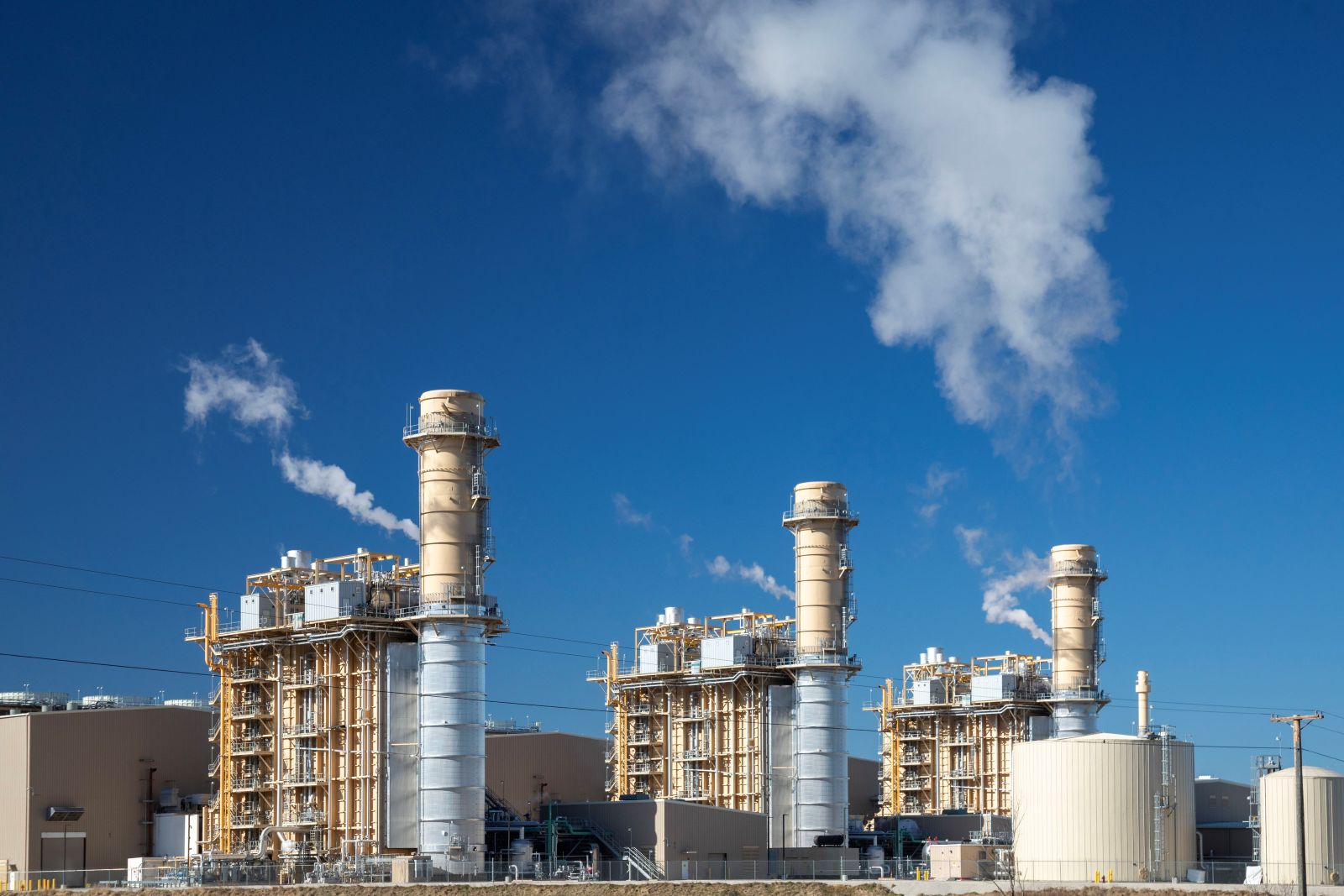
Private equity titan Blackstone made headlines in mid-October by announcing an enormous $8.7 billion final close for its latest flagship vehicle, Blackstone Energy Transition Partners V. The fund, which dropped oil and gas production investments half a decade ago, reportedly turned away an additional $3 billion in investor demand simply to remain under its strict capital caps. Yet, beneath the clean-sounding moniker lies a complex reality: a significant portion of this capital is not heading toward wind turbines or solar arrays, but into natural gas plants and data center infrastructure.
This financial phenomenon highlights a profound schism between traditional environmental definitions of the "energy transition" and the profit-driven mandates of Wall Street. While everyday citizens and climate scientists view the transition as an urgent global imperative to move away from fossil fuels and limit catastrophic climate change, major financial institutions increasingly interpret the phrase as an encompassing strategy to capitalize on surging electricity demands, grid constraints, and digital expansion.
The Evolution and Growth of Private Market Energy Funds
Over the past decade, private equity firms have steadily expanded their portfolios dedicated to the energy shift. Between 2021 and early 2026, specialized "transition funds" across the private market have accumulated an unprecedented $178 billion. This capital haul is roughly triple the amount raised by traditional fossil fuel and legacy energy funds combined over the same period.
This resilience stands in stark contrast to the broader climate tech ecosystem. While private equity targets established companies through high-value buyouts, venture capital—which focuses on smaller, riskier startup investments—has experienced a sharp downturn, tracking toward its worst year of the decade in the United States.
The structural mechanics of private equity explain much of this momentum. Firms pool money from institutional investors—such as corporate and government pension funds—every few years, targeting companies where they can overhaul operations to maximize profitability before orchestrating a lucrative exit. However, this model has historically drawn intense scrutiny from labor and environmental watchdogs who argue that maximizing financial returns frequently comes at the expense of workers and ecological health.
The shifting economics of power have also been heavily influenced by regulatory and macro-economic volatility. The passage of landmark federal legislation under the Biden administration initially triggered a wave of private innovation and clean tech investment. However, subsequent legislative rollbacks by congressional opponents created a shifting regulatory landscape. Concurrently, the explosive growth of artificial intelligence and high-density data centers has sparked an unprecedented demand for continuous electricity, pulling trillions of dollars into power infrastructure investments.
Defining the Transition: Clean Energy vs. Bridge Fuels
Within financial circles, the energy transition has matured into a sophisticated, highly commercialized asset class. According to Dan Cohn, an energy finance analyst at the Institute for Energy Economics and Financial Analysis (IEEFA), private equity investments do not necessarily signal a moral endorsement of a budding industry; rather, they reflect a cold calculation that a sector is becoming economically critical.
"Investors are sensing oncoming scarcity of electricity and are positioning themselves accordingly," Cohn observed. "That speaks to both the moment of rising electricity demand, but also the maturity of clean energy technologies."
However, divergent philosophies govern how firms deploy this capital. At Blackstone, leadership has been remarkably explicit about the enduring utility of methane gas—the primary component of natural gas—framing it as an indispensable bridge fuel. When Blackstone rebranded its energy fund in 2022, global head of energy David Foley defended the inclusion of natural gas assets. While acknowledging the importance of solar and wind generation, Foley argued that simply adding intermittent renewables to the grid does not immediately allow for the retirement of baseline thermal sources like coal and gas.
Consequently, Blackstone’s recent transactional footprint includes investments in natural gas plant operators alongside renewable developers, grid transmission technology companies, and data center cooling innovators.
Contrasting Strategies Across Global Private Markets
Different financial institutions have charted distinct paths through the energy transition landscape. Brookfield, another global private markets giant, manages its transition funds under an explicit corporate framework targeting absolute decarbonization and emissions reductions. While Brookfield permits investments in natural gas under specific conditions—such as replacing dirtier coal-fired generation—its gas expansion strategies have nonetheless faced criticism from institutional shareholder groups.
Conversely, European private equity peers like Copenhagen Infrastructure Partners maintain a far narrower focus on clean sources, such as green hydrogen and offshore wind, with negligible exposure to natural gas.
Even within the largest asset management houses, nomenclature remains a battleground. BlackRock, an entity entirely separate from Blackstone, explicitly separates "transition" strategies from "sustainable" portfolios, warning investors that not all sustainable strategies qualify as transition investments, and vice versa. This semantic flexibility creates substantial friction for institutional investors attempting to align their portfolios with net-zero carbon pledges.
The Institutional Dilemma: Public Pensions and Climate Mandates
The broad definition of "transition" investing presents severe complications for public entities that have committed capital to these funds while simultaneously bound by strict climate mandates.
At least three major government-managed retirement systems—the Oregon Treasury, the Minnesota State Board of Investment, and the San Francisco Employees’ Retirement System—have committed a combined $525 million to Blackstone’s latest energy transition fund, according to data from Private Equity International. Each of these public funds maintains official climate action plans or carbon-reduction targets.
The presence of state pension money in funds that actively acquire natural gas infrastructure has ignited domestic pushback. In Oregon, state legislators and public advocates have formally petitioned the state treasury to establish more rigorous definitions and transparency regarding what constitutes a "climate-positive" investment in public financial reports. None of the involved state treasuries or Blackstone provided immediate comments when queried prior to publication.
Financial Incentives vs. Environmental Realities
Financial analysts note that there are clear economic incentives for incorporating gas into transition portfolios. Transition funds that retain exposure to natural gas assets consistently demonstrate slightly higher historical yields compared to pure-play renewable portfolios, appealing directly to pension trustees mandated to secure high risk-adjusted returns for retirees.
Nevertheless, the inclusion of natural gas and data center buildouts in climate-aligned portfolios is a subject of fierce external debate. Proponents argue that natural gas has historically driven down power sector emissions by displacing coal, while the massive electricity needs of modern data centers have catalyzed unprecedented infrastructure spending on grid modernization.
Conversely, environmental advocates and climate scientists argue that natural gas undermines global climate goals. Methane leaks throughout extraction and transportation infrastructure pack a potent near-term warming punch, and expanding gas-fired power generation locks economies into long-term fossil fuel dependency. Critics note that modern electrical grids are increasingly capable of achieving reliability through cleaner alternatives, such as grid-scale battery storage, which captures surplus solar and wind power for deployment during periods of low generation.
"Natural gas no longer functions as a credible bridge in the energy transition," wrote Shruti Shukla, a senior international energy advocate at the Natural Resources Defense Council, warning that the fuel risks slowing decarbonization and inflating system costs.
The Long-Term Outlook for Wall Street’s Energy Bets
As the clean energy ecosystem continues its rapid maturation, analysts suggest that Wall Street’s current romance with natural gas may ultimately prove to be a temporary economic hedge rather than a permanent fixture of sustainable finance. As battery technologies improve and renewable deployment costs continue their secular decline, the foundational economic argument for maintaining fossil fuel assets within transition portfolios is facing intensifying scrutiny.
"There are other very prominent solutions like solar, wind, and batteries, which will mature and continue to see price declines, and so the view that you need gas is increasingly contested," Cohn concluded.
For now, the multi-billion-dollar private equity machinery marches forward, balancing the immediate demands of a power-starved digital economy against the long-term imperatives of a warming planet—leaving investors, regulators, and climate advocates to navigate a shifting landscape where profitability and sustainability rarely speak the same language.